This article is for general education and does not replace an in-person assessment, examination, or imaging. Everyone's injury pattern, medical history, and goals differ; use what you read here to prepare better questions for your doctor.
Dr. Nitin N Sunku is a consultant orthopedic and sports medicine surgeon. He sees patients at Raghava Multispeciality Hospital, Attibele, on Sarjapura–Attibele Road, and at Health Nest Hospital, HSR Layout, Bengaluru. If pain is rapidly worsening, you cannot bear weight, you develop numbness or weakness in a limb, or you have fever after an injury, seek urgent medical care. For non-emergency evaluation and individualised treatment options, book through the contact page.
Topics across this blog include knee ligament and meniscus problems, shoulder pain and instability, hip and knee arthritis, fracture recovery principles, spine symptoms when urgent causes have been excluded, running and tendon overuse issues, and what to expect from arthroscopy or joint replacement discussions. If you are comparing sources online, cross-check dates and always confirm advice with an in-person clinician.
ACL degeneration is the gradual breakdown of the anterior cruciate ligament's fibres over time — caused by ageing, repeated stress, osteoarthritis, an old injury, or a build-up of jelly-like (mucoid) material inside the ligament, rather than one sudden tear. It typically causes a deep, dull knee ache, pain at the end of bending or straightening, stiffness and, in some people, a feeling that the knee is loose.
Quick Answer: What Is ACL Degeneration?
ACL degeneration is the gradual breakdown of the anterior cruciate ligament's fibres over time, caused by ageing, repeated stress, osteoarthritis, an old injury, or a build-up of jelly-like (mucoid) material inside the ligament, rather than one sudden tear. It typically causes a deep, dull knee ache, pain at the end of bending or straightening, stiffness and, in some people, a feeling that the knee is loose. Treatment ranges from physiotherapy, weight management and activity changes to arthroscopic (keyhole) surgery when symptoms persist or the knee becomes unstable.
Key Takeaways
- Degeneration and a tear are different problems, and they are treated differently.
- Standard X-rays usually look normal, so an MRI plus a hands-on knee examination is what confirms the diagnosis.
- Many patients improve with 8 to 12 weeks of structured non-surgical care.
- Surgery is reserved for persistent pain, blocked movement or true instability.
What Is ACL Degeneration?
The anterior cruciate ligament (ACL) is a strong band of tissue that runs diagonally through the centre of your knee. Its main job is to stop the shin bone sliding forward under the thigh bone and to control rotation when you pivot, land or change direction. If you want the detailed anatomy, our guide to anterior cruciate ligament anatomy, origin and insertion covers it step by step.
In a healthy ACL, collagen fibres sit in tight, organised bundles. In ACL degeneration, that organisation is lost. The fibres thin, fray, thicken abnormally or become infiltrated with other material. The ligament may still be physically in one piece, but it no longer behaves like a healthy ligament.
Is ACL degeneration the same as an ACL tear?
No. An ACL tear is usually a sudden event: a twist, a landing or a collision, often with a pop and rapid swelling. ACL degeneration is a slow process, and it often shows up without any dramatic injury. That said, the two can overlap. A long-standing degenerated ligament can eventually tear with a trivial twist, and a partially torn ligament that never healed can degenerate over the years. Our article on the anterior and posterior cruciate ligaments explains how each ligament is injured and how doctors tell them apart.
Types of ACL Degeneration
The phrase "ACL degeneration" is used for several different situations, and the right treatment depends on which one you have. Most online articles lump them together. We do not, because the distinction matters.
| Type | What is happening | Who it usually affects | Typical clue |
|---|---|---|---|
| Age-related (attritional) wear | Fibres gradually thin and fray with ageing | Adults over 40 to 50 | Mild ache, stiffness, often found incidentally on MRI |
| Mucoid degeneration | Jelly-like mucoid material builds up between the fibres, so the ACL looks thick and swollen | Active middle-aged adults, athletes | Pain at deep bending, sometimes a block to full straightening |
| Osteoarthritis-related degeneration | The ACL deteriorates alongside worn cartilage | People with knee arthritis | Joint-line pain, creaking, swelling after activity |
| Chronic ACL deficiency | An old tear or partial tear that never healed and has become attenuated | Past sports or twisting injuries | Giving way on pivoting or on uneven ground |
Mucoid degeneration of the ACL deserves a special mention. It is considered uncommon and probably under-diagnosed, and its exact cause is still not fully understood. On MRI, the ligament often appears diffusely thickened with increased signal, sometimes described as a "celery stalk" look, and small cysts may sit near its attachments.
Causes and Risk Factors of ACL Degeneration
There is rarely one single cause. Several factors usually combine.
1. Ageing and natural wear
Like tendons and cartilage, ligaments lose water content and collagen quality as we age. By middle age, some fraying inside the ACL is common even in people with no knee complaints.
2. Repeated micro-stress
Running, football, cricket, badminton, trekking, gym squats and jumping sports all load the ACL thousands of times. Over years, repeated small stresses can add up, especially if muscle strength or technique is poor.
3. A narrow intercondylar notch
The ACL sits in a groove between the thigh bone condyles called the notch. If the notch is narrow, the ligament can rub against bone with each movement, which may contribute to thickening and wear.
4. Knee osteoarthritis and joint inflammation
The ACL lives inside the joint and shares the same fluid environment as the cartilage. In arthritic knees, chronic inflammation of the joint lining (synovitis) can damage the ligament, and ligament weakening can in turn overload the cartilage. If you already have worn cartilage, read our plain-English guide to cartilage degeneration.
5. An old injury that never fully healed
A previous sprain, a partial ACL tear or a knee twist that was "walked off" years ago can leave a scarred, weakened ligament that degenerates further with time.
6. Extra body weight
Every extra kilogram adds several kilograms of load across the knee during walking, stairs and squatting. Over years, that raises stress on every structure, including the ACL. Our article on weight loss and knee pain shows how much difference even modest weight reduction can make.
7. Inflammatory and metabolic conditions
Rheumatoid arthritis and other inflammatory joint diseases are known to attack the lining and ligaments of the knee. Poorly controlled diabetes can also affect connective tissue health.
8. Trivial trauma on an already weak ligament
In published case series of mucoid ACL degeneration, a majority of patients recalled only a minor knock or twist before symptoms began. A small event can be enough to trigger symptoms in a ligament that was already vulnerable.
Symptoms of ACL Degeneration
Symptoms are usually subtle and creep up over weeks or months. Common features include:
- Deep, dull knee pain that is hard to point to, often felt behind or in the centre of the knee
- Pain with full bending, such as squatting, sitting cross-legged, kneeling or using an Indian-style toilet
- Pain or tightness at the end of straightening, sometimes with a feeling that the knee will not fully lock out
- Stiffness, especially after sitting for a long time or first thing in the morning
- Mild swelling after activity
- Clicking or a catching sensation, which can mimic a meniscus problem
- A feeling of looseness or giving way, more typical when the ligament has weakened significantly or an old tear is present
If your pain started after a clear twisting event with a pop and immediate swelling, that points more toward a tear. Our guide on whether you can walk with a torn ACL explains what a fresh tear typically feels like.
ACL degeneration vs ACL tear vs meniscus tear vs arthritis
| Feature | ACL degeneration | ACL tear | Meniscus tear | Knee arthritis |
|---|---|---|---|---|
| Onset | Gradual | Sudden, often with a pop | Sudden or gradual | Gradual |
| Main pain | Deep, central, at end ranges | Immediate pain, then instability | Joint-line pain, locking | Joint-line pain, stiffness |
| Swelling | Mild, intermittent | Rapid, within hours | Variable | Intermittent |
| Giving way | Sometimes | Common | Occasional | Rare |
| X-ray | Usually normal | Usually normal | Usually normal | Narrowed joint space |
This table is a guide only. The only reliable way to separate these conditions is a proper examination and imaging.
When Should You See an Orthopedic Doctor?
Book a consultation if you notice any of the following:
- Knee pain lasting longer than 3 to 4 weeks despite rest
- Difficulty fully straightening or fully bending the knee
- Repeated giving way, especially on stairs, slopes or while turning
- A locked knee that will not move
- Swelling that keeps returning
- Night pain or pain that is getting steadily worse
Seek urgent care if the knee suddenly locks, swells rapidly after an injury, or you cannot bear weight. If you are unsure whether your symptoms need a specialist, our article on when to see an orthopedic surgeon for joint pain lists the red flags.
How Is ACL Degeneration Diagnosed?
Diagnosis combines your story, a physical examination and the right imaging. It should never rest on an MRI report alone, because many people have ACL changes on MRI without any symptoms.
Clinical examination
Your surgeon checks the range of movement, looks for pain at the end of bending or straightening, and tests stability using the Lachman test, anterior drawer test and pivot shift test. A degenerated ACL with intact stability behaves very differently from a torn, unstable one.
X-ray
An X-ray does not show ligaments, and in ACL degeneration it is often normal. It is still useful to check for early arthritis, a narrow notch or other bone problems.
MRI scan
MRI is the key test. Features that suggest ACL degeneration include:
- A thickened ACL with increased internal signal
- A blurred or poorly defined fibre pattern
- Small ganglion cysts around the ligament or its tibial attachment
- An intact ligament in continuity, which separates degeneration from a complete tear
Because an "abnormal ACL" on MRI does not always explain pain, the scan has to be read together with your symptoms. This is why we avoid ordering unnecessary scans and treat the patient rather than the report.
Arthroscopy
In selected cases, a keyhole look inside the knee confirms the diagnosis and allows treatment in the same sitting.
ACL Degeneration Treatment Options
Treatment depends on the type of degeneration, how much pain or instability you have, your age, your activity level and any associated cartilage or meniscus damage.
Non-surgical treatment (first line for most people)
For stable knees with mild to moderate symptoms, a structured non-surgical plan is the usual starting point:
- Activity modification: temporarily avoiding deep squats, kneeling, pivoting sports and heavy leg-press work while the knee settles
- Physiotherapy: strengthening the quadriceps, hamstrings, glutes and calf muscles so they share the load and protect the ligament, plus balance and control training
- Weight management: often the single most effective long-term step for knee health
- Short course of anti-inflammatory medication: only as advised by your doctor
- Bracing: useful for patients who feel unsteady during sport or on uneven ground
- Image-guided injections: where cartilage wear or joint inflammation is part of the picture, options such as hyaluronic acid, PRP or GFC may be discussed, and precision matters, which is why we use ultrasound-guided injections. To be honest and clear: no injection regrows a degenerated ACL, and these treatments are aimed at pain, inflammation and the surrounding joint.
A fair trial is usually 8 to 12 weeks. If you improve, you continue the strengthening programme and return to activity in stages.
Surgical treatment
Surgery is considered when pain, restricted movement or instability persists despite proper non-surgical care.
1. Arthroscopic debridement or partial excision (for mucoid degeneration). Through two or three small keyhole cuts, the surgeon removes the swollen, hypertrophied portion of the ACL and any associated cyst, sometimes with a notchplasty (gently widening the notch to stop the ligament rubbing). In a large published series of 80 knees, about 94 percent of knees had meaningful pain relief after partial excision, though a small number developed some forward instability afterwards. This is why the amount of ligament removed must be judged carefully by an experienced arthroscopic surgeon. You can read more about the technique on our knee arthroscopy page.
2. ACL augmentation or reconstruction (for instability). When the ligament is too weak to control the knee and you are experiencing repeated giving way, rebuilding the ACL with a graft may be the right choice. Our ACL reconstruction page explains graft options and what the operation involves, and our ACL surgery cost and recovery guide covers realistic expense and timelines in Bengaluru.
3. Treating the bigger picture. If ACL degeneration is part of established knee arthritis, the plan has to address the cartilage too. Depending on the pattern of wear, that may range from structured osteoarthritis knee treatment to realignment or joint replacement in advanced cases. Whether the ACL is intact is an important factor in choosing the right operation, so it should be assessed before any arthritis surgery is planned.
Which treatment suits which situation?
| Your situation | Likely approach |
|---|---|
| Mild ache, stable knee, ACL changes found on MRI | Physiotherapy, strengthening, weight and activity guidance |
| Pain at deep bending or a block to straightening, mucoid ACL on MRI | Trial of non-surgical care, then arthroscopic partial excision if it persists |
| Giving way, positive Lachman or pivot shift | Bracing and rehab for low demand, ACL reconstruction for active or unstable knees |
| ACL changes with knee arthritis | Arthritis-focused plan: exercise, weight loss, injections, then surgery if needed |
| Over 60 with an ACL problem | Individualised decision based on activity goals, not age alone |
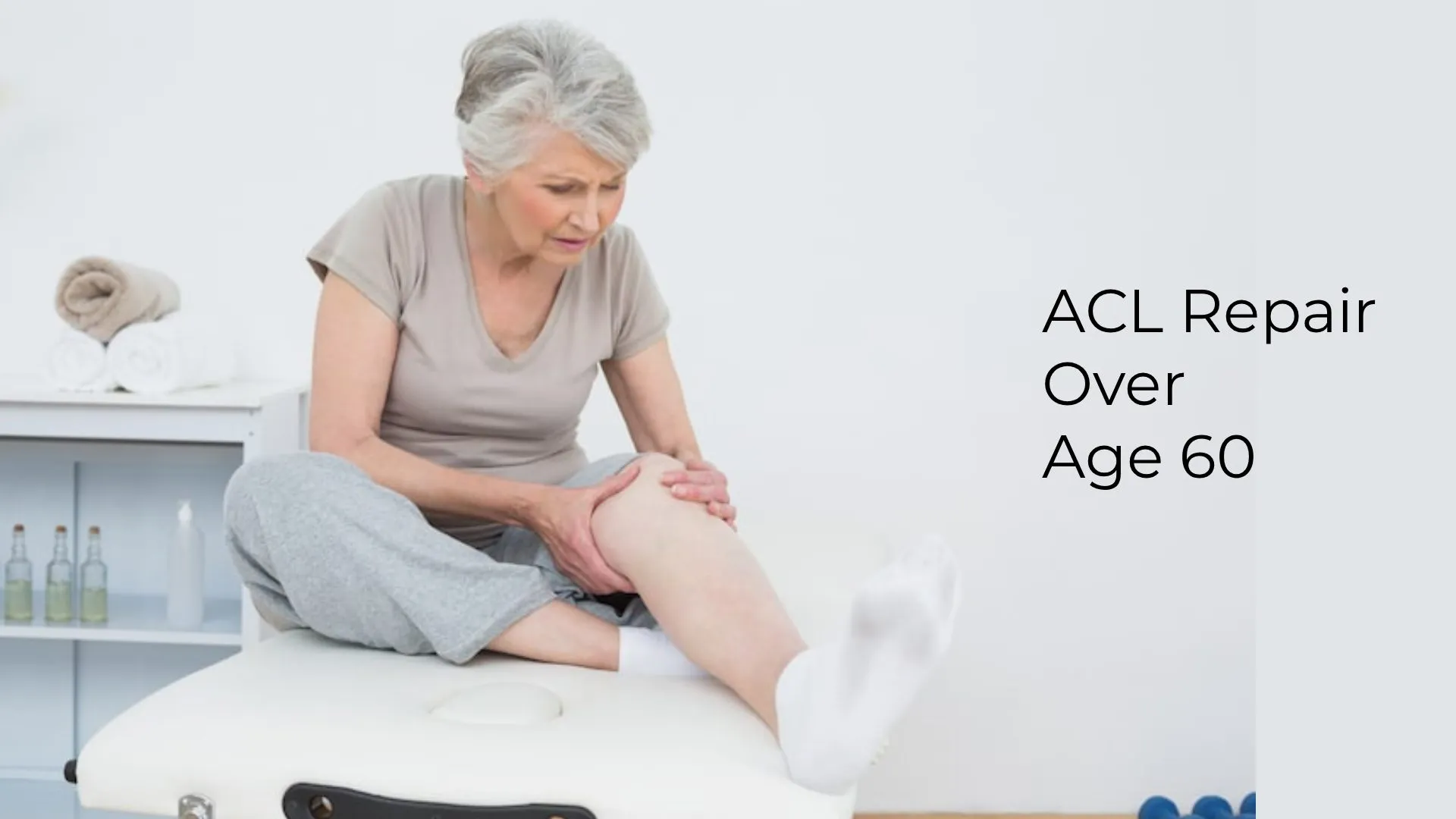
Age is rarely the deciding factor. Our article on ACL surgery over age 60 explains how an active older adult can still be a good candidate.
Recovery Timeline: What to Expect
These are typical ranges, and your surgeon will tailor them to you.
- Non-surgical care: improvement over 6 to 12 weeks, with strengthening continuing for 3 to 6 months
- After arthroscopic debridement: walking within days, regaining full movement over a few weeks, and a gradual return to sport in roughly 6 to 12 weeks, depending on the extent of work done
- After ACL reconstruction: a longer path, usually around 6 to 9 months before full return to pivoting sport, guided by strength and function tests rather than the calendar
Whatever the treatment, rehabilitation decides the final result. If you have surgery, it is worth knowing the warning signs after ACL surgery so that problems are caught early. Some patients also ask about adjuncts, and our review of red light therapy for ACL injuries shows what the evidence does and does not support.
Can You Prevent ACL Degeneration?
You cannot stop ageing, but you can slow the stresses that wear the ligament:
- Keep your leg muscles strong, especially the quadriceps, hamstrings and glutes.
- Maintain a healthy weight to reduce load on every knee structure.
- Warm up properly and include balance and landing-control drills if you play pivoting sports.
- Build up training gradually. Sudden jumps in running distance or gym load are a common trigger.
- Do not ignore a twisted knee. Get a persistent "sprain" examined instead of walking it off.
- Treat arthritis early. Learning the early signs of knee osteoarthritis gives you more options and better outcomes.
- Vary your exercise. Cycling, swimming and strength work protect the knee better than repeated high-impact pounding alone.
Why Choose Dr. Nitin N Sunku for ACL and Knee Care in Bengaluru?
Accurate diagnosis is half the treatment in ACL degeneration, because the wrong label can lead to the wrong operation. Dr. Nitin N Sunku is a fellowship-trained orthopedic and sports medicine surgeon with an MS in Orthopedics (gold medalist), specialised training in arthroscopy, and experience as team doctor for Bengaluru FC. His approach is conservative first: surgery is advised only when the benefits clearly outweigh the risks.
You can see Dr. Nitin at Raghava Multispeciality Hospital in Attibele and Health Nest Hospital in HSR Layout. To explore our complete range of ligament and arthroscopy care, visit the ACL care service page, or read about our wider sports medicine services.
Frequently Asked Questions About ACL Degeneration
What is ACL degeneration?
ACL degeneration is the slow breakdown of the anterior cruciate ligament's fibres due to ageing, repeated stress, osteoarthritis, old injury or mucoid build-up. The ligament usually stays in one piece but loses quality, which can cause pain, stiffness or looseness.
What are the first symptoms of ACL degeneration?
The earliest signs are usually a deep, vague knee ache, discomfort at the end of full bending or straightening, mild stiffness and occasional swelling after activity. Giving way appears later and mainly if the ligament has become weak.
Is ACL degeneration the same as an ACL tear?
No. A tear is typically a sudden injury with a pop and rapid swelling. Degeneration is gradual wear or internal change in the ligament. They can coexist, and a degenerated ACL can tear more easily.
Can a degenerated ACL heal on its own?
The damaged fibres do not regrow, but symptoms often settle with physiotherapy, strengthening, weight management and activity modification. Many people live comfortably with a degenerated but functioning ACL.
What causes mucoid degeneration of the ACL?
The exact cause is not fully understood. Suggested contributors include ageing, repeated micro-stress, a narrow notch, joint inflammation and minor trauma. It is mostly found in active middle-aged adults and is thought to be under-recognised.
Can ACL degeneration be seen on X-ray?
Usually not. X-rays show bone, not ligaments, and are often normal. MRI, combined with a physical examination, is the main way to identify ACL degeneration.
Do I need surgery for ACL degeneration?
Not always. Surgery is considered if pain, blocked movement or instability continues after about 8 to 12 weeks of proper non-surgical treatment. Options include arthroscopic partial excision of the swollen ligament or ACL reconstruction for an unstable knee.
Can I run or exercise with ACL degeneration?
Often yes, with modifications. Low-impact activity such as cycling, swimming and guided strength work is generally safe. High-impact running, deep squats and pivoting sports may need to be paused or phased in until your surgeon clears you.
Does ACL degeneration lead to knee arthritis?
The two are closely linked and can influence each other. A weak or unstable ACL can overload cartilage over time, and arthritic knees often show ACL wear. Early strengthening and weight control help protect the joint.
How long does recovery take?
Non-surgical improvement usually takes 6 to 12 weeks. After keyhole debridement, many patients return to sport in about 6 to 12 weeks. After ACL reconstruction, full return to pivoting sport generally takes 6 to 9 months.
Which doctor should I see for ACL degeneration in Bengaluru?
An orthopedic surgeon with sports medicine and arthroscopy training is the right specialist. Dr. Nitin N Sunku consults in Attibele and HSR Layout and can examine your knee, review your MRI and recommend a clear plan.
Final Thoughts
ACL degeneration is a spectrum, from harmless age-related wear to a painful, swollen ligament that blocks movement or a weakened one that lets the knee give way. The key is an accurate diagnosis and a plan matched to your knee and your goals. Most people do well with patient, well-guided rehabilitation, and surgery is a useful option for those who need it, not the default.
If you have been told your ACL is "degenerated" and are unsure what it means for you, bring your MRI and reports along. Learn more about our approach to knee pain care in Bengaluru, or book an appointment with Dr. Nitin N Sunku or call +91-9980031006.
References
- Symptomatic ACL mucoid degeneration in middle-aged athletes (PMC)
- Mucoid degeneration of the anterior cruciate ligament: management and outcome (PMC)
- ACL injuries overview — AAOS OrthoInfo
Medical disclaimer: This article is for general education and does not replace a personal medical examination. Please consult a qualified orthopedic doctor for diagnosis and treatment of knee pain or ligament problems.

About the Author
Dr. Nitin N Sunku
MBBS, MS (Orthopedics), Fellowship in Arthroscopy & Sports Medicine
Dr. Nitin N Sunku is a Consultant Orthopedic & Sports Medicine Surgeon with over 10 years of focused practice in Bengaluru. He serves as the Team Doctor for Bengaluru FC and consults at Raghava Multispeciality Hospital (Attibele) and Health Nest Hospital (HSR Layout). His clinical interests include arthroscopy, ligament & meniscus care, regenerative orthopedic medicine, ultrasound-guided injections, and joint replacement.
Experiencing symptoms?
Don't let pain hold you back. Schedule a comprehensive evaluation with Dr. Nitin today.
Book Appointment