Sports Injury Clinic near Electronic City
Dr. Nitin N Sunku — Raghava Multispeciality Hospital, Attibele
The badminton shoulder, the cricket hamstring, the football knee that popped, the marathon shin that will not settle. Fellowship-trained sports-medicine care — diagnosis, rehab and keyhole surgery when it is needed — a short drive down Hosur Road.
Call directly
+91-9980031006
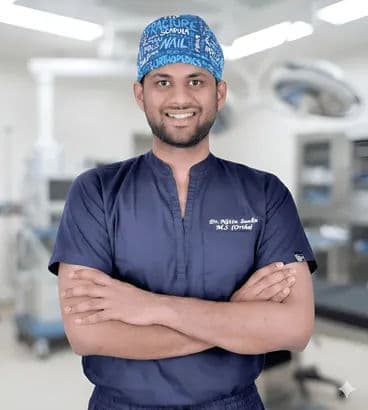
Verified Doctor
MBBS, MS (Ortho)
5000+ Patients
10+
Years Experience
5000+
Happy Patients
4.9★
Patient Rating
Same Day
Appointments
From the Tech-Park League to the Half Marathon
Electronic City plays hard at the weekend after sitting still all week. These are the injuries that produces.
ACL & Meniscus Tears
Badminton Shoulder & Rotator Cuff
Ankle Sprains & Ligament Tears
Runner's Knee & Shin Splints
Hamstring & Calf Strains
Gym & Weightlifting Injuries
Tennis / Golfer's Elbow
Sports Fractures & Dislocations
What Each Sport Does to the Weekend Athlete
The pattern is remarkably consistent. Knowing it means the right examination on the first visit.
| Sport | Typical injuries | Note |
|---|---|---|
| Badminton | Rotator cuff and shoulder impingement from overhead smashes; Achilles and calf strains from lunging; ankle sprains; ACL tears on the pivot. | The single biggest source of sports injuries from the Electronic City leagues. |
| Corporate cricket | Hamstring tears in the sprint between wickets; shoulder injuries in bowlers; finger and wrist fractures from the ball; ankle sprains in the outfield. | Classic weekend-warrior pattern: no warm-up, full intensity. |
| Football / futsal | ACL and meniscus tears from planting and turning; MCL sprains from tackles; groin strains; ankle ligament injuries on turf. | The same injuries treated for professional footballers, at amateur volumes. |
| Running (10K, half marathon) | Patellofemoral pain, ITB syndrome, shin splints, Achilles tendinopathy, stress fractures of the shin and foot from too much too soon. | Almost always a training-load problem before it is a structural one. |
| Gym / CrossFit | Lower back strain from deadlifts, meniscus tears from deep loaded squats, shoulder labral injuries from overhead pressing, elbow tendinopathy. | Technique and progression errors, usually after a lay-off. |
What to Do Between the Injury and the Appointment
Most sports injuries from a Saturday match are seen on Monday or Tuesday. What happens in between affects how easy the diagnosis is and how quickly you recover.
- 1
Protect
Stop playing. A ligament that has torn will not improve by finishing the match.
- 2
Ice
15–20 minutes at a time, every 2–3 hours for the first 48 hours. Never directly on skin.
- 3
Compress & elevate
A crepe bandage and the limb above heart level limit swelling and make examination easier.
- 4
Do not massage or apply heat
Both increase bleeding into the injured tissue in the first 48 hours.
- 5
Get examined within a week
Early assessment, before swelling and guarding set in, gives the clearest diagnosis. If the joint is locked, deformed or you cannot bear weight, come to casualty the same day.
Sports Medicine, Not General Orthopedics
Team Doctor, Bengaluru FC
The same sports-medicine expertise that keeps professional footballers on the pitch, applied to your badminton shoulder, cricket hamstring or marathon knee.
Fellowship-Trained in Arthroscopy & Sports Medicine
Dr. Nitin's fellowship training is in exactly this field: ligament reconstruction, meniscus repair, shoulder stabilisation and the rehabilitation that follows.
20 Minutes South of Electronic City
A straight run down Hosur Road (NH 44) from Phase 1 or 2, against the city-bound traffic. Diagnosis, X-ray and plan in one visit; back home the same afternoon.
X-Ray on Site, MRI When It Changes the Plan
In-house X-ray at Raghava Multispeciality Hospital rules fractures in or out on the spot. An MRI is ordered when the examination points to a ligament, meniscus or labral injury that it would help to map.
Return-to-Play Is the Goal
Treatment is planned backwards from the sport you want to return to — not just pain relief. Rehab-first for most injuries, keyhole surgery for the ones where it makes the difference.
Insurance & Cashless Help
Health insurance is accepted for procedures such as ACL reconstruction, and the hospital team assists with cashless pre-authorisation under corporate policies.
A Short Drive Down Hosur Road
Electronic City Phase 1
~20 min via NH 44
Electronic City Phase 2
~18 min drive
Neo Town
~16 min drive
Hebbagodi
~14 min drive
Bommasandra
~12 min drive
Chandapura
~8 min drive
Jigani
~15 min drive
Attibele
Clinic location
Five Days at a Desk, Then Ninety Minutes at Full Intensity.
That is the weekend-warrior equation, and it explains most of what comes in from Electronic City. Muscles and tendons that have been static all week are asked to sprint, lunge, smash and pivot without a warm-up, and the weakest link gives: a hamstring, an ankle ligament, an ACL. The good news is that most of these injuries recover fully with the right rehabilitation, and the ones that need surgery do far better when it is done by someone who does it every week and plans it around the sport you want to go back to.
Planned Backwards from Return-to-Play
The goal is the sport, not just the absence of pain.
1st
Diagnose
2nd
Rehab
If needed
Keyhole Surgery
What Our Patients Say
Arjun R.
2 weeks ago
“Excellent doctor! He explained the issue in detail and the treatment was very effective. Highly recommended.”
Pooja S.
1 month ago
“I had shoulder arthroscopy. Recovery was smooth and Dr. Nitin's care was exceptional throughout.”
Karthik M.
3 weeks ago
“Very professional and friendly. Best orthopedic surgeon in the area, hands down.”
Sunita G.
1 month ago
“Dr. Nitin treated my mother's knee arthritis without surgery. So grateful for his patience and expertise.”
Book an Injury Assessment
The team will call back within hours to confirm your slot — WhatsApp works too.
Two Clinics — Pick the Easier Drive
Attibele (20 min south via Hosur Road) is primary; HSR Layout works if you are headed toward the city.
Raghava Multispeciality Hospital
Address
39, Sarjapura - Attibele Rd, opposite Canara Bank (formerly Syndicate Bank), Attibele, Bengaluru, Karnataka 562107
Hours
Mon – Sat: 10:00 AM – 6:00 PM
Phone
+91-9980031006Serving patients from
Health Nest Hospital
Address
1162, 24th Main Rd, Garden Layout, Sector 2, HSR Layout, Bengaluru, Karnataka 560102
Hours
Mon – Sat: 10:00 AM – 8:00 PM
Phone
+91-9449031003Serving patients from
How a Sports-Medicine Clinic Approaches an Injury Differently
The question is not “what is torn” but “what do you want to get back to”
General orthopedics treats an injury; sports medicine treats an athlete with an injury, and the difference shows up in every decision. A partial ACL tear in a 45-year-old who plays a gentle game of badminton on Sundays and a complete ACL tear in a 28-year-old who plays competitive futsal three nights a week are the same structure and very different problems. The first will probably do well with a strengthening programme and a brace; the second needs a reconstruction if the knee is going to survive the pivoting that sport demands. So the first visit spends as long on what you play, how often and at what level as it does on the knee itself. The full picture of sports injury care in Bangalore is on its own page; this one is about the version of it that walks in from Electronic City.
Getting the diagnosis right early
A sports injury is easiest to diagnose in the first few days, before swelling and muscle guarding get in the way of the examination. That is why the advice above is to get examined within a week. Most diagnoses are made clinically: a positive Lachman test for the ACL, a specific tenderness pattern for a meniscus, a painful arc for the rotator cuff. The in-house X-ray at Raghava Multispeciality Hospital rules out a fracture or an avulsion on the spot. An MRI is ordered when it would change the plan — to map the extent of a ligament or meniscus injury before surgery, or to sort out a shoulder where the examination is ambiguous — rather than as a reflex. Patients who have already had a scan should bring it, but should expect the examination to lead.
Rehab first, and what “rehab” actually means
For the majority of injuries seen from the tech-park leagues — hamstring and calf strains, ankle sprains, runner's knee, shin splints, most shoulder impingement, many meniscus tears — the treatment is rehabilitation, and the word deserves defining. It does not mean rest followed by a return to the same sport at the same intensity. It means a staged, progressive loading programme that rebuilds the strength and control of the injured tissue, then re-introduces the sport-specific demands — sprinting, cutting, jumping, overhead smashing — step by step, with clear criteria for moving to the next stage. Done properly, it is the difference between an ankle sprain that recovers fully and one that becomes a chronically unstable ankle. The regenerative options that can support tissue healing in specific cases are described on the PRP and regenerative treatment page.
When surgery is the right call
Some injuries do need an operation, and delaying those is its own mistake. A complete ACL rupture in someone returning to pivoting sport, a bucket-handle meniscus tear that locks the knee, a recurrent shoulder dislocation with a Bankart lesion, a full-thickness rotator cuff tear in an active person, a displaced fracture. These are done arthroscopically wherever possible at the Attibele hospital, most as day-care or single-night admissions, and the rehabilitation that follows is planned by the same surgeon from the day of the operation. The specifics of the commonest procedures are on the ACL reconstruction, knee arthroscopy and shoulder pain pages. Sports fractures — a wrist from a fall on the cricket outfield, a collarbone from a bike crash — go through the hospital casualty and the fracture and trauma service.
Why Attibele for an Electronic City athlete
A sports injury needs more visits than most orthopedic problems — assessment, a review at two weeks, rehab check-points, a return-to-play clearance — and each of those is far easier when the clinic is twenty minutes south against the traffic rather than ninety minutes into the city. The Attibele hospital has X-ray in the building, an operating theatre for the cases that need it, and one fellowship-trained sports surgeon who sees you at every visit. Patients who live nearer HSR Layout can use the HSR Layout clinic for follow-ups; the record and the surgeon stay the same.
Frequently Asked Questions
Practical answers for weekend athletes from Electronic City Phase 1, Phase 2, Bommasandra and Hebbagodi.
I hurt my knee playing badminton on Saturday. How soon should I be seen?
Within the first week — ideally Monday or Tuesday. The examination is clearest before swelling and muscle guarding set in. If the knee is locked, visibly deformed, or you cannot put weight on it, come to the hospital casualty the same day rather than waiting for an appointment.
Do I need an MRI before the appointment?
No. Most sports injuries are diagnosed by examination, and an X-ray is done in-house on the day to rule out a fracture. An MRI is ordered when it would change the plan — for example to map a ligament or meniscus injury before surgery. Bring any scan you already have.
I heard a pop and the knee swelled within an hour. Is it an ACL tear?
That combination — a pop, rapid swelling, a feeling of instability — is the classic ACL story, though a meniscus tear at its blood supply or a kneecap dislocation can do the same. Stop playing, ice and elevate it, and get examined this week. Whether it needs reconstruction depends on the tear, the knee and the sport you want to return to.
How far is the clinic from Electronic City?
About 10–12 km from Phase 1 — roughly 20 minutes south on Hosur Road (NH 44), against the city-bound traffic. The hospital has on-site parking and in-house X-ray, so assessment, imaging and a plan happen in a single visit.
Will I need surgery?
Most sports injuries seen from Electronic City do not. Hamstring and calf strains, ankle sprains, runner's knee, shin splints and most shoulder impingement are treated with structured rehabilitation. Surgery is for the injuries where it changes the outcome — a complete ACL tear in a pivoting athlete, a locked meniscus, a recurrent shoulder dislocation — and is done arthroscopically at the Attibele hospital.
How long before I can play again?
It depends entirely on the injury. A mild ankle sprain may be two to three weeks; a hamstring strain four to eight; a meniscus procedure six to twelve; an ACL reconstruction nine to twelve months for pivoting sport. Return-to-play is decided on strength and control criteria, not on the calendar.
I am training for a 10K and have shin pain that will not settle. What is it?
Usually medial tibial stress syndrome (shin splints) from increasing training volume too fast, but persistent, localised shin pain that hurts at rest or at night needs to be distinguished from a stress fracture — which changes the plan completely. Get it examined; an X-ray and, if needed, further imaging will tell them apart.
Does Dr. Nitin treat amateur players or only professionals?
The large majority of patients are amateur and recreational athletes — corporate cricket, badminton leagues, gym-goers and runners. The Bengaluru FC team-doctor role means the same protocols used for professional players are applied to everyone.
Is corporate health insurance accepted for sports injury surgery?
Health insurance is accepted for procedures such as ACL reconstruction, meniscus repair and shoulder stabilisation, and the hospital team assists with cashless pre-authorisation. Bring your policy or TPA details and call ahead to confirm coverage specifics for your insurer.
Can I get a Saturday appointment?
Yes. The OPD runs Monday to Saturday, 10:00 AM to 6:00 PM. Saturdays are the busiest day for working professionals from Electronic City — book by phone or WhatsApp to secure a slot. Same-day appointments are available most weekdays.
Get Back on the Court, Pitch or Road — Properly.
Sports-medicine care 20 minutes from Electronic City. Book today.