This article is for general education and does not replace an in-person assessment, examination, or imaging. Everyone's injury pattern, medical history, and goals differ; use what you read here to prepare better questions for your doctor.
Dr. Nitin N Sunku is a consultant orthopedic and sports medicine surgeon. He sees patients at Raghava Multispeciality Hospital, Attibele, on Sarjapura–Attibele Road, and at Health Nest Hospital, HSR Layout, Bengaluru. If pain is rapidly worsening, you cannot bear weight, you develop numbness or weakness in a limb, or you have fever after an injury, seek urgent medical care. For non-emergency evaluation and individualised treatment options, book through the contact page.
Topics across this blog include knee ligament and meniscus problems, shoulder pain and instability, hip and knee arthritis, fracture recovery principles, spine symptoms when urgent causes have been excluded, running and tendon overuse issues, and what to expect from arthroscopy or joint replacement discussions. If you are comparing sources online, cross-check dates and always confirm advice with an in-person clinician.
Can you walk with a torn ACL? Learn ACL tear recovery time without surgery, symptoms to watch for, and ACL treatment options in Bengaluru.
Introduction
One of the most common questions people ask after a knee injury is:
“Can I still walk if I’ve torn my ACL?”The short answer is yes — in many cases, walking is still possible even with a torn ACL. But just because you can walk doesn’t mean the injury isn’t serious. In fact, ignoring it can lead to long-term complications that may affect your mobility and quality of life.
In this blog, we’ll help you understand what a torn ACL really means, what symptoms to look for, and how to treat it properly with the help of expert orthopedic care in Bengaluru.
What Is an ACL Tear?
The ACL (anterior cruciate ligament) is one of the key ligaments in your knee that provides stability, especially during activities like running, jumping, or changing direction quickly. It’s commonly injured during sports, falls, or sudden twisting movements.
Can You Walk with a Torn ACL?
Yes — it’s possible to walk with a torn ACL, especially once the initial swelling and pain subside. However, patients often report:
- A feeling of the knee “giving way” during movement
- Difficulty with twisting, pivoting, or turning
- Ongoing swelling and instability
This can be misleading, as walking in a straight line may feel okay, but the knee remains structurally unstable — especially during physical activity.
What Happens If You Ignore an ACL Tear?
Leaving an ACL tear untreated can lead to:
- Further damage to the meniscus or cartilage
- Chronic knee instability during daily activities or sports
- A higher risk of early-onset knee arthritis
- Loss of confidence in physical movement
That’s why it’s important to consult an orthopedic specialist early and plan the right course of action.
How We Treat ACL Tears in Bengaluru
At our orthopedic clinic in HSR Layout, Bengaluru, we offer customised treatment based on the severity of the tear, your lifestyle, and activity goals.
Treatment Options Include:
- Bracing and Rest for minor or partial tears
- Physiotherapy to build strength and support the knee
- ACL Reconstruction Surgery for complete tears or high-demand patients (athletes, active individuals)
- Post-surgical rehabilitation for full functional recovery
As a sports medicine specialist, Dr. Nitin N Sunku focuses on helping active individuals return to their sport or daily routine — safely and with confidence.
ACL tear recovery time without surgery
For patients managed conservatively, ACL tear recovery time without surgery follows a staged timeline: weeks 0–2 focus on swelling control, ice, bracing and crutches; weeks 2–6 restore range of motion and begin early quadriceps and hamstring activation; weeks 6 to 3 months emphasise progressive strengthening and proprioception; and a graded return to low-pivot activity at 3–6 months.
Conservative management is most appropriate for older patients, those with a partial tear, or people with a low-pivot lifestyle (walking, cycling, swimming, gym work) whose knee feels stable in daily activities. Younger patients, athletes in pivoting sports (football, basketball, kabaddi, badminton), or anyone whose knee keeps giving way usually benefit from reconstruction rather than rehab alone.
Even when surgery is avoided, structured physiotherapy is essential — an untreated, unrehabilitated ACL-deficient knee carries a higher risk of secondary meniscus and cartilage damage over time.
Conclusion: Don’t Ignore Knee Instability
While you might be able to walk after an ACL tear, it’s crucial to understand the risk of further injury and long-term joint damage. Getting a proper diagnosis and starting the right treatment is the best way to protect your knee and return stronger.
***1. ACL Function: The ACL is a key ligament providing stability, especially during running, jumping, or quick changes in direction.
2. Walking is Possible but Misleading: While walking is often possible with a torn ACL once initial pain subsides, the knee remains structurally unstable.
3. Symptoms of Instability: Patients often report the knee "giving way," difficulty with twisting/pivoting, and ongoing swelling/instability.
4. Risks of Ignoring an ACL Tear (Key Advice): Untreated tears can lead to further damage (meniscus/cartilage), chronic knee instability, and a higher risk of early-onset knee arthritis.
5. Treatment Options (Key Advice): Treatment is customized and may include Bracing and Rest (for minor tears), Physiotherapy, ACL Reconstruction Surgery (for complete tears or high-demand patients), and Post-surgical rehabilitation.
6. Overall Advice: It is crucial to get a proper diagnosis from an orthopedic specialist early and not ignore knee instability to prevent long-term joint damage.
About the Author
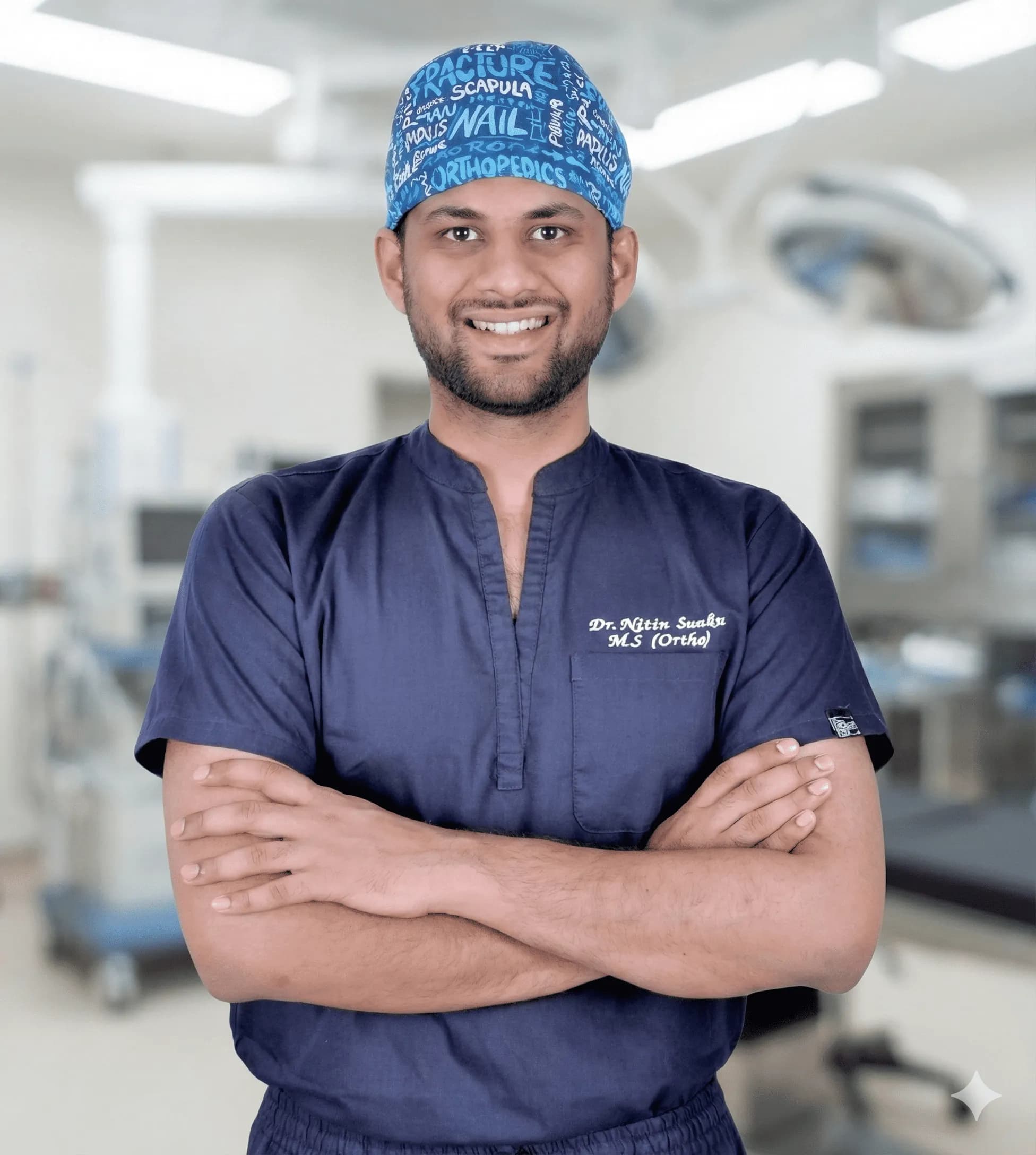
Dr. Nitin N Sunku
MBBS, MS (Orthopedics), Fellowship in Arthroscopy & Sports Medicine
Dr. Nitin N Sunku is a Consultant Orthopedic & Sports Medicine Surgeon with over 10 years of focused practice in Bengaluru. He serves as the Team Doctor for Bengaluru FC and consults at Raghava Multispeciality Hospital (Attibele) and Health Nest Hospital (HSR Layout). His clinical interests include arthroscopy, ligament & meniscus care, regenerative orthopedic medicine, ultrasound-guided injections, and joint replacement.
Experiencing symptoms?
Don't let pain hold you back. Schedule a comprehensive evaluation with Dr. Nitin today.
Book Appointment