This article is for general education and does not replace an in-person assessment, examination, or imaging. Everyone's injury pattern, medical history, and goals differ; use what you read here to prepare better questions for your doctor.
Dr. Nitin N Sunku is a consultant orthopedic and sports medicine surgeon. He sees patients at Raghava Multispeciality Hospital, Attibele, on Sarjapura–Attibele Road, and at Health Nest Hospital, HSR Layout, Bengaluru. If pain is rapidly worsening, you cannot bear weight, you develop numbness or weakness in a limb, or you have fever after an injury, seek urgent medical care. For non-emergency evaluation and individualised treatment options, book through the contact page.
Topics across this blog include knee ligament and meniscus problems, shoulder pain and instability, hip and knee arthritis, fracture recovery principles, spine symptoms when urgent causes have been excluded, running and tendon overuse issues, and what to expect from arthroscopy or joint replacement discussions. If you are comparing sources online, cross-check dates and always confirm advice with an in-person clinician.
If you have been dealing with persistent pain at the back of your ankle or lower leg, you have probably come across the term Achilles tendinopathy. This guide breaks down every phase, explains what is happening inside the tendon, and outlines the right treatment.
What Is Achilles Tendinopathy?
The Achilles tendon joins your calf muscles to your heel bone. It is the largest tendon in the body. It helps you push off when you walk, run, jump, or use stairs.
Achilles tendinopathy means pain and often swelling near the tendon. Sport and daily activities can feel harder. In the past, doctors often called it tendinitis and blamed inflammation alone.
Research on tendon tissue tells a different story. True inflammatory change is often mild or absent. The tendon keeps taking small overloads. It tries to heal but can get stuck in a cycle of incomplete repair.
Roughly half of runners may have Achilles tendon pain at some point in life. The problem is not limited to runners. Office workers, weekend athletes, and people from all walks of life in Bengaluru and across India seek care for it.
Two Anatomical Subtypes
Before exploring the phases, it is worth noting that Achilles tendinopathy is classified by location into two main subtypes:
- Midportion Achilles tendinopathy affects the middle section of the tendon, roughly 2 to 6 centimeters above the heel bone. This is the most common presentation.
- Insertional Achilles tendinopathy affects the point where the tendon attaches to the calcaneus and involves a slightly different mechanical picture, including compressive loading at the bone-tendon junction.
The phases described in this article apply primarily to midportion tendinopathy, though the general continuum concept is relevant to both types.
The Tendon Continuum: Understanding Achilles Tendinopathy as a Progression
Cook and Purdam described the “tendon continuum.” In simple terms, Achilles problems sit on a spectrum, not a single fixed disease stage.
Load the tendon too hard and it may slide along that spectrum toward more change in the tissue. Reduce and grade load the right way and it can move back toward a healthier state. That is why many people improve without surgery.
Clinicians often describe three overlapping tissue phases. Rehab also follows staged goals. The three tissue phases are:
- Phase 1: Reactive Tendinopathy
- Phase 2: Tendon Disrepair
- Phase 3: Degenerative Tendinopathy
A full tendon rupture is a separate, urgent problem and needs its own plan.
Rehab is often grouped into four practical stages: calm symptoms, build basic strength, rebuild power, then return to sport. This article links tissue stages to those rehab stages so you know what is going on and what to do next.
Phase 1: Reactive Tendinopathy
What Is Happening in the Tendon?
Reactive tendinopathy is the earliest stage. The tendon has been loaded too fast for what it is used to.
Tendon cells respond by swelling the tissue. The tendon may look or feel thicker. This is often a protective response: the body tries to spread load over a wider area.
At this stage, the structural integrity of the collagen is largely preserved. There is no significant collagen disruption. This is important because it means the tendon has strong potential for full reversal if the overload is removed quickly and the tendon is managed correctly.
Who Gets Reactive Tendinopathy?
It often appears in people who ramp up training too quickly. Examples include a runner who jumps weekly mileage, a cricketer who returns hard after a break, or someone in Bengaluru who starts intense HIIT without a base.
It can also flare in an older tendon that already had wear, then faces a sudden spike in load.
Symptoms
Pain appears quickly after the overloading event, often within 24 to 48 hours. The tendon is tender to touch, may be visibly swollen, and the surrounding area feels warm. Morning stiffness and stiffness after prolonged rest are common. Pain is typically constant and can interrupt sleep or simple daily activities.
How Long Does It Last?
If the tendon is appropriately offloaded and managed, the reactive phase typically resolves within 5 to 10 days. This does not mean you are healed. It means the acute irritability has settled. Returning to full load too early at this point is one of the most common errors patients make, and it is the primary reason tendinopathy progresses to the next stage.
Treatment for Reactive Tendinopathy
The priority in this phase is load reduction without complete immobilization. Complete rest actually weakens the tendon over time. The goal is to reduce the provocative load while maintaining baseline tendon stimulus.
Isometric calf work is the main treatment in this phase. That means holding a calf muscle contraction without moving the ankle through a big range. Many protocols use several holds of about 45 seconds, on flat ground first.
Ice, a short period of easier training, and simple pain relief may help symptoms. Low-impact options like cycling or swimming can keep fitness up while the tendon calms.
Corticosteroid injections are generally avoided in this phase as they can weaken tendon collagen structure and risk progressing the condition.
Phase 2: Tendon Disrepair
What Is Happening in the Tendon?
If reactive change is not managed, the tendon can enter disrepair. More tendon cells stay active. Collagen fibres begin to lose their tidy layout. New small blood vessels may grow into the tendon.
The tendon is still trying to heal, but damage is happening faster than repair. Strength is partly reduced but not gone. Many people with Achilles pain for weeks to a few months sit in this zone if load has not been guided well.
Symptoms
Pain is less constant than in the reactive phase. Patients typically describe pain at the start of activity that eases after a warm-up, then returns with prolonged or high-intensity activity and again the following morning. The tendon may feel thickened or nodular on palpation. Morning stiffness lasting more than 20 to 30 minutes is common. Running is possible but limited, and activities like hill running, stairs, and jumping are particularly provocative.
Treatment for Tendon Disrepair
The disrepair phase requires a shift from pure load reduction to progressive loading. This is the most important phase for rehabilitation because it is where structured strength training can actually reverse the pathological changes and move the tendon back toward health.
Isotonic (heavy-slow resistance) calf loading is the primary tool. Heel raises performed slowly, through a controlled range, with progressively increasing load represent the gold standard. The Alfredson eccentric protocol, involving slow lowering of the heel over the edge of a step with both straight and bent knee positions, has been extensively validated. Importantly, the pain-monitoring model used in this phase allows mild to moderate pain during exercise (up to 5 out of 10) as long as pain returns to baseline within 24 hours.
Load management must be precise. Too little load perpetuates the disrepair. Too much load tips the tendon back into reactivity. This balance is best managed with professional guidance from an experienced sports medicine specialist.
Shockwave therapy (extracorporeal shockwave therapy or ESWT) is an evidence-supported adjunct in this phase. It stimulates cellular activity and promotes collagen turnover. At our sports medicine clinic in Bengaluru, ESWT is incorporated into structured rehabilitation programs for patients in the disrepair phase who are not progressing sufficiently with exercise alone.
Phase 3: Degenerative Tendinopathy
What Is Happening in the Tendon?
Degenerative tendinopathy is the most advanced stage on the spectrum. Parts of the tendon show more cell loss, more messy collagen, and more new vessels. The tendon stores and releases less elastic energy. That matters for runners, who load the tendon with every step.
The damage is often patchy. Healthy tendon often sits next to worn areas. That is good news: the healthy parts can still be trained. Stronger muscle and tendon around the patch can share the load.
Symptoms
The symptom pattern in degenerative tendinopathy resembles the disrepair phase in terms of daily behavior: pain at the start of activity, some easing during activity, and return of pain with high load or the following day. However, symptoms are more persistent despite treatment, and the overall tolerance for load is lower. The tendon may show a visible nodular thickening. Some patients experience a sudden reduction in symptoms that is paradoxically worrying, as it can indicate significant loss of nerve supply to the degenerative area.
Treatment for Degenerative Tendinopathy
This is the most challenging phase to treat and requires patience and specialist involvement. The goal is to maximize the capacity of the healthy surrounding tendon tissue through continued progressive loading rather than trying to reverse the degenerative changes in the affected core, which cannot be fully reversed.
Heavy-slow resistance training remains the cornerstone. Plyometric exercises (hopping, jumping, bounding) are progressively introduced in later rehabilitation as the tendon needs to regain its energy storage capacity. This phase of rehabilitation, sometimes called the energy storage phase, is what prepares the tendon for return to sport.
Platelet-rich plasma (PRP) injections have been explored for degenerative tendinopathy. The evidence remains mixed, with some studies showing benefit and others showing no advantage over saline placebo. At our clinic, PRP is considered a case-by-case adjunct rather than a routine treatment.
When conservative management has been thoroughly tried for six to twelve months without adequate improvement, surgical options become relevant. Procedures such as percutaneous needle tenotomy, open or keyhole surgical debridement, or in cases of insertional tendinopathy, percutaneous Zadek osteotomy can provide meaningful pain relief. Research shows that surgery relieves pain in the majority of patients with chronic tendinopathy resistant to conservative care.
The Rehabilitation Continuum: Four Phases of Recovery
Alongside the pathological continuum, clinicians use a rehabilitation framework to guide treatment progression. This is particularly important because patients often present somewhere in the middle of the continuum and need a structured roadmap back to full function.
Rehabilitation Phase 1: Symptom Management and Load Reduction
This phase begins immediately upon presentation regardless of pathological stage. The focus is on stopping the cycle of repeated overloading, identifying and modifying provocative activities, and beginning isometric tendon loading to maintain baseline tendon stimulus while managing pain.
Rehabilitation Phase 2: Recovery
Once acute irritability settles and the patient can complete isometric exercises without significant pain flare, isotonic loading begins. Slow, controlled calf raises with progressive resistance are performed. Cardiovascular fitness is maintained through low-load alternatives such as cycling or pool running. This phase typically lasts four to eight weeks but varies by individual.
Rehabilitation Phase 3: Rebuilding
This phase focuses on restoring full calf and lower limb strength, improving proprioception, and beginning sport-specific movement patterns. Running reintroduction begins in a graduated manner, guided by the pain-monitoring model. Single-leg capacity and functional assessment are key milestones. This phase can last eight to sixteen weeks.
Rehabilitation Phase 4: Return to Sport
Full sport-specific loading including sprinting, change of direction, jumping, and sport-relevant plyometrics is introduced. Return to sport is not considered simply when pain is absent but when objective strength and functional tests confirm the tendon and calf complex can handle the demands required. At our sports medicine practice in Bengaluru, return-to-sport clearance includes functional testing benchmarks, not just a symptom check.
Risk Factors That Drive Progression Through the Phases
Understanding why some people progress rapidly through the phases while others stay in the reactive stage helps in prevention and early management. The key risk factors include:
- Rapid increases in training load without adequate recovery time are the most common driver.
- Training on new surfaces or changing footwear abruptly can alter the load pattern on the tendon.
- Higher body mass index increases compressive load on the tendon with every step.
- Reduced ankle dorsiflexion range of motion is strongly associated with Achilles tendinopathy in runners.
- Type 2 diabetes, hypertension, and prolonged corticosteroid use affect tendon biology and healing capacity.
- A previous history of tendinopathy significantly increases the risk of recurrence.
- Age-related reductions in tendon stiffness and collagen synthesis make older recreational athletes more vulnerable.
In Bengaluru's running community, a common pattern we see clinically is athletes who ramp up training ahead of events like the Bengaluru Marathon or corporate running challenges without allowing adequate adaptation time, tipping the Achilles into reactive tendinopathy that then progresses because it is managed with rest alone rather than structured loading.
When to See a Specialist
Not all Achilles pain requires immediate specialist review, but there are clear red flags that warrant professional assessment without delay. You should consult an orthopedic or sports medicine specialist if pain is severe and prevents normal weight-bearing, if a sudden snap or popping sensation accompanied the onset of pain (which may indicate a partial or complete rupture), if there is significant swelling, bruising, or visible deformity, if pain has persisted for more than six weeks despite relative rest, or if you have attempted a structured rehabilitation program without improvement over eight to twelve weeks.
At our clinics at Health Nest Hospital in HSR Layout and Raghava Multispeciality Hospital in Anekal, Bengaluru, patients presenting with Achilles tendon pain receive a thorough clinical assessment including palpation, functional testing, and imaging where indicated. Our sports medicine team formulates a phase-specific treatment plan that addresses not just the tendon in isolation but the entire kinetic chain contributing to the problem.
For patients who have sustained complete Achilles tendon rupture or require surgical management for failed conservative care, expert shoulder and joint care principles are applied to achieve the best possible functional outcome. You can also explore our broader approach to managing sports-related tendon and ligament injuries through our ACL care page to understand the depth of our sports injury expertise.
If you are recovering from a lower limb injury and are unsure whether your heel or ankle pain is tendinopathy or something else, our blog covers a range of related conditions to help you understand your symptoms before your consultation.
Practical Tips for Managing Achilles Tendinopathy at Each Phase
Regardless of which phase you are in, several principles apply universally:
- Do not stretch aggressively into dorsiflexion during irritable phases, as this increases compressive load at the insertion.
- Avoid complete rest, as it accelerates tendon deconditioning without promoting healing.
- Do not rely on passive treatments such as massage or ultrasound alone; exercise is the intervention with the highest level of evidence.
- Wear supportive footwear appropriate to your activity. Avoid walking barefoot on hard floors during flare-ups, as this increases tensile load without the cushioning benefit of footwear.
- Progress load gradually and never jump a rehabilitation phase because you feel good for a few days.
Booking an Appointment with Dr. Nitin N Sunku in Bengaluru
If you are struggling with Achilles tendon pain and are not sure which phase of tendinopathy you are in or what treatment you need, a proper clinical assessment is the most important first step. Dr. Nitin N Sunku offers evidence-based, phase-specific management of Achilles tendinopathy for athletes, recreational exercisers, and active adults across Bengaluru.
Book your appointment here: Book your appointment online
Frequently Asked Questions About Phases of Achilles Tendinopathy
What are the phases of Achilles tendinopathy?Achilles tendinopathy progresses through three pathological phases based on the Cook and Purdam tendon continuum model: reactive tendinopathy (Phase 1), tendon disrepair (Phase 2), and degenerative tendinopathy (Phase 3). Each phase has distinct biological changes within the tendon, different symptom patterns, and requires a different treatment approach. The condition can move forward and backward along this continuum depending on how load is managed.
How do I know which phase of Achilles tendinopathy I am in?Phase is determined by the duration of symptoms, their severity and irritability, the pattern of pain during and after activity, and clinical examination findings. Reactive tendinopathy typically presents acutely with constant pain and significant irritability. Disrepair phase presents with pain that settles during activity and returns afterward. Degenerative tendinopathy presents similarly to disrepair but is more persistent and resistant to initial treatment. Ultrasound or MRI imaging can confirm the extent of structural changes. A sports medicine specialist can accurately stage your tendinopathy with a thorough assessment.
Can Achilles tendinopathy heal on its own?Reactive tendinopathy can settle on its own with adequate offloading, but "settling" does not mean the tendon has fully recovered. Without progressive loading, the tendon remains vulnerable to re-injury. The disrepair and degenerative phases require structured rehabilitation to promote healing and prevent further progression. Simply resting does not address the underlying tendon deconditioning and is associated with higher rates of recurrence.
How long does Achilles tendinopathy take to heal?Reactive tendinopathy: symptoms can settle in 5 to 10 days with appropriate management, though full tendon recovery takes several weeks. Disrepair phase: rehabilitation typically takes 8 to 16 weeks of structured loading. Degenerative tendinopathy: recovery can take 3 to 6 months or longer, and some cases require surgical intervention. Return to full sport in all phases should be guided by objective functional milestones rather than symptom resolution alone.
Is it safe to exercise with Achilles tendinopathy?Yes, in most phases, exercise is not only safe but essential. The key is matching the type and volume of exercise to the current phase and irritability of the tendon. Isometric exercises are appropriate in the reactive phase. Isotonic loading begins in the disrepair phase. Plyometric exercises are introduced in the later rebuilding phase. The pain-monitoring model, which allows up to mild-moderate pain during exercise provided it returns to baseline within 24 hours, helps guide appropriate loading in all phases.
What exercises are best for Achilles tendinopathy?The exercises with the strongest evidence are calf raises performed with heavy-slow resistance. Starting with double-leg calf raises on a flat surface and progressing to single-leg raises, then to eccentric-only raises over the edge of a step, then to plyometric exercises represents the standard progression. Isometric holds (standing on tiptoe and holding position for 45 seconds) are particularly valuable in irritable reactive tendons. All exercise should be supervised or at least guided by a qualified physiotherapist or sports medicine professional, particularly in the early phases.
When is surgery needed for Achilles tendinopathy?Surgery is considered after a thorough conservative management program of at least 6 to 12 months has failed to produce adequate improvement. It is most commonly required in advanced degenerative tendinopathy with focal structural changes or in insertional tendinopathy where bony abnormalities such as a prominent calcaneal prominence (Haglund's deformity) are contributing to symptoms. Procedures include open or keyhole debridement, percutaneous tenotomy, or Zadek osteotomy for insertional cases. Surgery has a success rate exceeding 80% in appropriately selected patients.
Can Achilles tendinopathy lead to a rupture?Yes. Chronic, undertreated tendinopathy, particularly in the degenerative phase, increases the risk of Achilles tendon rupture. A structurally compromised tendon has reduced capacity to absorb load and is more likely to fail under sudden high demand. This is one of the strongest arguments for taking Achilles tendon pain seriously and seeking proper treatment rather than managing it purely with rest and pain relief.
Medical References and Further Reading
- Cook JL, Purdam CR. Is tendon pathology a continuum? A pathology model to explain the clinical presentation of load-induced tendinopathy. British Journal of Sports Medicine, 2009. Read the BJSM article on tendon pathology
- Beyer R et al. Current Clinical Concepts: Conservative Management of Achilles Tendinopathy. Journal of Athletic Training, 2015. Open conservative management paper on PubMed Central
- Li HY, Hua YH. Achilles Tendinopathy: Current Concepts about the Basic Science and Clinical Treatments. BioMed Research International, 2016. Open basic science review on PubMed Central
- Achilles Tendinopathy: Pathophysiology, Epidemiology, Diagnosis, Treatment, Prevention, and Screening. PubMed, 2020. View PubMed abstract for this overview
- Achilles Tendinopathy. StatPearls, NCBI Bookshelf. Read the NCBI Bookshelf chapter on Achilles tendinopathy
- A Treatment Algorithm for Managing Achilles Tendinopathy. PMC, British Journal of Sports Medicine. Open treatment algorithm article on PubMed Central
Related Services at Dr. Nitin N Sunku's Clinic
- Sports Medicine: Comprehensive Injury Management
- ACL Surgery: Expert Arthroscopic Knee Ligament Treatment
- Meniscus Tear Surgery: Minimally Invasive Meniscus Treatment
- Shoulder & Rotator Cuff Surgery: Rotator Cuff, Dislocation and Frozen Shoulder
- Read More from Our Blog
Dr. Nitin N Sunku, MBBS, MS Orthopedics (Gold Medalist), Fellowship in Arthroscopy & Sports Medicine.
Team Doctor, Bengaluru FC. Visiting Consultant, Narayana Hrudayalaya & Manipal Hospital, Bengaluru.
Dr. Nitin regularly manages athletes and active adults presenting with Achilles tendinopathy, tendon ruptures, and complex lower limb overuse injuries using a structured, evidence-based, phase-specific approach.
Book appointment online or call +91-9449031003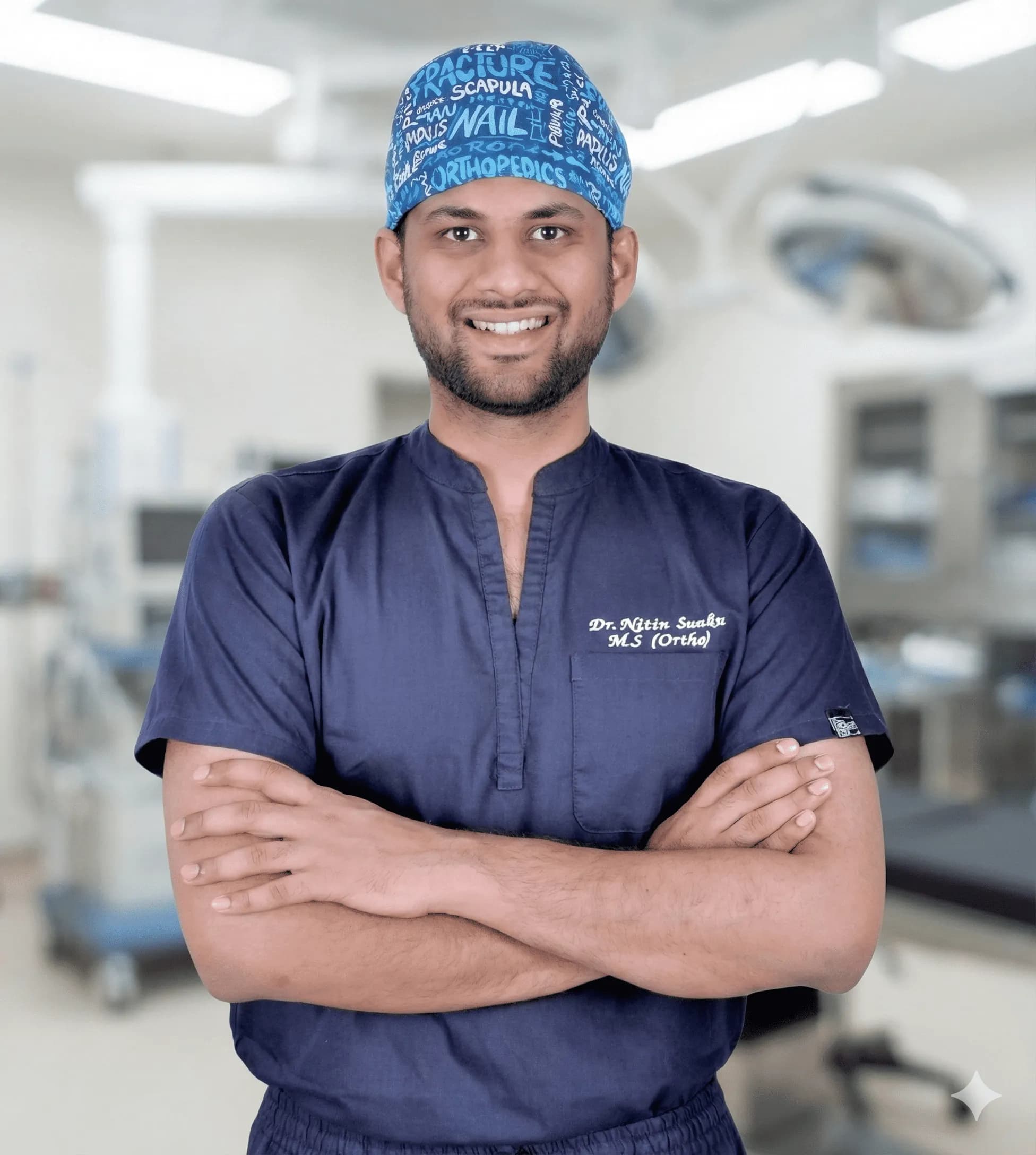
About the Author
Dr. Nitin N Sunku
MBBS, MS (Orthopedics), Fellowship in Arthroscopy & Sports Medicine
Dr. Nitin N Sunku is a Consultant Orthopedic & Sports Medicine Surgeon with over 10 years of focused practice in Bengaluru. He serves as the Team Doctor for Bengaluru FC and consults at Raghava Multispeciality Hospital (Attibele) and Health Nest Hospital (HSR Layout). His clinical interests include arthroscopy, ligament & meniscus care, regenerative orthopedic medicine, ultrasound-guided injections, and joint replacement.
Experiencing symptoms?
Don't let pain hold you back. Schedule a comprehensive evaluation with Dr. Nitin today.
Book Appointment