This article is for general education and does not replace an in-person assessment, examination, or imaging. Everyone's injury pattern, medical history, and goals differ; use what you read here to prepare better questions for your doctor.
Dr. Nitin N Sunku is a consultant orthopedic and sports medicine surgeon. He sees patients at Raghava Multispeciality Hospital, Attibele, on Sarjapura–Attibele Road, and at Health Nest Hospital, HSR Layout, Bengaluru. If pain is rapidly worsening, you cannot bear weight, you develop numbness or weakness in a limb, or you have fever after an injury, seek urgent medical care. For non-emergency evaluation and individualised treatment options, book through the contact page.
Topics across this blog include knee ligament and meniscus problems, shoulder pain and instability, hip and knee arthritis, fracture recovery principles, spine symptoms when urgent causes have been excluded, running and tendon overuse issues, and what to expect from arthroscopy or joint replacement discussions. If you are comparing sources online, cross-check dates and always confirm advice with an in-person clinician.
In the large majority of patients, frozen shoulder (adhesive capsulitis) is treated successfully without surgery. The usual plan combines pain control, stage-matched physiotherapy, and, when needed, an image-guided steroid injection or hydrodilatation. Surgery is kept for the minority whose shoulder stays stiff after many months of proper non-surgical care.
Quick Answer: Can Frozen Shoulder Be Treated Without Surgery in India?
Yes. In the large majority of patients, frozen shoulder (adhesive capsulitis) is treated successfully without surgery. The usual plan combines pain control, stage-matched physiotherapy, and, when needed, an image-guided steroid injection or hydrodilatation. Surgery, either manipulation under anaesthesia or arthroscopic capsular release, is kept for the minority whose shoulder stays stiff after many months of proper non-surgical care. Most people recover movement over 12 to 24 months, and treatment mainly shortens the painful part and protects function along the way.
If you have been told you need surgery straight away, or told to "just wait it out", this guide will help you judge what is reasonable.
What Is Frozen Shoulder?
The shoulder joint is wrapped in a thin, flexible bag called the joint capsule. In frozen shoulder, this capsule becomes inflamed, then thickens and tightens, so the joint cannot move through its normal range. The result is pain and stiffness that is out of proportion to any injury.
Doctors use several names for the same condition: adhesive capsulitis, frozen shoulder, and stiff shoulder. You may also hear "periarthritis shoulder" in India, an older term that is now used less often.
Who Gets It?
- Adults between about 40 and 60 years of age
- Women slightly more often than men
- People with diabetes, where frozen shoulder is more common, tends to be stiffer, and can affect both shoulders
- People with thyroid disease, heart disease, or Parkinson's disease
- Anyone whose shoulder was immobilised after a fracture, surgery, or stroke
- Many people with no obvious cause at all
Our separate guide on frozen shoulder and diabetes explains why a new frozen shoulder is worth a blood sugar check.
Symptoms: How to Recognise Frozen Shoulder
The hallmark is that both you and the doctor cannot lift your arm. This is different from a painful but movable shoulder, as in a rotator cuff problem, where the doctor can usually raise the arm for you.
Typical features:
- Deep, aching pain in the shoulder, sometimes spreading to the upper arm
- Pain that is worse at night and when lying on the affected side
- Difficulty combing hair, reaching a back pocket, fastening a bra, or wearing a shirt
- Marked loss of external rotation, meaning turning the arm outward like opening a door
- Normal X-ray, apart from some bone thinning from disuse
Frozen Shoulder or Something Else?
| Condition | How It Differs |
|---|---|
| Rotator cuff tear | Weakness is prominent, and the arm can be moved passively |
| Calcific tendinitis | Sudden severe pain, calcium spot visible on X-ray |
| Cervical spondylosis | Neck pain, tingling or numbness down the arm |
| Shoulder arthritis | Grinding, reduced joint space on X-ray |
| Frozen shoulder | Stiff in all directions, especially outward rotation, both actively and passively |
This is why a proper examination matters before any treatment. Many people treated for "neck problems" or "tendon pain" turn out to have frozen shoulder, and the reverse also happens. Our page on shoulder pain treatment in Bangalore outlines how we separate these causes.
The Three Stages of Frozen Shoulder
Treatment works best when it matches the stage. Timings below are typical ranges and vary between people.
Stage 1: Freezing (Painful Stage), Roughly 2 to 9 Months
Pain is the main problem and stiffness builds gradually. The capsule is inflamed. Aggressive stretching at this stage can backfire, because it provokes more inflammation.
Stage 2: Frozen (Stiff Stage), Roughly 4 to 12 Months
Pain often eases a little but the shoulder is very stiff. Daily tasks become difficult, and night pain may still disturb sleep.
Stage 3: Thawing (Recovery Stage), Roughly 6 to 24 Months
Movement slowly returns. This stage is when stretching and strengthening give the most benefit.
Across the three stages, the whole course commonly lasts 1 to 3 years if untreated. Some people are left with a small permanent loss of motion, usually one that does not limit everyday life.
Frozen Shoulder Treatment Without Surgery: Your Options
Non-surgical care is not a single treatment. It is a sequence, adjusted to your stage, pain level, job, and other health conditions.
1. Education and Activity Modification
Understanding the condition removes a lot of fear. You will be advised to:
- Keep using the arm within the pain limit instead of resting it in a sling
- Avoid sudden jerks and forced overhead lifting
- Sleep with a pillow supporting the arm, and avoid lying on the affected side
- Work with, not against, pain: a stretch should feel like firm tension, not sharp pain
2. Pain Relief Medicines
Short courses of anti-inflammatory tablets or topical gels may be used when pain is high, as advised by your doctor. They help you sleep and take part in physiotherapy, but they do not unlock the stiffness by themselves. Anyone with kidney, stomach, or heart problems should take them only on medical advice.
3. Stage-Matched Physiotherapy
This is the backbone of non-surgical treatment.
- Freezing stage: gentle, pain-free movement, pendulum swings, heat before exercise, posture work
- Frozen stage: sustained but comfortable stretches, assisted range-of-motion work, scapular control
- Thawing stage: progressive stretching, then strengthening of the rotator cuff and shoulder blade muscles
Short sessions done daily usually do more than occasional long, painful ones.
4. Image-Guided Corticosteroid Injection
A steroid injection into the shoulder joint can reduce inflammation and ease pain, especially in the painful early stages. Relief often lasts several weeks and gives a window in which physiotherapy becomes easier. Accuracy matters, which is why we use imaging guidance. Read about ultrasound-guided orthopedic injections and our related article on shoulder pain injections.
Points to know honestly:
- Steroid injections give mostly short-term benefit, not a permanent cure
- In people with diabetes, blood sugar can rise for a few days, so monitoring is needed
- Repeated injections are not advised, since too many can weaken tissues
5. Hydrodilatation (Capsular Distension)
In this procedure, a mix of saline, local anaesthetic and usually steroid is gently injected under imaging guidance to stretch the tight capsule from the inside. It is done as a day-care procedure, followed by physiotherapy over the next days and weeks. Studies suggest it can improve pain and motion in the short to medium term, and it is often considered when stiffness persists despite basic care and the patient wants to avoid an operation.
6. Suprascapular Nerve Block
A local anaesthetic placed near the nerve that carries most of the shoulder's pain signals can give relief when night pain is severe. It is used as a bridge to help you take part in rehab.
7. Regenerative and Other Injection Options
Some clinics offer PRP or other biologic injections for shoulder problems. The evidence for these in true frozen shoulder is still developing, and they are generally not the first choice. They are more relevant when a tendon problem coexists. Our overview of PRP and regenerative care explains where such options fit and where they do not, and the article on steroid injection vs PRP compares them directly.
8. Heat, Gentle Electrotherapy and Home Measures
Warm showers or heat packs before exercise, and cold packs after, are simple, low-cost helpers. Devices such as TENS or ultrasound therapy may ease pain for some, though they do not change the course of the condition.
What We Suggest at Each Stage: A Practical Roadmap
| Stage | Main Goal | Typical Plan |
|---|---|---|
| Freezing | Control pain, protect movement | Medicines as needed, gentle motion, possible image-guided injection or nerve block |
| Frozen | Maintain and gain motion | Regular physiotherapy, consider hydrodilatation if progress stalls |
| Thawing | Restore full function | Progressive stretching, strengthening, return to sport and work |
Home Exercises for Frozen Shoulder (Safe, Beginner-Friendly)
Do these only within a comfortable range, once or twice daily, unless your doctor advises otherwise. Stop if you feel sharp pain.
- Pendulum swing: Lean forward, let the arm hang, and swing it in small circles for one minute
- Table slide: Sit by a table, rest your forearm on it, and slide it forward by leaning your body, holding for 15 seconds
- Wand external rotation: Lying on your back, hold a stick, and use the good arm to gently push the affected hand outward
- Towel stretch for internal rotation: Hold a towel behind your back and use the good arm to ease the affected arm upward
- Cross-body stretch: Bring the affected arm across the chest and support it with the other hand
Warm up with heat first, and keep sessions short and regular.
Common Myths About Frozen Shoulder in India
Myth 1: Rest the shoulder completely. Rest in a sling makes the stiffness worse. Gentle movement within comfort is better.
Myth 2: Forceful massage or "bone setting" releases the joint. Forced manipulation by an untrained person can tear tissues and, rarely, cause a fracture. Any manipulation should be done by a doctor, under proper anaesthesia.
Myth 3: It is always a vitamin or calcium problem. Deficiencies can contribute to general aches, but frozen shoulder is a capsule problem, and supplements do not unlock it.
Myth 4: It will always need surgery. Most cases do not.
Myth 5: It will go away by itself so no treatment is needed. It often does improve with time, but this can take years, and the pain and lost function in between are real. Treatment can make this period shorter and more comfortable.
When Is Surgery Actually Needed?
Surgery is considered when the shoulder has stayed very stiff despite roughly 6 to 12 months of well-delivered non-surgical care, and daily function is still affected. Options include:
- Manipulation under anaesthesia (MUA): The shoulder is moved gently through its range while you are asleep, to break the adhesions
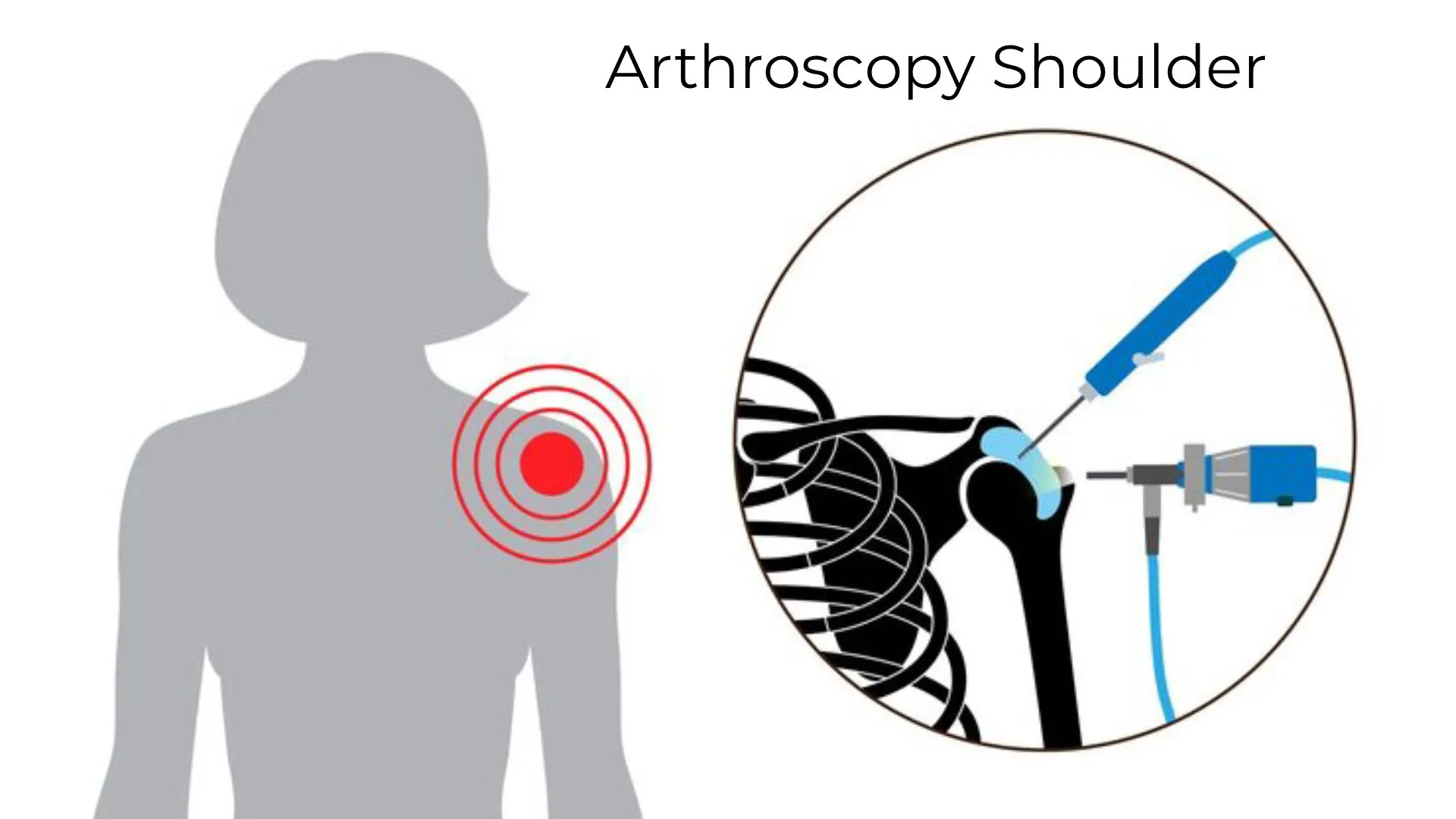
- Arthroscopic capsular release: Through small keyhole cuts, the surgeon divides the tight parts of the capsule while viewing the joint on a screen
Both are followed by early physiotherapy, and good results are common. They are not first-line options, and they carry their own risks, which is why a trial of non-surgical care comes first.
Frozen Shoulder With Diabetes: What Changes?
If you have diabetes, expect these differences:
- The condition is more common and often more severe
- Both shoulders may be affected, sometimes at different times
- Recovery can take longer
- Blood sugar control matters, since high sugar is linked to worse stiffness and steroid injections can push readings up
- Physiotherapy should be continued steadily, because stiffness can return quickly if you stop
Recovery: What Can You Realistically Expect?
- Many people notice pain easing within weeks of starting a matched plan
- Motion usually improves in steps over months, not days
- A full course often lasts 12 to 24 months, even with treatment
- Most people regain enough movement for everyday life and work
- A small loss of end-range motion can remain, especially in the last degrees of overhead reach or outward rotation
Consistency is the biggest factor you control. A daily 10 minute routine beats an occasional hour.
How Long Does It Take to Recover With and Without Treatment?
| Approach | What to Expect |
|---|---|
| No treatment | Gradual recovery, often 1 to 3 years, with prolonged pain and stiffness |
| Stage-matched physiotherapy and medicines | Better comfort and steady gains, typically over 6 to 18 months |
| Plus image-guided injection or hydrodilatation | Quicker pain relief and an easier path to exercise in selected patients |
| Surgery for resistant cases | Faster gain in motion after release, followed by rehab |
These are general ranges, not guarantees.
When to See an Orthopedic Specialist
Please book an assessment if:
- Shoulder pain and stiffness have lasted more than 3 to 4 weeks
- You cannot lift your arm or turn it outward
- Night pain stops you from sleeping
- You have diabetes and a new stiff shoulder
- You have fever, redness, a recent fall with severe pain, chest pain or breathlessness with arm pain, which need urgent attention instead
Early treatment is simpler, less painful and often shorter than treatment started after the shoulder is fully frozen.
Frozen Shoulder Treatment With Dr. Nitin N Sunku in Bengaluru
Dr. Nitin N Sunku is a fellowship-trained arthroscopy and sports medicine specialist who follows a conservative-first approach. Treatment starts with an accurate diagnosis, staging of your shoulder, and a written plan covering exercises, injections where appropriate, and a clear point at which surgery would be discussed.
- Condition page: Frozen shoulder treatment in Bangalore
- Shoulder services: Shoulder and rotator cuff care
- Attibele clinic: Orthopedic doctor in Attibele
- HSR Layout clinic: Orthopedic doctor in HSR Layout
- Insurance support: Cashless and insurance guidance
To book a consultation, use the contact page or call +91-9980031006.
Frequently Asked Questions
Can frozen shoulder be cured without surgery in India?
Yes, in most people. Stage-matched physiotherapy, pain control, and image-guided injections or hydrodilatation where needed can restore useful movement without an operation.
What is the fastest way to treat frozen shoulder?
No method is instant. In selected patients, an image-guided injection or hydrodilatation followed by physiotherapy can speed pain relief and make exercise easier, but the capsule still needs time and regular movement to loosen.
How long does frozen shoulder take to heal without surgery?
Commonly 12 to 24 months overall, and sometimes longer, especially with diabetes. Good treatment shortens the painful phase and improves function along the way.
Which exercises are best for frozen shoulder?
Gentle pendulum swings, table slides, wand-assisted external rotation and towel stretches, done in a comfortable range once or twice daily. The best set depends on your stage.
Does a steroid injection cure frozen shoulder?
No. It reduces inflammation and pain for a few weeks, which helps rehab, but it does not remove the underlying capsule tightness.
What is hydrodilatation for frozen shoulder?
It is a day-care procedure where fluid is injected into the joint under imaging to stretch the tight capsule. It is followed by physiotherapy.
Is massage good for frozen shoulder?
Gentle massage and heat may relax surrounding muscles, but forceful massage or manipulation by untrained people can harm the shoulder and is not advised.
Can frozen shoulder come back?
It rarely returns in the same shoulder, but the other shoulder can be affected later, particularly in people with diabetes.
Is frozen shoulder related to diabetes?
Yes. Frozen shoulder is more common in people with diabetes and often more severe, so a new stiff shoulder is a reason to check blood sugar.
When should I consider surgery for frozen shoulder?
When pain and stiffness persist despite roughly 6 to 12 months of proper non-surgical treatment and daily life is still limited.
What should I avoid with a frozen shoulder?
Avoid wearing a sling for long periods, forceful stretching into sharp pain, heavy overhead lifting, and untrained manipulation.
How much does frozen shoulder treatment cost in India?
Cost depends on the plan: consultation, physiotherapy sessions, injections or hydrodilatation, hospital setting and insurance. Ask for an itemised estimate during your visit.
Key Takeaways
- Frozen shoulder is a capsule problem, and most people recover without surgery.
- Treatment should match the stage: calm pain first, then build motion.
- Image-guided injections and hydrodilatation help selected patients, but physiotherapy does the long-term work.
- Diabetes changes the picture and calls for blood sugar control.
- Surgery is for resistant cases after many months of proper care.
Disclaimer: This article is for education and does not replace a medical examination. Please consult a qualified orthopedic specialist for your own shoulder. External references: patient information on adhesive capsulitis from AAOS OrthoInfo, NHS and Mayo Clinic, and published reviews on hydrodilatation and corticosteroid injection for adhesive capsulitis (PubMed).

About the Author
Dr. Nitin N Sunku
MBBS, MS (Orthopedics), Fellowship in Arthroscopy & Sports Medicine
Dr. Nitin N Sunku is a Consultant Orthopedic & Sports Medicine Surgeon with over 10 years of focused practice in Bengaluru. He serves as the Team Doctor for Bengaluru FC and consults at Raghava Multispeciality Hospital (Attibele) and Health Nest Hospital (HSR Layout). His clinical interests include arthroscopy, ligament & meniscus care, regenerative orthopedic medicine, ultrasound-guided injections, and joint replacement.
Experiencing symptoms?
Don't let pain hold you back. Schedule a comprehensive evaluation with Dr. Nitin today.
Book Appointment