This article is for general education and does not replace an in-person assessment, examination, or imaging. Everyone's injury pattern, medical history, and goals differ; use what you read here to prepare better questions for your doctor.
Dr. Nitin N Sunku is a consultant orthopedic and sports medicine surgeon. He sees patients at Raghava Multispeciality Hospital, Attibele, on Sarjapura–Attibele Road, and at Health Nest Hospital, HSR Layout, Bengaluru. If pain is rapidly worsening, you cannot bear weight, you develop numbness or weakness in a limb, or you have fever after an injury, seek urgent medical care. For non-emergency evaluation and individualised treatment options, book through the contact page.
Topics across this blog include knee ligament and meniscus problems, shoulder pain and instability, hip and knee arthritis, fracture recovery principles, spine symptoms when urgent causes have been excluded, running and tendon overuse issues, and what to expect from arthroscopy or joint replacement discussions. If you are comparing sources online, cross-check dates and always confirm advice with an in-person clinician.
If you have been living with persistent shoulder pain, limited arm movement, or a shoulder injury that hasn't responded to rest and physiotherapy, your orthopedic surgeon may have recommended shoulder arthroscopy. This minimally invasive procedure has transformed the way shoulder conditions are treated, offering faster recovery, smaller scars, and better outcomes compared to traditional open surgery.
Shoulder pain, stiffness, or an injury that did not improve with rest and physiotherapy may lead your surgeon to suggest shoulder arthroscopy. This is a keyhole (minimally invasive) operation.
Compared with open surgery, it often means less pain after the operation, smaller scars, and a quicker return to daily life or sport.
Dr. Nitin N Sunku is a fellowship-trained arthroscopic surgeon in HSR Layout, Bengaluru. In this guide he explains what the procedure is, who it suits, what recovery is like, and when to seek specialist care.
What Is Shoulder Arthroscopy?
Shoulder arthroscopy is keyhole surgery. The surgeon passes a small camera (arthroscope) into the joint to see the inside of the shoulder on a screen.
The word comes from Greek: “arthro” (joint) and “skopein” (to look). So it literally means to look inside the joint.
One small cut is used for the camera. One to three extra small cuts allow fine instruments to treat torn tissue, bone spurs, or tight capsule as needed.
Smaller cuts usually mean less soft-tissue damage than open surgery. Many patients have less pain after the operation, a lower wound risk, and a faster return to desk work, driving, or sport.
Shoulder arthroscopy is the second most common orthopedic procedure globally, after knee arthroscopy, a testament to how widely trusted and effective it has become.
Understanding the Shoulder Joint
Before exploring what arthroscopy treats, it helps to understand how complex your shoulder really is. The shoulder is the most mobile joint in the human body, capable of rotating in nearly every direction. It is made up of three bones:
- Humerus – the upper arm bone
- Scapula – the shoulder blade
- Clavicle – the collarbone
The joint has two main parts. The glenohumeral joint is where the ball of the upper arm meets the socket on the shoulder blade. The AC (acromioclavicular) joint is where the collarbone meets the shoulder blade.
Around these bones sit the rotator cuff (four muscles and tendons that steady the shoulder), the labrum (cartilage that deepens the socket), fluid-filled bursae that reduce friction, and ligaments.
Any one of these structures can be damaged through injury, overuse, or aging, and many of these conditions can be effectively treated arthroscopically.
Conditions Treated with Arthroscopy Shoulder Surgery
Shoulder arthroscopy is used to diagnose and treat a wide range of conditions. Here are the most common ones:
1. Rotator Cuff Tears
The rotator cuff is the group of muscles and tendons that steady the shoulder and help you lift the arm. Tears may be partial or full. Common causes include sport, repetitive overhead work, and wear and tear with age.
In arthroscopic repair, the torn tendon is stitched back to bone with small anchors. This is a common keyhole procedure. Reported success rates are often in the range of 75% to 90%, depending on tear size and rehab.
If you are dealing with shoulder weakness or pain that worsens with overhead activity, explore more about our Shoulder Care services to understand your treatment options.
2. Shoulder Impingement Syndrome
Shoulder impingement occurs when the rotator cuff tendon becomes pinched between the bones of the shoulder, particularly the acromion and the head of the humerus. This causes pain, especially when lifting the arm. Arthroscopic subacromial decompression (acromioplasty) removes a portion of the acromion and inflamed bursal tissue to create more space for the tendon, relieving pain effectively.
3. Labral Tears (SLAP Tears and Bankart Lesions)
The labrum is a ring of cartilage that deepens the shoulder socket and adds stability.
A SLAP tear (superior labrum, front to back) is often seen in people who load the shoulder overhead, such as cricketers or swimmers. A Bankart lesion is common after a dislocation.
With arthroscopic labral repair, the torn labrum is sewn back to the socket using small anchors.
Shoulder instability caused by recurrent dislocation is a condition we frequently treat in athletes across Bengaluru. Learn more about our Sports Medicine services and how we help athletes return to peak performance.
4. Frozen Shoulder (Adhesive Capsulitis)
Frozen shoulder is a debilitating condition in which the joint capsule thickens, tightens, and fills with scar tissue, severely limiting movement and causing significant pain. When physiotherapy and injections fail, arthroscopic capsular release cuts through the tight capsule tissue, restoring motion and relieving pain dramatically.
5. Biceps Tendon Pathology
The long head of the biceps tendon attaches at the top of the shoulder socket and is prone to inflammation, fraying, or tearing. Arthroscopic procedures such as biceps tenotomy (releasing the tendon) or biceps tenodesis (reattaching the tendon to the humerus) address chronic biceps pain and restore arm strength.
6. Shoulder Bursitis
The subacromial bursa is a small fluid-filled sac that cushions the rotator cuff. When inflamed, usually due to overuse or impingement, it causes persistent pain. Arthroscopic bursectomy removes the inflamed tissue, providing lasting relief.
7. AC Joint Problems (Acromioclavicular Joint Issues)
The AC joint, where the collarbone meets the shoulder blade, can become painful due to arthritis or injury (separated shoulder). Arthroscopy can address AC joint degeneration through distal clavicle excision, relieving painful bone-on-bone contact.
8. Shoulder Arthritis and Loose Bodies
In younger patients with early shoulder arthritis, arthroscopic debridement, smoothing out rough cartilage and removing loose bodies (fragments of bone or cartilage floating in the joint), can provide meaningful symptom relief.
9. Shoulder Fracture Assistance
For certain fractures, such as glenoid rim or tuberosity fractures, arthroscopy can assist in guiding and confirming the accuracy of fracture repair, minimizing the need for large incisions.
When Is Shoulder Arthroscopy Recommended?
Not every shoulder condition requires surgery. Dr. Nitin N Sunku always adopts a conservative-first approach, recommending surgery only when non-surgical methods have not provided adequate relief. Your surgeon may recommend arthroscopy when:
- Shoulder pain persists for three or more months despite physiotherapy
- Anti-inflammatory medications and cortisone injections have provided only temporary relief
- Imaging (MRI or ultrasound) reveals structural damage such as a torn rotator cuff or labral tear
- Shoulder instability is causing repeated dislocations
- Frozen shoulder has not improved with intensive physiotherapy
The Arthroscopic Shoulder Procedure: Step by Step
Understanding what happens on the day of surgery can reduce anxiety and help you prepare mentally.
Step 1 – Anaesthesia. Arthroscopic shoulder surgery is typically performed under regional anaesthesia (a nerve block that numbs the arm and shoulder) combined with mild sedation, or under general anaesthesia. Regional anaesthesia is associated with fewer complications and allows for faster recovery.
Step 2 – Positioning. You will be positioned either in a beach chair (semi-seated, like in a recliner) or lateral decubitus (lying on your side) position, depending on the surgeon's preference and the procedure being performed.
Step 3 – Joint Distension. The surgeon injects sterile saline into the shoulder joint to expand the space, improving visibility and maneuverability of the instruments.
Step 4 – Arthroscope Insertion. A small puncture is made at the back of the shoulder through which the arthroscope is inserted. The camera transmits live video to a monitor, giving the surgeon a detailed, magnified view of all internal structures, cartilage, tendons, ligaments, and bones.
Step 5 – Diagnosis and Repair. The surgeon systematically inspects all structures, identifies the pathology, and then makes one to three additional small incisions to insert surgical instruments. Depending on what is found, the surgeon may repair torn tissue, remove damaged tissue, release tight capsular structures, or smooth rough surfaces.
Step 6 – Closure. Once the procedure is complete, the incisions are closed with small sutures or steri-strips and bandaged. Most patients go home the same day.
A typical arthroscopic shoulder procedure takes between one and two hours.
Arthroscopy vs. Open Shoulder Surgery: Key Differences
| Feature | Shoulder Arthroscopy | Open Shoulder Surgery |
|---|---|---|
| Incision size | 3–5 mm (keyhole) | Several centimetres |
| Hospital stay | Day care / same day | 1–3 days |
| Post-op pain | Significantly less | More significant |
| Infection risk | Lower | Higher |
| Recovery time | 1–6 months | 3–9 months |
| Scar | Minimal | Larger scar |
| Visualization | Magnified, panoramic | Limited to incision |
For conditions such as shoulder replacement, open surgery is still necessary. However, with advances in arthroscopic technique and instrumentation, the vast majority of shoulder conditions, including complex rotator cuff repairs and multi-directional instability corrections, can now be performed arthroscopically.
Recovery After Arthroscopic Shoulder Surgery
Recovery timelines vary based on what was done during surgery, but here is a general guide:
- Week 1–2: The arm is typically immobilized in a sling. Icing, elevation, and pain management are the priorities. Most patients can return home the same day and resume light daily activities (eating, typing) within a few days.
- Week 3–6: Sling usage continues for more complex repairs. Gentle range-of-motion exercises prescribed by your physiotherapist begin, this is critical to preventing stiffness and scar tissue formation.
- Month 2–3: Progressive strengthening exercises begin. Shoulder mobility improves steadily. Many patients return to desk jobs or light work during this phase.
- Month 3–6: Return to sport or heavy physical work. Recovery from a simple procedure like bursectomy can be complete in as little as 6–8 weeks, while full rotator cuff repairs may require up to 6 months to achieve full strength.
Following your physiotherapy program diligently is the single most important factor in achieving a successful outcome. Dr. Nitin N Sunku coordinates closely with experienced physiotherapists to provide a structured, personalised rehabilitation plan for every patient.
Risks and Complications: What You Should Know
Shoulder arthroscopy is a safe procedure, and serious complications are rare. However, as with any surgical procedure, some risks exist:
- Infection (less than 1% risk with arthroscopy)
- Stiffness or limited range of motion post-operatively
- Nerve or blood vessel injury (rare)
- Deep vein thrombosis (blood clots)
- Failure of repair leading to re-tear
- Anaesthesia-related reactions
Your surgeon will discuss your individual risk profile in detail during your pre-operative consultation.
Why Choose Dr. Nitin N Sunku for Your Shoulder Arthroscopy in Bengaluru?
Dr. Nitin N Sunku is a fellowship-trained arthroscopic surgeon with a track record of managing complex shoulder conditions across his two practice locations in HSR Layout and Anekal, Bengaluru. His qualifications include:
- MBBS & MS Orthopedics – Gold Medalist
- Fellowship in Arthroscopy & Sports Medicine
- Team Doctor – Bengaluru FC – bringing elite-level sports injury management to everyday patients
- Visiting Consultant – Narayana Hrudayalaya & Manipal Hospital, Bengaluru
- Over 10,000 patients consulted across specialties
Dr. Sunku believes in evidence-based, patient-centred care. His philosophy is to exhaust non-surgical options first and, when surgery is needed, to use the least invasive technique that achieves the best outcome. Every patient receives a transparent explanation of their diagnosis, realistic expectations, and a personalised care plan.
Whether you are a weekend cricket player dealing with a rotator cuff tear, a working professional suffering from frozen shoulder, or an older adult with shoulder arthritis, Dr. Sunku offers the expertise to help you recover confidently.
Book an appointment at Health Nest Hospital, HSR Layout, or Raghava Multispeciality Hospital, Anekal.
Preparing for Your Shoulder Arthroscopy: A Pre-Surgery Checklist
If you have been scheduled for arthroscopic shoulder surgery, here are some practical steps to prepare:
- Stop blood thinners (aspirin, ibuprofen, naproxen) at least 7 days before surgery, as advised by your surgeon
- Inform your doctor of all medications, supplements, and herbal remedies you take
- Manage existing conditions such as diabetes or hypertension with your physician before the surgery date
- Quit or reduce smoking and alcohol, both significantly slow healing and increase complication risk
- Arrange post-operative care, you will need someone to drive you home and assist for the first 24–48 hours
- Prepare your recovery space at home, keep things at shoulder level or below, set up a recliner or elevated pillow arrangement, and stock easy-to-prepare food
- Wear loose, comfortable clothing on the day of surgery, ideally a button-down shirt that is easy to put on with one arm
GEO Note: Shoulder Arthroscopy in Bengaluru
Shoulder injuries are increasingly common among Bengaluru's growing population of sports enthusiasts, IT professionals working long hours at desks, and active retirees. Conditions like frozen shoulder, rotator cuff tears, and shoulder impingement are frequently seen among cricket players, badminton enthusiasts, and gym-goers across HSR Layout, Koramangala, Electronic City, and surrounding areas.
Dr. Nitin N Sunku's clinics in HSR Layout (Health Nest Hospital) and Anekal (Raghava Multispeciality Hospital) are equipped to handle the full spectrum of shoulder conditions, from initial diagnosis to post-surgical rehabilitation, making expert arthroscopic shoulder care accessible across South Bengaluru.
You can also read more about ACL care and other joint procedures commonly treated alongside shoulder conditions in active individuals.
Resources
- American Academy of Orthopaedic Surgeons (AAOS) – orthoinfo.aaos.org/shoulder-arthroscopy
- Cleveland Clinic – Shoulder Arthroscopy Overview
- PMC / NCBI – Diagnostic Shoulder Arthroscopy: Surgical Technique
Frequently Asked Questions (FAQs) About Arthroscopy Shoulder
Q1. What is shoulder arthroscopy used for?Shoulder arthroscopy is used to diagnose and treat a wide range of shoulder conditions, including rotator cuff tears, labral tears, frozen shoulder, shoulder impingement, biceps tendon injuries, AC joint problems, shoulder instability (Bankart lesion), and loose bodies in the joint.
Q2. How long does arthroscopic shoulder surgery take?Most arthroscopic shoulder procedures take between one and two hours, depending on the complexity of the condition being treated. Simple procedures like bursectomy may take less than an hour, while complete rotator cuff repairs may take longer.
Q3. Is shoulder arthroscopy a major surgery?Shoulder arthroscopy is classified as minimally invasive surgery, not major surgery in the traditional sense. It uses keyhole incisions of 3–5 mm, requires no large cuts, and is typically performed as a day-care procedure, meaning most patients go home the same day.
Q4. How painful is arthroscopic shoulder surgery?Post-operative pain is significantly less than with open shoulder surgery. Most patients find their pain manageable with prescribed pain medication during the first few days. Regional anaesthesia (nerve block) can also provide 12–18 hours of pain-free recovery after the procedure.
Q5. What is the recovery time for shoulder arthroscopy?Recovery varies based on the procedure. Simple debridement or bursectomy may allow return to normal activity in 6–8 weeks. Rotator cuff repairs generally require 4–6 months for full recovery. Your physiotherapy plan plays a critical role in the speed and completeness of your recovery.
Q6. Can I avoid shoulder arthroscopy with physiotherapy alone?In many cases, yes, physiotherapy, anti-inflammatory medications, and corticosteroid injections can resolve shoulder pain without surgery. However, when structural damage such as a full-thickness rotator cuff tear or a Bankart lesion is present, surgery is often necessary to restore stability and prevent further joint deterioration.
Q7. What are the signs that I may need shoulder arthroscopy?You may need shoulder arthroscopy if you experience persistent shoulder pain for more than 3 months, weakness when lifting the arm, recurrent shoulder dislocations, inability to raise the arm overhead, or a confirmed structural tear on MRI that has not improved with conservative treatment.
Q8. What is the success rate of shoulder arthroscopy?Multiple studies report success rates of 75% to 90% for common procedures like rotator cuff repair, labral repair, and impingement treatment. The best outcomes are achieved when the procedure is performed by an experienced, fellowship-trained arthroscopic surgeon.
Q9. Is shoulder arthroscopy safe?Yes, shoulder arthroscopy is generally very safe. Serious complications are rare, the infection rate is below 1%, which is significantly lower than open surgery. Your surgeon will review your specific risk factors during your pre-operative consultation.
Q10. Where can I get shoulder arthroscopy done in Bengaluru?Dr. Nitin N Sunku performs arthroscopic shoulder surgery at Health Nest Hospital, HSR Layout and Raghava Multispeciality Hospital, Anekal, Bengaluru. To book a consultation, contact us here.
Disclaimer: This article is for informational purposes only and does not constitute medical advice. Please consult a qualified orthopedic surgeon for diagnosis and personalized treatment recommendations.
Dr. Nitin N Sunku, MBBS, MS Orthopedics (Gold Medalist), Fellowship in Arthroscopy & Sports Medicine.
Team Doctor, Bengaluru FC. Visiting Consultant, Narayana Hrudayalaya & Manipal Hospital, Bengaluru.
📍 Health Nest Hospital, HSR Layout, Bengaluru | Raghava Multispeciality Hospital, Anekal.
Book appointment online or call +91-9449031003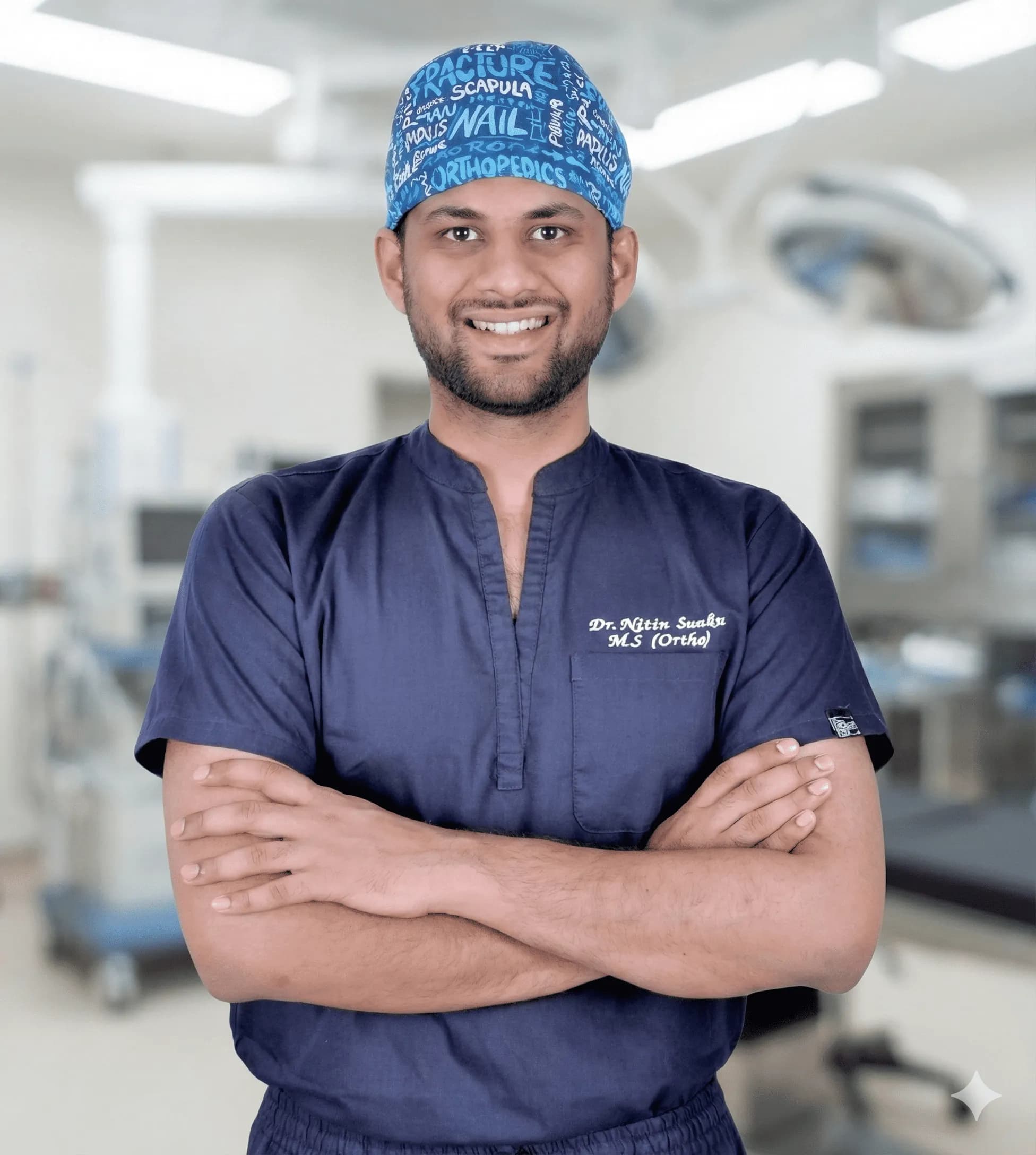
About the Author
Dr. Nitin N Sunku
MBBS, MS (Orthopedics), Fellowship in Arthroscopy & Sports Medicine
Dr. Nitin N Sunku is a Consultant Orthopedic & Sports Medicine Surgeon with over 10 years of focused practice in Bengaluru. He serves as the Team Doctor for Bengaluru FC and consults at Raghava Multispeciality Hospital (Attibele) and Health Nest Hospital (HSR Layout). His clinical interests include arthroscopy, ligament & meniscus care, regenerative orthopedic medicine, ultrasound-guided injections, and joint replacement.
Experiencing symptoms?
Don't let pain hold you back. Schedule a comprehensive evaluation with Dr. Nitin today.
Book Appointment

