This article is for general education and does not replace an in-person assessment, examination, or imaging. Everyone's injury pattern, medical history, and goals differ; use what you read here to prepare better questions for your doctor.
Dr. Nitin N Sunku is a consultant orthopedic and sports medicine surgeon. He sees patients at Raghava Multispeciality Hospital, Attibele, on Sarjapura–Attibele Road, and at Health Nest Hospital, HSR Layout, Bengaluru. If pain is rapidly worsening, you cannot bear weight, you develop numbness or weakness in a limb, or you have fever after an injury, seek urgent medical care. For non-emergency evaluation and individualised treatment options, book through the contact page.
Topics across this blog include knee ligament and meniscus problems, shoulder pain and instability, hip and knee arthritis, fracture recovery principles, spine symptoms when urgent causes have been excluded, running and tendon overuse issues, and what to expect from arthroscopy or joint replacement discussions. If you are comparing sources online, cross-check dates and always confirm advice with an in-person clinician.
Precision ultrasound-guided shoulder injections for rotator cuff, bursitis, frozen shoulder, AC joint, and biceps tendon problems.
Why the shoulder needs precision
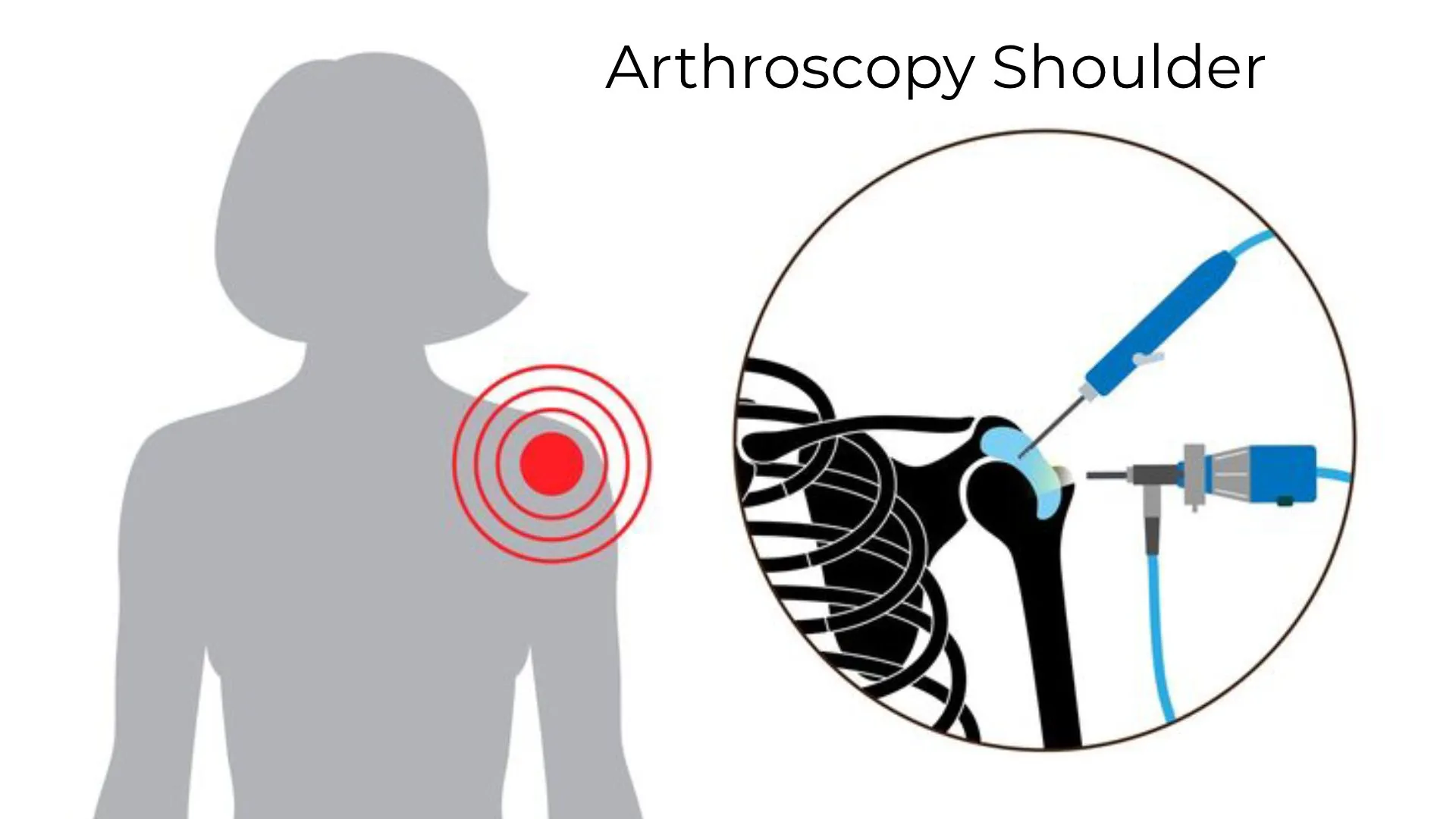
The shoulder is one of the most mobile joints in the body — and one of the most complex. Its small structures (subacromial bursa, rotator cuff tendons, biceps tendon sheath, AC joint) sit close to nerves and blood vessels.
This is the joint where image-guided injections shine the most: accurate placement transforms outcomes. Pair this guide with ultrasound-guided orthopedic injections for the technical details.
Common shoulder problems
- Rotator cuff tendinopathy — overuse pain in cuff tendons (supraspinatus most common)
- Subacromial bursitis — painful inflammation of the bursa beneath the acromion
- Adhesive capsulitis (frozen shoulder) — progressive stiffness and pain
- AC joint pain — pain at the top of the shoulder
- Biceps tendinopathy — pain at the front of the shoulder
- Calcific tendinopathy — calcium deposits in cuff tendons
- Selected partial cuff tears — non-operatively managed in many patients
- Post-surgery persistent pain — case-by-case evaluation
Treatment ladder
Step 1 — Diagnosis
History + physical exam + imaging (X-ray for joint, ultrasound for soft tissue, MRI in selected cases).
Step 2 — Foundation rehab
Targeted physiotherapy (cuff strengthening, scapular control) is essential and often sufficient for milder cases.
Step 3 — Image-guided injections
- Corticosteroid + local anaesthetic — for selected cases of acute, painful inflammation, used judiciously
- Hydrodilatation — for frozen shoulder, an image-guided procedure that distends the joint capsule
- GFC / regenerative injections — for chronic tendinopathy and selected partial tears
- Aspiration — for calcific tendinopathy
Step 4 — Combination protocols
Injection + structured rehab almost always outperforms either alone.
Step 5 — Surgical referral
Reserved for full-thickness cuff tears, structural problems, or shoulders that fail comprehensive non-surgical care.
What to expect during a shoulder injection visit
- Consultation — symptoms, prior treatments, imaging review
- Diagnostic ultrasound — live look at the cuff, bursa, and biceps
- Sterile preparation
- Local anaesthetic
- Real-time, image-guided injection to the correct target
- Brief observation and aftercare instructions
- Coordinated rehab plan
Total visit: 30–60 minutes.
Recovery and aftercare
- 24–72 hours: mild soreness is common
- Avoid heavy overhead lifting for 3–5 days unless told otherwise
- Begin or continue physiotherapy as advised
- Onset of relief: steroid relief within days; regenerative effect (GFC) builds over 2–6 weeks
Get assessed in Bengaluru
If you would like a structured, honest evaluation, you can book a consultation with Dr. Nitin N Sunku at Raghava Multispeciality Hospital, Attibele (Sarjapura–Attibele Road) or Health Nest Hospital, HSR Layout. The clinics serve patients from Attibele, Anekal, Bommasandra, Chandapura, Hosur Road, Electronic City, HSR Layout, Koramangala, BTM Layout, Sarjapur Road, and Bellandur. Bring any prior X-ray or MRI; the imaging is reviewed and explained in plain language during your visit.
This article is educational and does not replace a clinical examination. Treatment outcomes vary based on the severity of your condition, age, weight, lifestyle, and other medical factors. Severe joint degeneration may still require surgical management.
About the Author
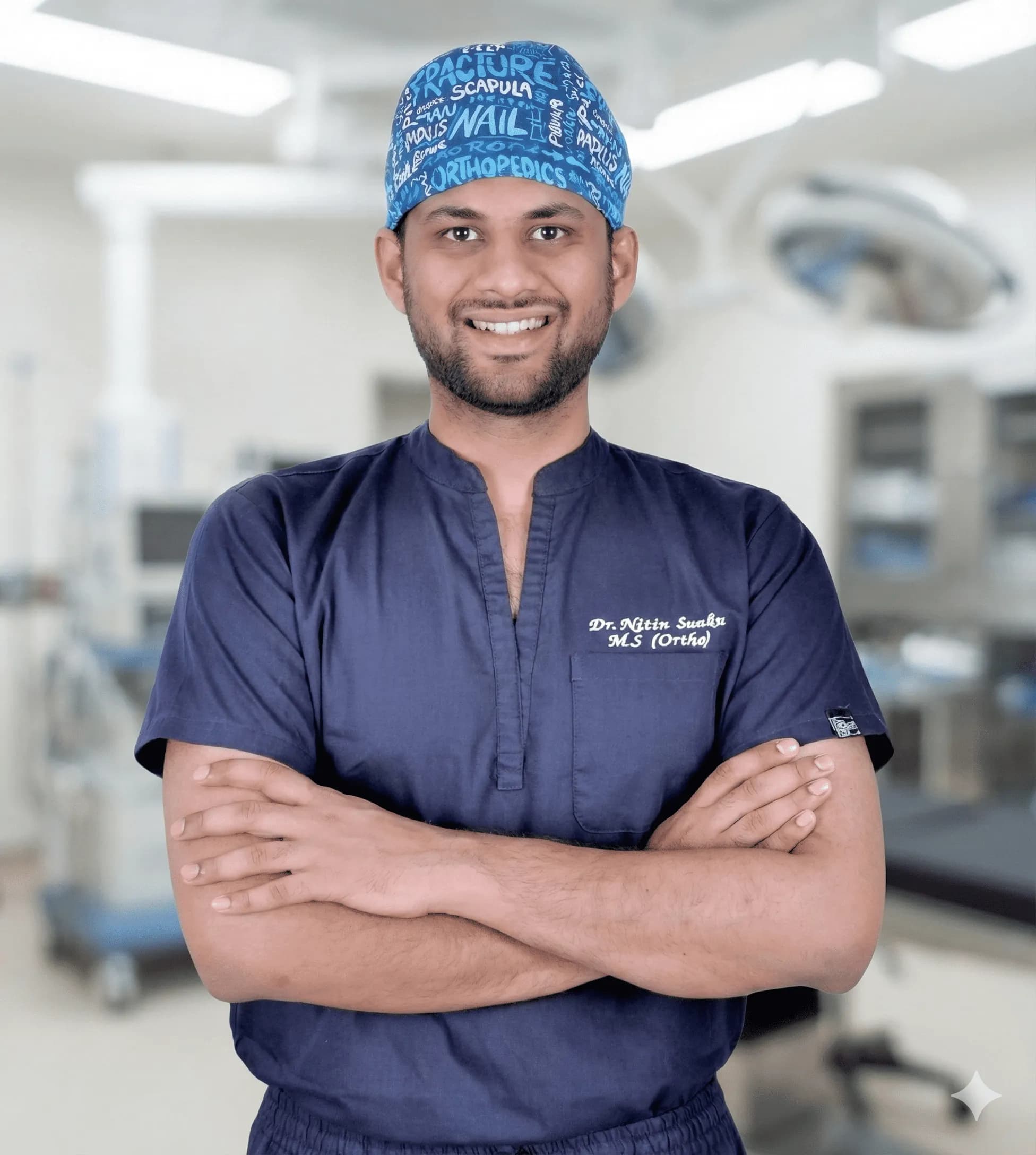
Dr. Nitin N Sunku
MBBS, MS (Orthopedics), Fellowship in Arthroscopy & Sports Medicine
Dr. Nitin N Sunku is a Consultant Orthopedic & Sports Medicine Surgeon with over 10 years of focused practice in Bengaluru. He serves as the Team Doctor for Bengaluru FC and consults at Raghava Multispeciality Hospital (Attibele) and Health Nest Hospital (HSR Layout). His clinical interests include arthroscopy, ligament & meniscus care, regenerative orthopedic medicine, ultrasound-guided injections, and joint replacement.
Experiencing symptoms?
Don't let pain hold you back. Schedule a comprehensive evaluation with Dr. Nitin today.
Book Appointment