This article is for general education and does not replace an in-person assessment, examination, or imaging. Everyone's injury pattern, medical history, and goals differ; use what you read here to prepare better questions for your doctor.
Dr. Nitin N Sunku is a consultant orthopedic and sports medicine surgeon. He sees patients at Raghava Multispeciality Hospital, Attibele, on Sarjapura–Attibele Road, and at Health Nest Hospital, HSR Layout, Bengaluru. If pain is rapidly worsening, you cannot bear weight, you develop numbness or weakness in a limb, or you have fever after an injury, seek urgent medical care. For non-emergency evaluation and individualised treatment options, book through the contact page.
Topics across this blog include knee ligament and meniscus problems, shoulder pain and instability, hip and knee arthritis, fracture recovery principles, spine symptoms when urgent causes have been excluded, running and tendon overuse issues, and what to expect from arthroscopy or joint replacement discussions. If you are comparing sources online, cross-check dates and always confirm advice with an in-person clinician.
A meniscus flap tear, sometimes called a parrot-beak tear because of its curved, beak-like shape, is one of the trickier knee injuries to manage. Unlike a straightforward cut, a flap tear leaves a loose piece of cartilage that can flip in and out of the joint, catching between the bones and triggering sudden pain, locking, or a feeling that the knee is about to give way. This guide covers exactly what causes a flap tear, how to recognize it, what repair actually involves, and a realistic week-by-week recovery timeline, so you know what to expect whether you are researching a new injury or preparing for surgery.
A meniscus flap tear, sometimes called a parrot-beak tear because of its curved, beak-like shape, is one of the trickier knee injuries to manage. Unlike a straightforward cut, a flap tear leaves a loose piece of cartilage that can flip in and out of the joint, catching between the bones and triggering sudden pain, locking, or a feeling that the knee is about to give way. This guide covers exactly what causes a flap tear, how to recognize it, what repair actually involves, and a realistic week-by-week recovery timeline, so you know what to expect whether you are researching a new injury or preparing for surgery.
If you have already been told you have a meniscus flap tear and want a deeper look at how it compares to other tear patterns, this related guide on meniscus tear repair, reconstruction, and surgery options breaks down the decision-making process in more detail.
What Is a Meniscus Flap Tear?
Your knee has two C-shaped pieces of fibrocartilage called the menisci, one on the inner (medial) side and one on the outer (lateral) side. They sit between the thigh bone (femur) and shin bone (tibia), acting as shock absorbers, load distributors, and stabilizers every time you walk, run, squat, or twist.
A flap tear happens when part of the meniscus tears away from the main body but stays partially attached, forming a loose flap of tissue. Instead of lying flat and smooth, this flap can fold over itself and slip in and out of the joint space, especially during bending, twisting, or pivoting movements. This is what causes the classic catching or locking sensation that patients describe, and it is also what makes flap tears more consistently symptomatic than smaller or more stable tear patterns.
Flap tears most often develop in the avascular zone of the meniscus, the inner portion that has little to no direct blood supply. This detail matters enormously for treatment, since tissue without a good blood supply has a much lower chance of healing on its own or even after surgical repair, which is why many flap tears are treated with a partial meniscectomy (trimming the torn flap) rather than a repair.
Causes of a Meniscus Flap Tear
Meniscus flap tears generally fall into two broad categories, traumatic and degenerative, and understanding which one applies to you helps set realistic expectations for treatment and recovery.
Traumatic Causes
- A sudden twisting or pivoting motion while the foot is planted, common in football, basketball, badminton, and cricket
- Deep squatting under load, such as heavy gym training or manual labor involving repeated crouching
- A direct blow to the knee during a tackle, fall, or collision
- Rapid deceleration or change-of-direction movements in sport
Degenerative Causes
- Age-related thinning and weakening of the meniscal tissue, typically after age 40
- Repetitive high-flexion postures common in daily life in India, such as sitting cross-legged, squatting, or using floor-level toilets
- Pre-existing knee osteoarthritis, which makes the meniscus more brittle and prone to tearing even during minor movements
- Chronic instability from an old, untreated ligament injury such as an ACL tear, which places abnormal shearing stress on the meniscus over time
It is worth noting that a degenerative flap tear can occur from something as ordinary as standing up from a low chair or turning quickly while carrying groceries. Patients are often surprised that there was no dramatic injury moment, but this is actually a very typical presentation in people over 40.
Symptoms of a Meniscus Flap Tear
The symptoms of a flap tear often overlap with other meniscus injuries, but the mechanical, on-and-off nature of the symptoms is a distinguishing feature.
- Joint line pain, usually felt along the inner or outer edge of the knee depending on which meniscus is involved
- A catching or clicking sensation during bending or straightening
- Intermittent locking, where the knee briefly gets stuck and then releases as the flap flips back into position
- Swelling that develops within 24 to 48 hours of an acute injury, or gradually with a degenerative tear
- A feeling of the knee giving way, particularly during pivoting or descending stairs
- Stiffness after prolonged sitting, and difficulty fully straightening or deeply bending the knee
- Tenderness when pressing directly along the joint line
One important pattern to recognize is that symptoms can temporarily improve if the flap flips back into a less irritating position, only to flare up again days or weeks later. This on-again, off-again pattern sometimes delays diagnosis because patients assume the knee has healed. If you are also noticing outer knee pain specifically, this guide on anterolateral and lateral meniscus tears explains that presentation in more depth.
How a Meniscus Flap Tear Is Diagnosed
Diagnosis starts with a detailed history and physical examination. Your surgeon will typically assess:
- Mechanism of injury, whether it was a single traumatic event or gradual onset
- McMurray's test, which reproduces clicking or pain by rotating the knee while it is bent and extended
- Thessaly test, performed by weight-bearing on the affected leg while rotating the knee at a slight bend
- Joint line tenderness, checked by palpating along the meniscal margins
Imaging confirms the diagnosis and guides treatment planning. X-rays are usually done first to rule out fractures or significant arthritis, followed by an MRI, which has over 90 percent sensitivity for detecting meniscal tears and can clearly show the tear pattern, location, and which vascular zone is involved. In some cases where the MRI is inconclusive or the clinical picture does not match imaging, diagnostic arthroscopy allows direct visualization of the tear.
Treatment Options for a Meniscus Flap Tear
Not every flap tear requires surgery, but flap tears are more likely to need surgical treatment than simple, stable tears because the loose fragment continues to mechanically irritate the joint.
Conservative Management
Small, stable flap tears without significant mechanical symptoms may respond to the RICE protocol (rest, ice, compression, elevation), activity modification, anti-inflammatory medication, and a structured physiotherapy program focused on quadriceps and hamstring strengthening. This approach is more likely to succeed when the tear is small and located in the outer, better-vascularized zone.
Partial Meniscectomy
Because most flap tears occur in the avascular zone, a partial meniscectomy, where the torn and unstable flap is trimmed away arthroscopically while preserving as much healthy tissue as possible, is often the most practical option. Recovery is generally faster than repair since there is no biological healing of sutured tissue to wait for, but preserving less meniscal tissue does carry a higher long-term risk of early-onset knee osteoarthritis, which is why surgeons try to remove only the damaged portion.
Meniscus Repair
When the flap tear extends into the outer, well-vascularized red-red zone, or involves younger, active patients where tissue preservation is a priority, a repair using inside-out, outside-in, or all-inside suturing techniques may be attempted. Repair takes longer to heal biologically but offers better long-term joint protection.
The decision between repair and meniscectomy depends on tear location, tissue quality, patient age, activity level, and associated injuries such as a concurrent ACL tear. A qualified sports medicine surgeon will weigh these factors individually rather than applying a one-size-fits-all approach.
Meniscus Flap Tear Repair: What Happens During Surgery
Meniscus flap tear surgery is performed arthroscopy as a day-care or short-stay procedure under spinal or general anesthesia. (Wait, the user's text had: "performed arthroscopically as a day-care or short-stay procedure under spinal or general anesthesia", let's make sure it is exact! Let me restore "arthroscopically") performed arthroscopically as a day-care or short-stay procedure under spinal or general anesthesia. Through two or three small incisions, the surgeon inserts a camera and specialized instruments to directly visualize the tear pattern. Depending on the findings, the torn flap is either trimmed (meniscectomy) or sutured back into place (repair). The procedure typically takes 30 to 60 minutes, and most patients go home the same day with a knee brace, crutches, and a clear rehabilitation plan.
Meniscus Flap Tear Recovery Timeline
Recovery speed depends heavily on whether you had a meniscectomy or a repair, so the two paths diverge fairly early.
Weeks 1 to 2
Expect swelling, bruising, and discomfort managed with ice, elevation, and prescribed pain medication. Meniscectomy patients are usually allowed to bear weight as tolerated with crutches for support, while repair patients are typically kept on limited or protected weight-bearing to avoid stressing the sutured tissue. Physiotherapy begins early, focusing on gentle range-of-motion exercises and reducing swelling.
Weeks 2 to 6
Meniscectomy patients often progress quickly, frequently walking without crutches by weeks 2 to 3 and starting light strengthening work. Repair patients generally remain more cautious during this period, continuing brace use and avoiding deep bending to protect the healing suture line.
Weeks 6 to 12
By this stage, most meniscectomy patients are walking normally and resuming low-impact activity such as cycling or swimming. Repair patients are usually approaching the end of brace-wearing and beginning more functional strengthening, though deep squatting and pivoting remain restricted.
Months 3 to 6
This is the most pivotal window for repair patients, since biological healing of the sutured meniscus is completing during this time. Jogging on flat surfaces typically begins around months 3 to 4 for repairs, compared to weeks 4 to 6 for meniscectomy patients. Agility drills, lateral movement, and sport-specific training are introduced progressively, guided by functional strength testing rather than the calendar alone.
Beyond 6 Months
Full return to pivoting sports for repair patients often falls between months 5 and 9, particularly if a concurrent ACL reconstruction was also performed, which can extend the overall timeline to 9 to 12 months. For a broader look at how recovery windows are structured after knee surgery, see this week-by-week meniscus tear surgery recovery guide.
Factors That Influence Recovery Speed
- Tear location: Tears in the outer, vascularized zone heal faster after repair than those closer to the avascular center
- Age: Younger patients generally have better healing capacity
- Associated injuries: A combined ACL and meniscus flap tear significantly extends recovery, often to 9 to 12 months
- Pre-surgical fitness: Stronger quadriceps and hamstrings before surgery, sometimes called "pre-hab," correlate with faster post-surgical progress
- Physiotherapy compliance: This is consistently the single biggest modifiable factor in how quickly and completely patients recover
Do's and Don'ts During Meniscus Flap Tear Recovery
Do:
- Follow your surgeon's specific weight-bearing instructions exactly, since these differ significantly between repair and meniscectomy
- Elevate the knee above heart level in the first two weeks to control swelling
- Attend physiotherapy consistently, even once pain has settled
- Eat a protein-adequate diet (roughly 1.2 to 1.6 grams per kilogram of body weight) to support tissue healing
- Use crutches or a brace for as long as advised, even if the knee feels stable sooner than expected
Don't:
- Don't return to pivoting sports, deep squats, or floor-sitting positions before your surgeon and physiotherapist confirm you are ready
- Don't skip follow-up appointments, since your rehab plan may need adjustment based on how the tissue is actually healing
- Don't ignore new or worsening symptoms such as increased swelling, fever, or a locked knee that will not release
- Don't compare your timeline to someone else's recovery, since tear location, repair versus meniscectomy, and associated injuries all change the pace significantly
- Don't smoke or use nicotine products during healing, as this measurably slows tissue repair
If you are specifically dealing with a tear on the inner side of the knee, this dedicated guide on activities to avoid with a medial meniscus tear covers movement-specific precautions in more detail.
Can a Meniscus Flap Tear Heal Without Surgery?
Small, stable flap tears in the outer vascular zone occasionally settle with rest, activity modification, and physiotherapy, but true flap tears in the avascular center rarely heal on their own because there is minimal blood supply to support tissue repair. Additionally, because the flap continues to mechanically catch and irritate the joint, symptoms often persist or recur even when initial pain briefly improves. Most orthopedic surgeons recommend a trial of conservative management for 4 to 6 weeks in mild cases, but surgery becomes the more reliable option once mechanical symptoms like locking or repeated catching are present.
Long-Term Outlook and Preventing Future Problems
Preserving as much healthy meniscal tissue as possible is the guiding principle in modern treatment, since patients who lose significant meniscal tissue face a measurably higher risk of early-onset knee osteoarthritis over time. Once you have recovered, protecting your knee long term involves maintaining strong quadriceps and hamstring muscles, managing body weight to reduce joint load, avoiding repetitive deep-flexion positions where possible, and warming up properly before pivoting sports. Patients who have had a partial meniscectomy in particular benefit from ongoing strength maintenance, since the knee has slightly less natural shock absorption going forward.
Frequently Asked Questions
What is a meniscus flap tear?
A meniscus flap tear is a tear pattern where part of the meniscus separates from the main body but remains partially attached, creating a loose, flap-like piece of cartilage that can catch or lock inside the knee joint during movement.
Is a flap tear the same as a parrot-beak tear?
Yes, flap tears are often called parrot-beak tears because of the curved, beak-like shape the torn fragment takes on, and both terms describe the same underlying tear pattern.
Can a meniscus flap tear heal on its own?
Small, stable flap tears in the outer vascular zone occasionally improve with rest and physiotherapy, but most true flap tears sit in the avascular zone with little blood supply, making spontaneous healing unlikely, especially once locking or catching symptoms are present.
How long does recovery take after meniscus flap tear surgery?
Partial meniscectomy patients typically return to daily activity within 2 to 6 weeks and light sport by 6 to 12 weeks. Meniscus repair patients generally need 3 to 6 months for full biological healing, with a return to pivoting sports often between 5 and 9 months.
What is the difference between meniscectomy and repair for a flap tear?
Meniscectomy involves trimming away the torn, unstable portion of the meniscus and offers a faster recovery, while repair involves suturing the tissue back together and offers better long-term joint protection but requires a longer, more cautious rehabilitation period.
What happens if a meniscus flap tear is left untreated?
An untreated flap tear can continue to catch and irritate the joint surface, potentially leading to cartilage damage, recurrent locking episodes, and a faster progression toward knee osteoarthritis over time.
Can I walk with a meniscus flap tear?
Many patients can walk with a flap tear, though pain, catching, or intermittent locking often make walking uncomfortable, particularly on stairs, uneven ground, or during pivoting movements.
Final Thoughts
A meniscus flap tear is one of the more mechanically disruptive knee injuries because the loose fragment does not simply sit still, it moves, catches, and irritates the joint with everyday activity. Getting an accurate diagnosis early, understanding whether repair or meniscectomy is the right path for your specific tear, and committing fully to the physiotherapy plan afterward are the three factors that most reliably determine a good outcome.
If you are dealing with knee locking, catching, or persistent joint line pain and want a clear, individualized treatment plan, you can learn more about comprehensive knee osteoarthritis and joint care or book a consultation with Dr. Nitin N Sunku at Raghava Multispeciality Hospital, Attibele, or Health Nest Hospital, HSR Layout, Bengaluru.
This article is intended for general educational purposes and does not replace a personalized medical evaluation. Please consult an orthopedic surgeon for an accurate diagnosis and treatment plan specific to your knee.
Further reading: Meniscus Tear Causes, Symptoms, and Treatments – UPMC
About the Author
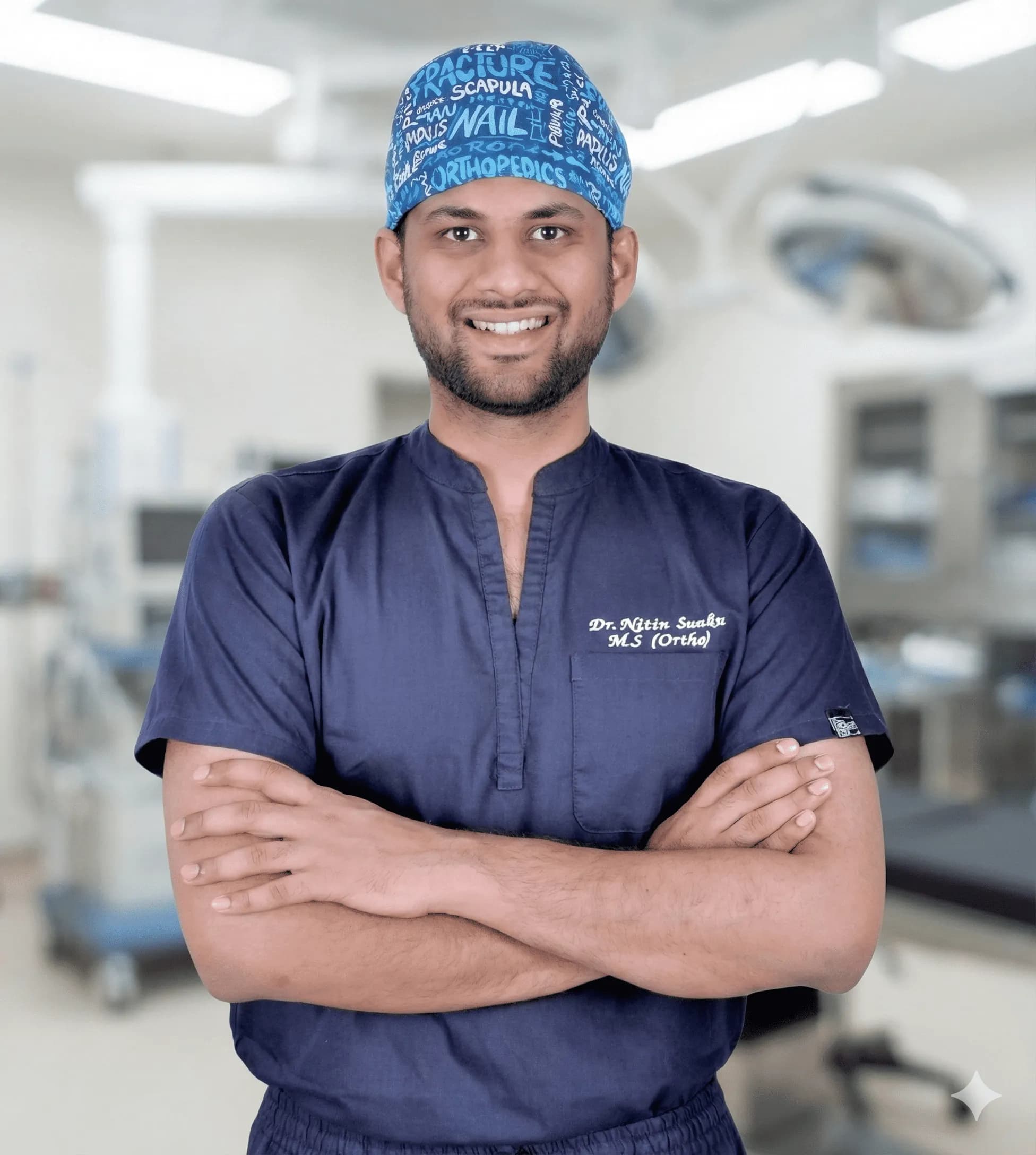
Dr. Nitin N Sunku
MBBS, MS (Orthopedics), Fellowship in Arthroscopy & Sports Medicine
Dr. Nitin N Sunku is a Consultant Orthopedic & Sports Medicine Surgeon with over 10 years of focused practice in Bengaluru. He serves as the Team Doctor for Bengaluru FC and consults at Raghava Multispeciality Hospital (Attibele) and Health Nest Hospital (HSR Layout). His clinical interests include arthroscopy, ligament & meniscus care, regenerative orthopedic medicine, ultrasound-guided injections, and joint replacement.
Experiencing symptoms?
Don't let pain hold you back. Schedule a comprehensive evaluation with Dr. Nitin today.
Book Appointment