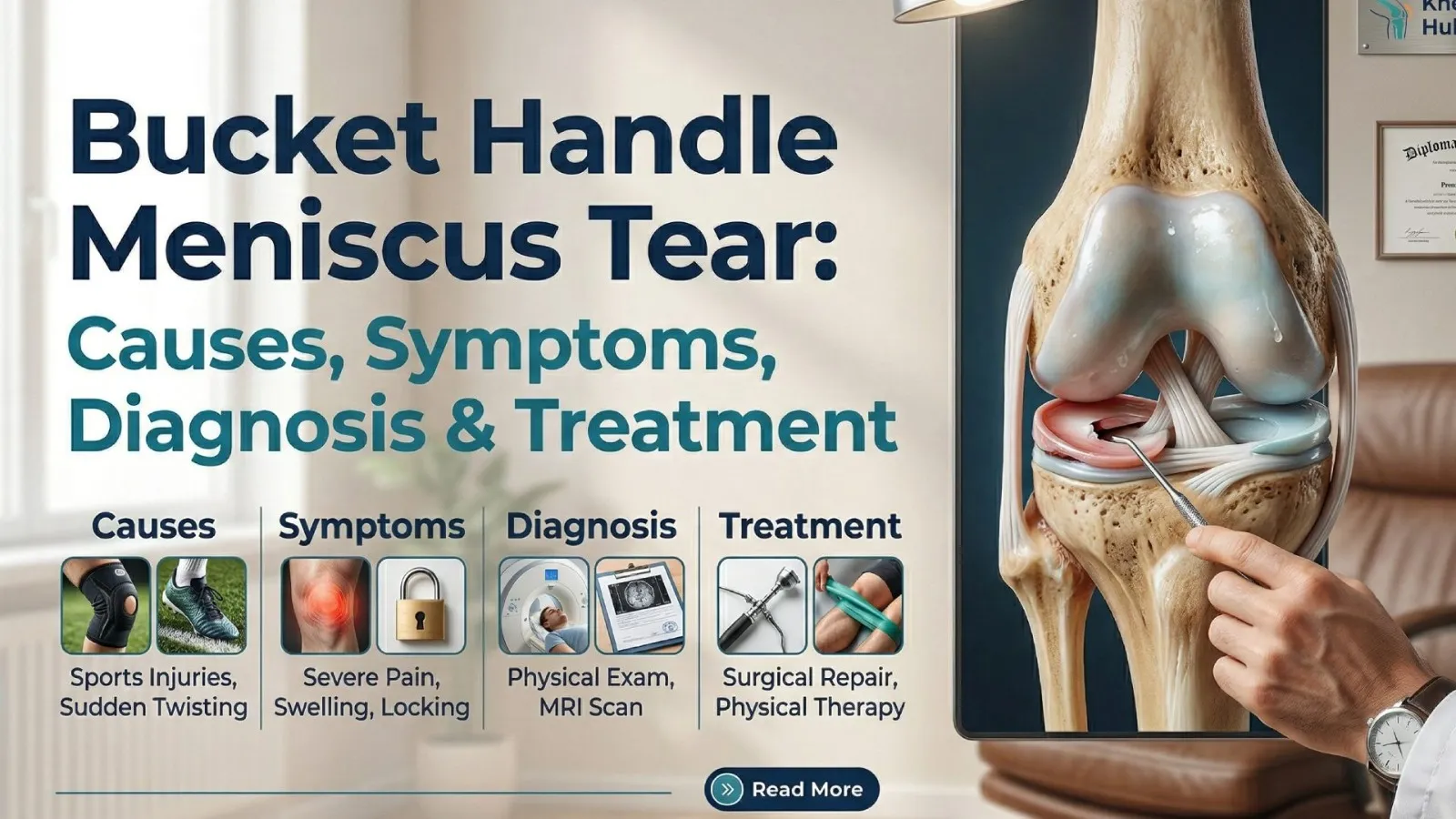
This article is for general education and does not replace an in-person assessment, examination, or imaging. Everyone's injury pattern, medical history, and goals differ; use what you read here to prepare better questions for your doctor.
Dr. Nitin N Sunku is a consultant orthopedic and sports medicine surgeon. He sees patients at Raghava Multispeciality Hospital, Attibele, on Sarjapura–Attibele Road, and at Health Nest Hospital, HSR Layout, Bengaluru. If pain is rapidly worsening, you cannot bear weight, you develop numbness or weakness in a limb, or you have fever after an injury, seek urgent medical care. For non-emergency evaluation and individualised treatment options, book through the contact page.
Topics across this blog include knee ligament and meniscus problems, shoulder pain and instability, hip and knee arthritis, fracture recovery principles, spine symptoms when urgent causes have been excluded, running and tendon overuse issues, and what to expect from arthroscopy or joint replacement discussions. If you are comparing sources online, cross-check dates and always confirm advice with an in-person clinician.
Meniscus tear surgery recovery time explained with a week-by-week guide covering healing stages, exercises, and recovery tips.
A meniscus tear can feel like the end of your active life. Whether you twisted your knee during a football match on Bengaluru's turf, stepped awkwardly while jogging on Cubbon Park's trails, or simply squatted wrong at the gym, the question that follows is almost always the same: How long will recovery take after meniscus tear surgery?
The honest answer: it depends. Recovery time after meniscus surgery ranges from as little as 4–6 weeks for a partial meniscectomy to 4–6 months or more for a meniscus repair. But knowing the difference between these procedures, what each phase of recovery looks like, and what you can do to speed things along — that knowledge can make all the difference.
In this guide, Dr. Nitin N Sunku — a fellowship-trained orthopedic and sports medicine specialist practising in HSR Layout and Attibele, Bengaluru — walks you through a realistic, evidence-based recovery roadmap tailored to Indian patients and activity levels.
Understanding the Meniscus and Why Surgery May Be Needed
Your knee has two menisci — the medial (inner) and lateral (outer) — each a C-shaped wedge of fibrocartilage that acts as a shock absorber, stabiliser, and load distributor between your femur (thigh bone) and tibia (shin bone). When this cartilage tears, it can cause pain, swelling, locking, and instability that prevents you from performing daily activities.
Not every meniscus tear requires surgery. Smaller, stable tears in the outer zone — which has a better blood supply — may respond to conservative management including rest, physiotherapy, and anti-inflammatory medication. However, tears that cause mechanical symptoms like locking or catching, tears in the inner avascular zone, bucket-handle tears, or injuries that fail to improve with non-surgical care often require operative intervention. If you are wondering whether your tear can heal without an operation, read: Can a Meniscus Tear Heal Without Surgery?
Types of Meniscus Surgery and How They Affect Recovery Time
The single most important factor that determines your recovery timeline is which surgical procedure is performed. There are three main options:
1. Partial Meniscectomy (Trimming)
In a partial meniscectomy, the damaged portion of the meniscus is arthroscopically removed, leaving the healthy tissue intact. This is the most commonly performed procedure for degenerative or complex tears that cannot be repaired.
- Return to desk work: 1–2 weeks
- Return to physical work / sports: 4–6 weeks
- Crutches: typically 1–2 weeks
2. Meniscus Repair (Stitching)
Meniscus repair involves suturing the torn edges back together and allowing the tissue to heal over time. It is preferred for younger, active patients with tears in the vascular zone because it preserves more of the meniscus and reduces long-term arthritis risk. However, the biological healing process takes significantly longer.
- Return to desk work: 4–6 weeks
- Return to full activity: 4–6 months
- Return to contact sports: 6–9 months
- Crutches: typically 4–6 weeks
3. Meniscus Transplant (Rare)
In cases where most of the meniscus has been removed and the patient is young, a cadaver meniscus transplant may be considered. Recovery can take 6–12 months and is not routinely available at every centre.
Dr. Nitin's Tip: "Preserving as much of the meniscus as possible is always the goal — especially in younger, active patients. A repaired meniscus protects your knee from arthritis far better than a removed one. The longer recovery is a worthwhile trade-off."
Meniscus Tear Surgery Recovery Time: Week-by-Week Timeline
| Phase | Timeline | Surgery Type | Key Milestones |
|---|---|---|---|
| Immediate | Days 1–7 | Both | Rest, ice, elevation, crutches |
| Early Recovery | Weeks 2–6 | Both | PT begins, swelling reduces |
| Intermediate | Weeks 6–12 | Both | Strength training, no high-impact |
| Late Recovery | 3–6 months | Repair | Return to daily activities |
| Full Return | 4–6 wks / 6 mos | Meniscectomy / Repair | Return to sport |
Detailed Phase-by-Phase Recovery Breakdown
Phase 1: Immediate Post-Op (Days 1–7)
You will typically go home the same day as your arthroscopic procedure. The knee will be swollen, painful, and wrapped in a compression bandage. Crutches are usually provided, and a knee brace may be fitted for repair patients.
What to focus on during this phase:
- RICE protocol: Rest, Ice (15–20 minutes every 2–3 hours), Compression, and Elevation
- Take prescribed pain medication as directed — do not wait for severe pain to set in
- Keep the wound dry and watch for signs of infection: redness, warmth, discharge, or fever
- Begin ankle pumps and gentle quadriceps activation exercises as instructed
- Avoid prolonged standing or walking beyond what is necessary
Phase 2: Early Recovery — Physiotherapy Begins (Weeks 2–6)
Physiotherapy typically commences within the first week after surgery. Early sessions focus on:
- Restoring full knee extension (straightening)
- Achieving 90-degree knee flexion (bending)
- Strengthening the quadriceps, hamstrings, and calf muscles
- Normalising gait (walking pattern)
- Reducing swelling through manual therapy and modalities
Meniscectomy patients will typically progress faster at this stage, often shedding crutches by weeks 2–3. Repair patients must avoid loading the knee in a bent position and may remain on crutches for the full 4–6 weeks. Consistent physiotherapy is critical.
Phase 3: Intermediate Recovery — Building Strength (Weeks 6–12)
By weeks 6–8, most meniscectomy patients are walking normally and can resume light activity. Meniscus repair patients are approaching the end of their brace-wearing period and beginning more functional movements.
Key activities during this phase:
- Stationary cycling — excellent for low-impact range-of-motion and strength
- Closed-chain exercises: squats, leg press, step-ups (within range limits)
- Proprioception and balance training to restore neuromuscular control
- Swimming (once wounds are fully healed)
Phase 4: Late Recovery — Return to Activity (3–6 Months)
For meniscus repair patients, months 3–6 are the most pivotal. Biological healing of the sutured cartilage is reaching completion, and the focus shifts to restoring sport-specific movement patterns and confidence.
- Jogging on flat surfaces begins around months 3–4 (repair) or weeks 4–6 (meniscectomy)
- Agility, lateral movement, and change-of-direction drills are introduced progressively
- Return to sport is based on functional testing, not just time
Factors That Influence Your Recovery Time
- Type and Location of the Tear: Tears in the outer (red) zone heal faster after repair.
- Age and Biological Healing Capacity: Younger patients generally heal faster.
- Associated Injuries: A combined ACL and meniscus tear significantly extends recovery time (9–12 months).
- Pre-operative Fitness: Better pre-hab leads to faster recovery.
- Compliance with Physiotherapy: Perhaps the single biggest modifiable factor.
- Body Weight: Excess weight places additional load on healing tissue.
Meniscus Surgery in Bengaluru: What Indian Patients Should Know
- Floor-sitting habits (cross-legged, squatting) should be avoided for 8–12 weeks post-repair.
- Many patients in Bengaluru return to active lifestyles including cricket, badminton, yoga, and running.
- Post-operative physiotherapy is available at both Health Nest Hospital, HSR Layout and Raghava Multispeciality Hospital, Attibele.
Warning Signs to Watch for During Recovery
- Sudden increase in pain or swelling
- Fever above 38.5°C
- Wound redness, warmth, or discharge
- Calf pain or redness (possible DVT)
- Knee locking return
Evidence-Based Tips to Speed Up Your Meniscus Recovery
- Start physiotherapy early.
- Elevate the knee above heart level to reduce swelling.
- Eat a protein-rich diet (1.2–1.6g per kg of body weight).
- Stay adequately hydrated.
- Sleep with the leg straight and elevated.
- Avoid long-term NSAIDs in repair patients (low-grade inflammation supports healing).
- Do your home exercises daily.
Frequently Asked Questions (FAQ)
How long does meniscus tear surgery recovery take?
Partial meniscectomy takes 4–6 weeks; repair takes 4–6 months for full recovery.
Can I walk after meniscus surgery?
Most meniscectomy patients walk day-of or next-day. Repair patients use crutches for 4–6 weeks.
Is meniscus repair or meniscectomy better?
Repair is preferred for younger patients as it preserves cartilage and reduces arthritis risk.
Can I sit cross-legged after meniscus surgery?
Avoid for 8–12 weeks post-repair to protect healing tissue.
About the Author
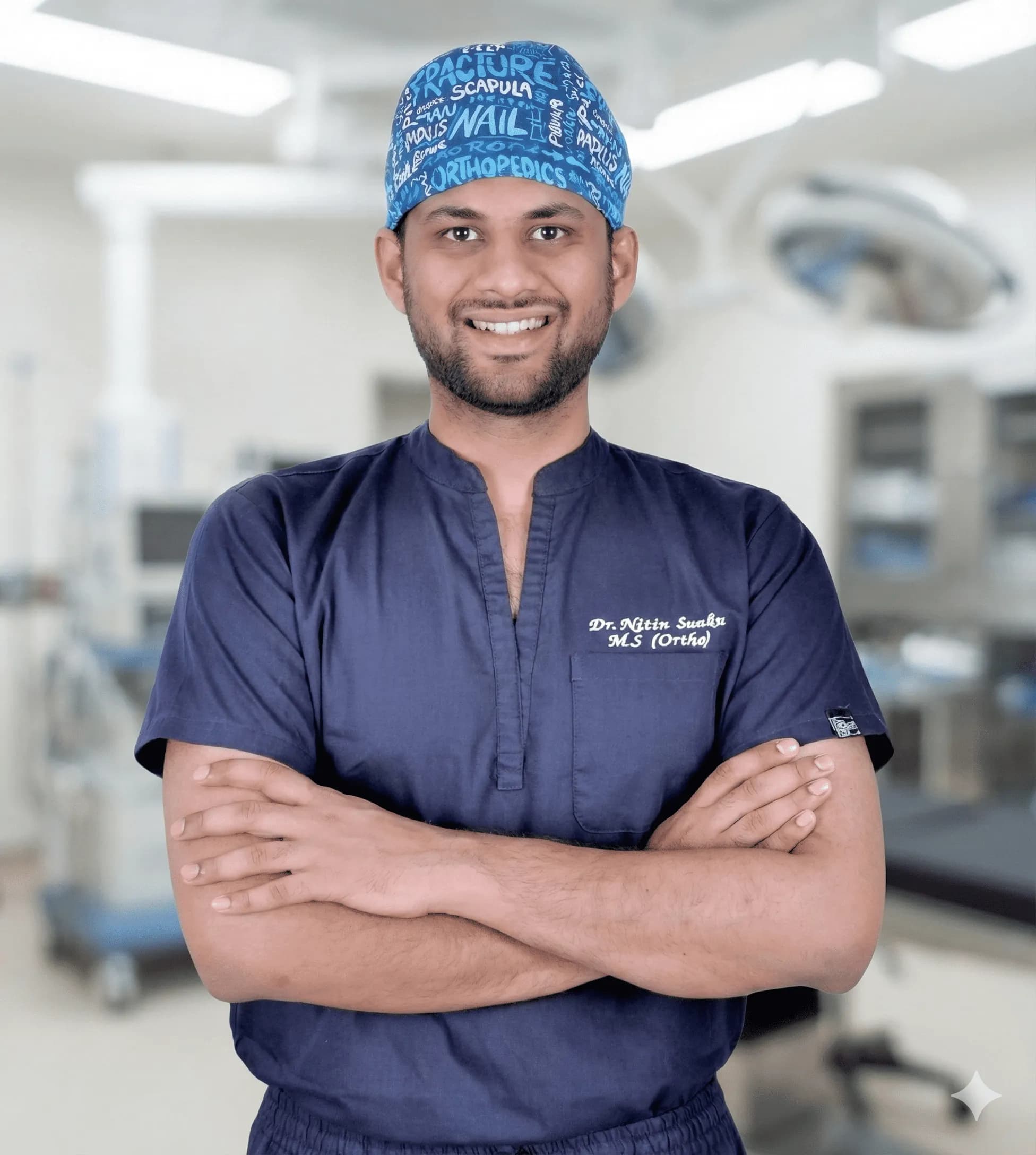
Dr. Nitin N Sunku
MBBS, MS (Orthopedics), Fellowship in Arthroscopy & Sports Medicine
Dr. Nitin N Sunku is a Consultant Orthopedic & Sports Medicine Surgeon with over 10 years of focused practice in Bengaluru. He serves as the Team Doctor for Bengaluru FC and consults at Raghava Multispeciality Hospital (Attibele) and Health Nest Hospital (HSR Layout). His clinical interests include arthroscopy, ligament & meniscus care, regenerative orthopedic medicine, ultrasound-guided injections, and joint replacement.
Experiencing symptoms?
Don't let pain hold you back. Schedule a comprehensive evaluation with Dr. Nitin today.
Book Appointment