This article is for general education and does not replace an in-person assessment, examination, or imaging. Everyone's injury pattern, medical history, and goals differ; use what you read here to prepare better questions for your doctor.
Dr. Nitin N Sunku is a consultant orthopedic and sports medicine surgeon. He sees patients at Raghava Multispeciality Hospital, Attibele, on Sarjapura–Attibele Road, and at Health Nest Hospital, HSR Layout, Bengaluru. If pain is rapidly worsening, you cannot bear weight, you develop numbness or weakness in a limb, or you have fever after an injury, seek urgent medical care. For non-emergency evaluation and individualised treatment options, book through the contact page.
Topics across this blog include knee ligament and meniscus problems, shoulder pain and instability, hip and knee arthritis, fracture recovery principles, spine symptoms when urgent causes have been excluded, running and tendon overuse issues, and what to expect from arthroscopy or joint replacement discussions. If you are comparing sources online, cross-check dates and always confirm advice with an in-person clinician.
A meniscus tear is a common knee injury that affects the cartilage acting as a cushion between your thigh bone and shin bone.
A meniscus tear is one of the most common knee injuries I treat. The meniscus is a C-shaped piece of cartilage that sits between your thigh bone (femur) and shin bone (tibia), acting as a shock absorber and helping to spread load evenly across the joint. Each knee has two — an inner (medial) and outer (lateral) meniscus.
The question patients ask most often is whether the tear can heal without surgery. The honest answer is: it depends. Whether a meniscus tear can heal on its own is determined chiefly by the type, size, location, and your activity demands — not by a single rule that applies to everyone.
Why Location Matters So Much
The meniscus has a limited blood supply. Only the outer third — sometimes called the "red zone" — receives enough blood to heal naturally. The inner two-thirds (the "white zone") has very little blood flow, so tears there rarely heal on their own.
- Tears in the outer red zone often have a genuine chance of healing with rest, physiotherapy, and activity modification.
- Tears in the inner white zone, and larger or complex tears, are far less likely to heal fully and may need surgical repair or trimming.
Types of Tears That Respond to Non-Surgical Care
Conservative (non-surgical) treatment is often successful for small, stable tears, degenerative tears in older adults, and partial tears where the knee is not locking or giving way. Many people in these groups return to normal activity without ever needing an operation.
What Non-Surgical Treatment Involves
If your tear is suitable for conservative management, the plan usually includes:
- RICE in the early phase — rest, ice, compression, and elevation to settle swelling
- Physiotherapy to strengthen the quadriceps, hamstrings, and hip muscles that support and protect the knee
- Activity modification — temporarily avoiding deep squatting, twisting, and high-impact loading
- Anti-inflammatory measures and, in selected cases, an ultrasound-guided injection to control pain
- A gradual return-to-activity programme once strength and control are restored
When Surgery Becomes the Better Option
Surgery — usually a minimally invasive arthroscopic repair or partial meniscectomy — is considered when:
- The knee locks, catches, or gives way
- Pain and swelling persist despite several weeks of dedicated physiotherapy
- The tear is large, displaced (such as a bucket-handle tear), or affects knee stability
- There is an associated ligament injury such as an ACL tear
Modern arthroscopy allows tears to be repaired through small incisions, preserving as much of the natural meniscus as possible — which is important for protecting the knee from early arthritis later in life.
The Bottom Line
Some meniscus tears heal well without surgery, while others do not — and trying to "push through" the wrong type of tear can cause further damage. A proper diagnosis, usually combining a clinical examination with an MRI, is the only reliable way to know which path is right for you. If you have ongoing knee pain, swelling, or instability, an evaluation with an orthopedic specialist in Bengaluru will protect your long-term knee health and prevent avoidable damage.
About the Author
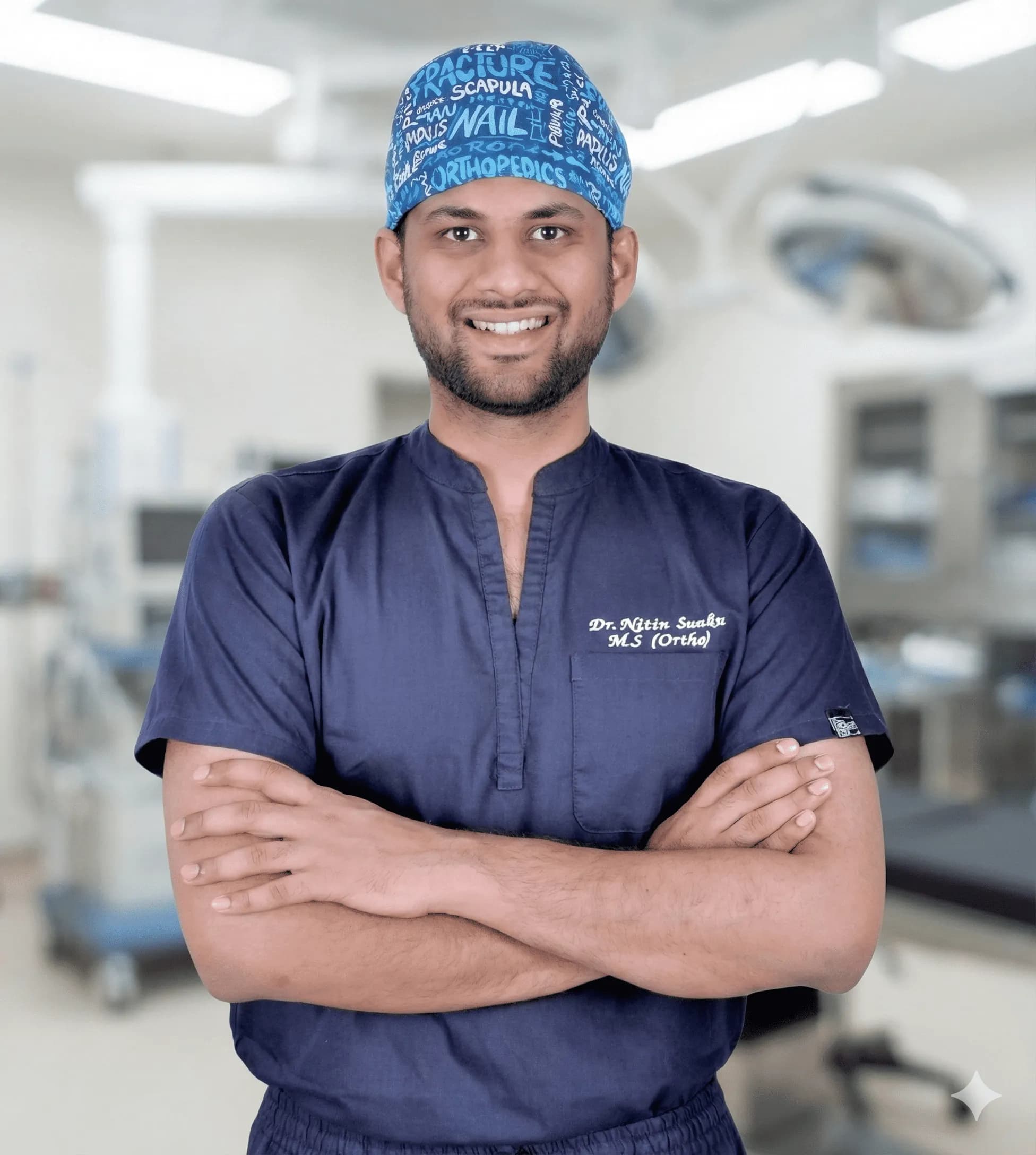
Dr. Nitin N Sunku
MBBS, MS (Orthopedics), Fellowship in Arthroscopy & Sports Medicine
Dr. Nitin N Sunku is a Consultant Orthopedic & Sports Medicine Surgeon with over 10 years of focused practice in Bengaluru. He serves as the Team Doctor for Bengaluru FC and consults at Raghava Multispeciality Hospital (Attibele) and Health Nest Hospital (HSR Layout). His clinical interests include arthroscopy, ligament & meniscus care, regenerative orthopedic medicine, ultrasound-guided injections, and joint replacement.
Experiencing symptoms?
Don't let pain hold you back. Schedule a comprehensive evaluation with Dr. Nitin today.
Book Appointment

