This article is for general education and does not replace an in-person assessment, examination, or imaging. Everyone's injury pattern, medical history, and goals differ; use what you read here to prepare better questions for your doctor.
Dr. Nitin N Sunku is a consultant orthopedic and sports medicine surgeon. He sees patients at Raghava Multispeciality Hospital, Attibele, on Sarjapura–Attibele Road, and at Health Nest Hospital, HSR Layout, Bengaluru. If pain is rapidly worsening, you cannot bear weight, you develop numbness or weakness in a limb, or you have fever after an injury, seek urgent medical care. For non-emergency evaluation and individualised treatment options, book through the contact page.
Topics across this blog include knee ligament and meniscus problems, shoulder pain and instability, hip and knee arthritis, fracture recovery principles, spine symptoms when urgent causes have been excluded, running and tendon overuse issues, and what to expect from arthroscopy or joint replacement discussions. If you are comparing sources online, cross-check dates and always confirm advice with an in-person clinician.
Knee arthroscopy is a minimally invasive surgical procedure that allows an orthopedic surgeon to see inside the knee joint using a small camera.
Knee arthroscopy is a minimally invasive surgical procedure that allows an orthopedic surgeon to look inside the knee joint using a small camera. It is one of the most commonly performed and trusted knee procedures worldwide, used both to diagnose problems precisely and to treat them in the same sitting.
This advanced technique addresses many knee problems through small "keyhole" incisions, which means less tissue damage, less pain, lower infection risk, and a faster recovery compared with traditional open surgery. Most arthroscopic knee procedures are performed as day-care or short-stay surgery.
How the Procedure Works
During arthroscopy, a thin tube containing a camera and light (the arthroscope) is inserted through a small incision, while sterile fluid gently expands the joint for a clear view. The surgeon watches a magnified, high-definition image of the inside of your knee on a screen and uses fine specialised instruments through one or two additional small incisions to repair or remove damaged tissue. The whole operation is usually carried out under spinal or general anaesthesia and often takes under an hour.
Conditions Knee Arthroscopy Can Treat
Knee arthroscopy is commonly recommended for a variety of conditions, including:
- Meniscus tears — repairing or trimming torn cartilage
- Damaged articular cartilage — smoothing or treating cartilage defects
- Loose fragments — removing loose pieces of bone or cartilage causing catching or locking
- ACL or PCL reconstruction — rebuilding torn knee ligaments
- Synovitis — treating an inflamed joint lining
- Infection or scar tissue — washing out the joint or releasing stiffness
When Is Knee Arthroscopy Needed?
Surgery is rarely the first step. Arthroscopy is usually considered when you have persistent knee pain, swelling, locking, catching, or instability that has not improved with non-surgical treatment such as physiotherapy, activity modification, and medication. It may also be recommended sooner when imaging clearly shows a mechanical problem — like a displaced meniscus tear or a torn ligament — that will not settle on its own.
Recovery and Rehabilitation
Recovery depends on what was done. After a simple procedure such as a partial meniscectomy, many patients walk the same day and return to desk work within one to two weeks. After a ligament reconstruction or meniscus repair, recovery is more gradual and structured physiotherapy over several months is essential to restore strength, motion, and confidence. Following your rehabilitation plan closely is the single biggest factor in a good long-term outcome.
What Makes Arthroscopy a Good Option
Because it preserves healthy tissue and avoids large incisions, arthroscopy typically means smaller scars, less post-operative pain, lower complication rates, and an earlier return to daily life and sport. Early, accurate treatment also helps protect the joint from further wear that can lead to arthritis.
If you have ongoing knee symptoms that are not improving, an evaluation with an experienced orthopedic surgeon will clarify whether arthroscopy is right for you. Early diagnosis and timely treatment help restore knee function and prevent further damage. Dr. Nitin N Sunku offers arthroscopic knee surgery at his clinics in Attibele and HSR Layout, Bengaluru.
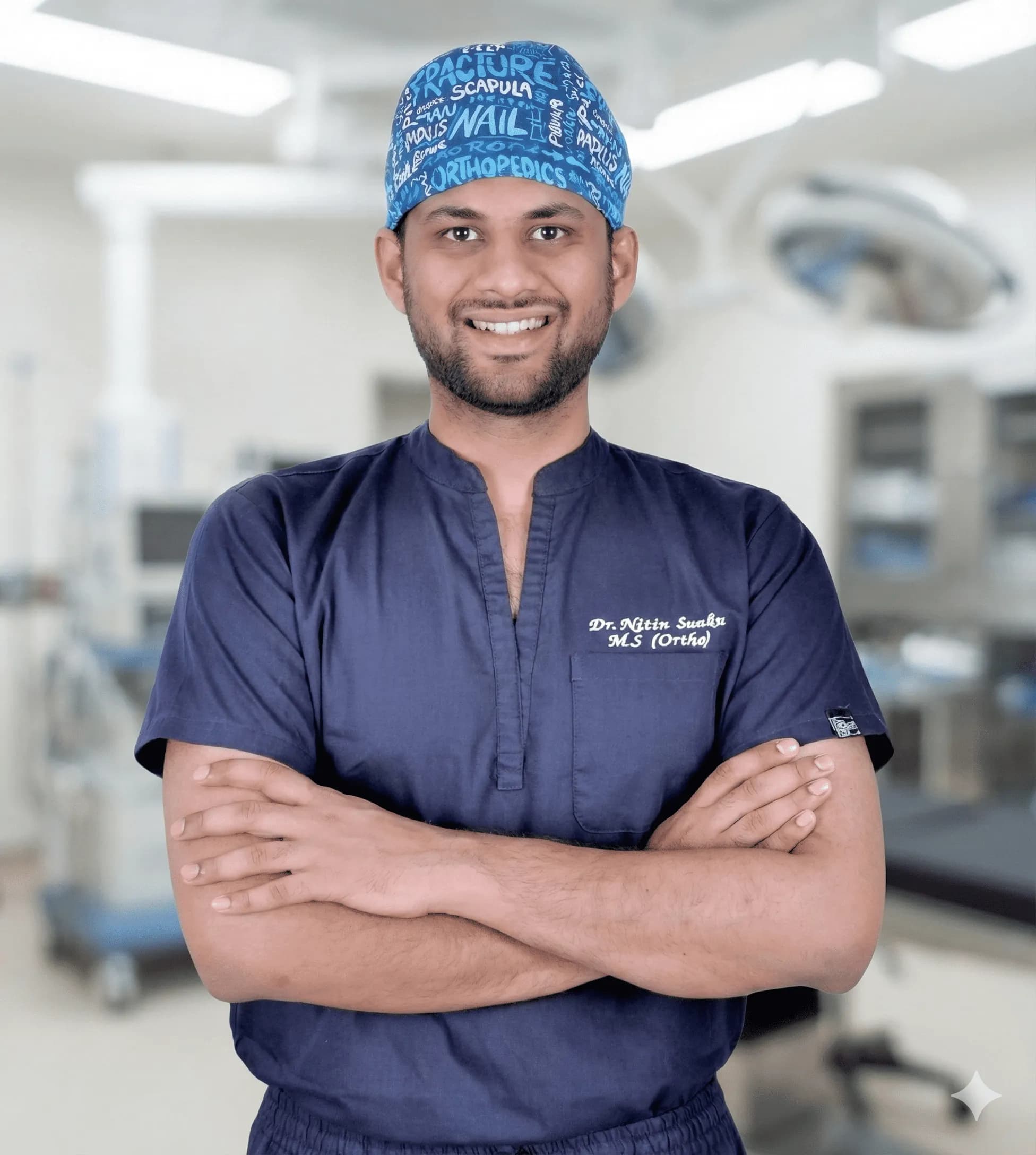
About the Author
Dr. Nitin N Sunku
MBBS, MS (Orthopedics), Fellowship in Arthroscopy & Sports Medicine
Dr. Nitin N Sunku is a Consultant Orthopedic & Sports Medicine Surgeon with over 10 years of focused practice in Bengaluru. He serves as the Team Doctor for Bengaluru FC and consults at Raghava Multispeciality Hospital (Attibele) and Health Nest Hospital (HSR Layout). His clinical interests include arthroscopy, ligament & meniscus care, regenerative orthopedic medicine, ultrasound-guided injections, and joint replacement.
Experiencing symptoms?
Don't let pain hold you back. Schedule a comprehensive evaluation with Dr. Nitin today.
Book Appointment

