This article is for general education and does not replace an in-person assessment, examination, or imaging. Everyone's injury pattern, medical history, and goals differ; use what you read here to prepare better questions for your doctor.
Dr. Nitin N Sunku is a consultant orthopedic and sports medicine surgeon. He sees patients at Raghava Multispeciality Hospital, Attibele, on Sarjapura–Attibele Road, and at Health Nest Hospital, HSR Layout, Bengaluru. If pain is rapidly worsening, you cannot bear weight, you develop numbness or weakness in a limb, or you have fever after an injury, seek urgent medical care. For non-emergency evaluation and individualised treatment options, book through the contact page.
Topics across this blog include knee ligament and meniscus problems, shoulder pain and instability, hip and knee arthritis, fracture recovery principles, spine symptoms when urgent causes have been excluded, running and tendon overuse issues, and what to expect from arthroscopy or joint replacement discussions. If you are comparing sources online, cross-check dates and always confirm advice with an in-person clinician.
Anatomic vs reverse shoulder replacement, honest cost ranges, recovery timelines and how to choose a surgeon — from Bengaluru orthopedic specialist.
Few things steal independence as quietly as a worn-out shoulder. It starts with a deep ache that wakes you at night, then becomes the inability to reach the top shelf, fasten a bra, comb your hair, or pull a shirt over your head. By the time most patients walk into the clinic asking about shoulder replacement surgery India, they have lived with this loss for years — trying painkillers, physiotherapy, and a string of injections that work for a while and then stop working at all.
Dr. Nitin N Sunku is an orthopedic and sports-medicine surgeon practising at Raghava Multispeciality Hospital in Attibele and Health Nest Hospital in HSR Layout, Bengaluru. A meaningful part of the practice is shoulder arthritis and rotator cuff disease in adults between 55 and 80. This guide walks you through what modern shoulder replacement actually involves, the difference between anatomic and reverse replacement, what it costs in India in 2026, and how to know whether you genuinely need it.
What shoulder replacement surgery actually is
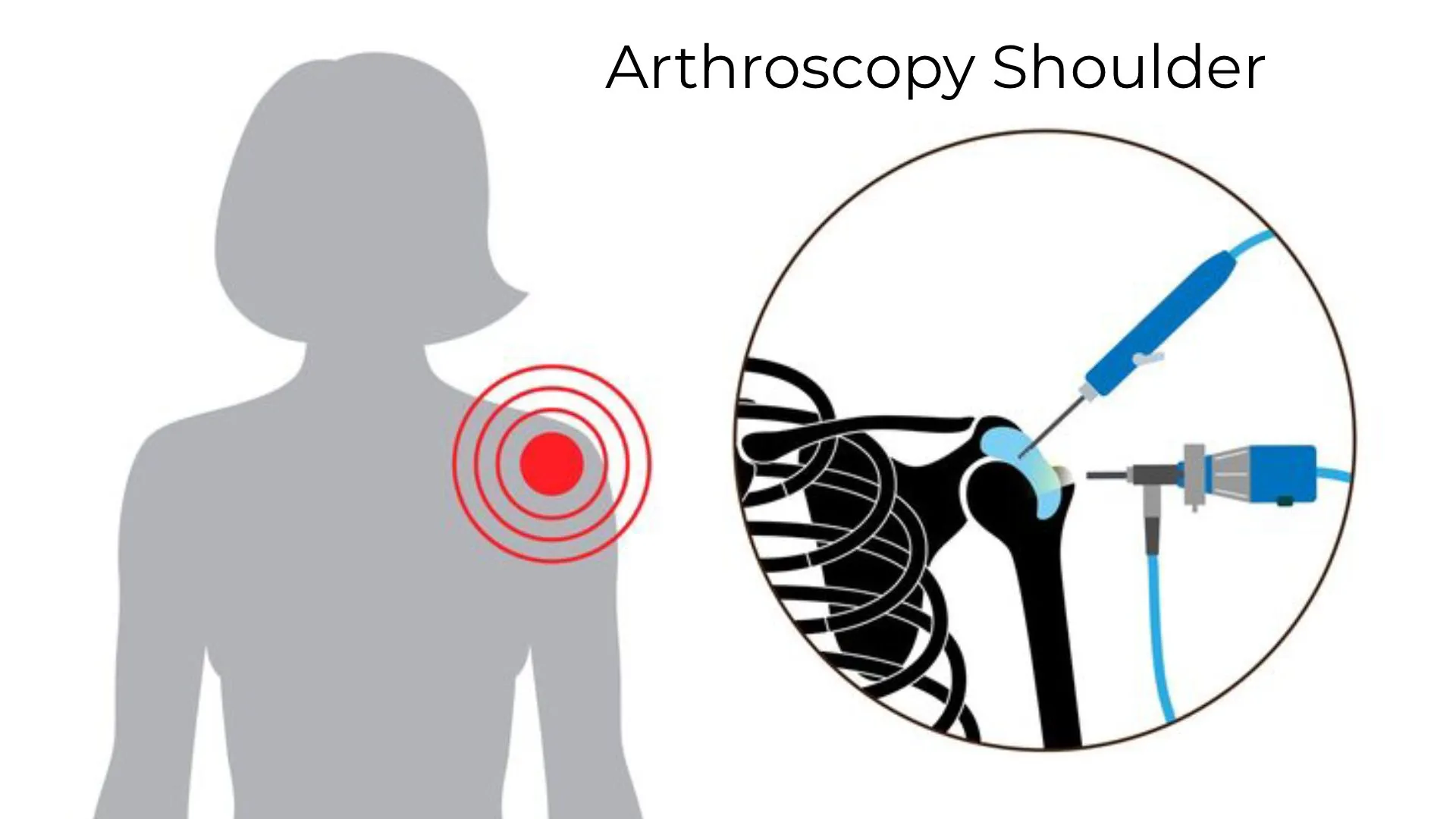
A shoulder replacement — or shoulder arthroplasty — is the operation in which the damaged surfaces of the ball-and-socket joint are removed and replaced with prosthetic components made of metal and high-grade polyethylene. The worn humeral head (the “ball”) is shaped to accept a metal stem and articulating head, and the glenoid (the “socket” on the shoulder blade) is resurfaced with a plastic or metal-backed component. The pain generators are physically removed, which is why relief is usually dramatic.
The shoulder differs from the hip and knee in one critical way: it depends almost entirely on soft tissue — the rotator cuff — for active movement. This single fact means there is no “one” shoulder replacement. There are two main designs — anatomic and reverse — and choosing between them depends on the health of your rotator cuff, not just the state of your cartilage.
Types of shoulder replacement available in India
Total Shoulder Arthroplasty (TSA / Anatomic)
The classic operation. The ball is replaced with a metal head and the socket is resurfaced with polyethylene, mimicking your natural anatomy. This is the right choice for patients with primary osteoarthritis and an intact, functional rotator cuff. Outcomes are excellent, and most patients regain near-normal range of motion and forget they have a prosthesis.
Reverse Total Shoulder Arthroplasty (rTSA)
One of the genuine revolutions of the last twenty years in orthopedics. The geometry is reversed — a metal ball is fixed to the shoulder blade and a plastic socket is mounted on the humerus. This design recruits the deltoid muscle to do the lifting work that a torn rotator cuff can no longer do. For an elderly patient who literally cannot raise the arm because of rotator cuff arthropathy or an irreparable massive cuff tear, a reverse replacement can give back overhead function within weeks. It is most often recommended in patients above 70.
Hemiarthroplasty
Only the humeral head is replaced; the socket is left alone. Once popular, it is now reserved for very specific scenarios — certain complex fractures or younger patients where the native glenoid is preserved. For most patients with arthritis, it is no longer the first choice.
Resurfacing arthroplasty
A bone-conserving option that caps the humeral head rather than removing it. Useful in carefully selected younger, active patients who want to preserve bone stock for a possible future revision.
When is shoulder replacement needed?
- End-stage glenohumeral osteoarthritis with daily functional loss — pain at rest, disturbed sleep, inability to perform overhead tasks.
- Rotator cuff arthropathy — the combination of a massive, irreparable cuff tear with secondary arthritis.
- Rheumatoid arthritis with a destroyed joint and failed medical management.
- Avascular necrosis (AVN) of the humeral head, often following steroid use, alcohol, or prior fracture.
- Severe post-traumatic arthritis after an old proximal humerus fracture.
- Failed prior shoulder surgery — revision arthroplasty for a previously operated joint.
For a deeper read on the clinical thresholds, see the earlier post on When Is Shoulder Replacement Surgery Needed.
When conservative care still works
The practice is genuinely conservative about offering arthroplasty. In early and moderate shoulder arthritis, a structured non-surgical programme can buy years of comfortable function. That programme typically includes a tailored physiotherapy plan focusing on scapular mechanics and cuff strengthening, image-guided intra-articular injections (corticosteroid or hyaluronic acid), activity modification, and judicious use of NSAIDs. The posts on Shoulder Pain Injections: Precision Non-Surgical Care, Frozen Shoulder Treatment Without Surgery in India, and Rotator Cuff Injury walk through these options in depth. Replacement is appropriate only when these strategies are exhausted — or when imaging shows damage so advanced that conservative care is no longer a reasonable bet.
Anatomic vs reverse shoulder replacement: how the surgeon chooses
The single most important variable is the rotator cuff. If the cuff is intact and the arthritis is the main problem, an anatomic TSA reproduces normal biomechanics and gives an excellent functional result. If the cuff is torn beyond repair — especially if you cannot actively lift your arm despite preserved passive motion — an anatomic replacement will simply not work, because there is no engine left to drive it. That is precisely the patient for whom reverse TSA was designed. Age, bone quality, deltoid function, and prior surgery all feed into the decision, but rotator cuff status is the fulcrum.
Shoulder replacement surgery cost in India
Honest, indicative ranges for Bengaluru and most tier-1 Indian cities in 2026. Final cost depends on hospital tier, implant brand, room category, and any complicating factors.
- Anatomic total shoulder replacement (TSA): ₹2,50,000 – ₹5,00,000
- Reverse total shoulder replacement (rTSA): ₹3,50,000 – ₹6,50,000
- Premium implants (ceramic heads, custom or patient-specific instrumentation): ₹5,00,000 – ₹8,00,000+
- Hemiarthroplasty: ₹2,00,000 – ₹3,50,000
Most health insurance policies in India cover shoulder arthroplasty when it is medically indicated and pre-authorised. Ask for a fully itemised written estimate before admission — surgeon's fee, implant, OT, anaesthesia, room, physiotherapy and follow-ups should all be specified.
What recovery looks like
- Day 0–2: In hospital. Arm in an abduction sling. Pendulum exercises and gentle elbow, wrist and hand mobilisation begin within 24 hours.
- Week 1–6: Sling continues. Supervised passive range of motion only — no active lifting against gravity. Stitches removed at around two weeks.
- Week 6–12: Sling discontinued. Progressive active range of motion. Light strengthening begins under physiotherapy supervision.
- Months 3–6: Structured strengthening. Return to most light recreational activities — walking, light gardening, swimming.
- Months 6–12: Maximal recovery. Follow-up X-rays confirm component position. Most patients have reached their functional plateau by this point.
Overhead athletes and manual workers should expect a slightly longer timeline.
Realistic outcomes
In well-selected patients, modern shoulder arthroplasty delivers 90% or better patient satisfaction at five years. Reverse total shoulder replacement is particularly transformative in older patients with rotator cuff arthropathy — people who walked in unable to lift a cup of tea to their mouth often regain shoulder-level function within three months. Modern implants are designed to last 15–20 years or more in the average user. The long-term restrictions are sensible rather than severe: avoid repetitive overhead heavy lifting (above about 10 kg), avoid contact sports, and keep up the strengthening exercises lifelong.
How to choose a shoulder replacement surgeon
- Ask about shoulder arthroplasty case volume — how many anatomic and reverse replacements the surgeon does each year.
- Look for specific fellowship training in shoulder and upper-limb surgery, not just general orthopedics.
- Confirm access to intra-operative imaging and pre-operative CT planning for component positioning — this matters enormously in reverse arthroplasty.
- Insist on a written, itemised estimate before admission.
- Most importantly: a good shoulder surgeon should be willing to discuss conservative options first, and should be comfortable saying “not yet” when that is the right answer.
Book a shoulder consultation in Attibele or HSR Layout
If you or a parent is struggling with chronic shoulder pain, progressive stiffness, or loss of overhead function, a single careful consultation can clarify whether replacement is genuinely on the table — or whether there is still good non-surgical mileage left. To book with Dr. Nitin N Sunku, call Raghava Multispeciality Hospital, Attibele at +91-9980031006, or Health Nest Hospital, HSR Layout at +91-9449031003. Please carry any existing X-rays, MRI scans and prior prescriptions.
Frequently Asked Questions
How long does a shoulder implant last?
Modern anatomic and reverse shoulder implants are engineered for 15–20+ years in the average user. Longevity depends on activity level, bone quality, and how faithfully the long-term restrictions on heavy overhead lifting are observed.
What is the difference between anatomic and reverse shoulder replacement?
Anatomic TSA mirrors your natural ball-and-socket geometry and needs an intact rotator cuff to work. Reverse TSA flips the geometry so the deltoid muscle drives the arm — it is the operation of choice when the cuff is irreparably torn.
Am I too old for shoulder replacement surgery in India?
Age alone is rarely a disqualifier. Patients well into their eighties do well with shoulder replacement. What matters far more is cardiac and pulmonary fitness, bone quality, and your functional goals. A formal pre-anaesthetic assessment answers this properly.
How long is recovery after a shoulder replacement?
Expect a sling for six weeks, light functional use by three months, and maximum recovery between six and twelve months. Most patients are doing most daily activities comfortably by week 12.
Does insurance cover shoulder replacement in India?
Yes — most Indian health insurers cover shoulder arthroplasty when medically indicated and properly pre-authorised. The hospital insurance desk will handle cashless claims with appropriate documentation.
Can I drive after a shoulder replacement?
Usually not for the first six weeks while the sling is in use. Driving typically resumes between weeks 6 and 8, once you have safe one-handed control and have been cleared at follow-up.
Will I get full range of motion back?
After anatomic TSA, most patients regain near-normal motion. After reverse TSA, the priority is reliably restoring overhead reach and pain-free daily function; extremes of internal rotation (reaching behind the back) may remain modestly limited, but the trade-off is a shoulder that finally lifts again.
About the Author
Dr. Nitin N Sunku
MBBS, MS (Orthopedics), Fellowship in Arthroscopy & Sports Medicine
Dr. Nitin N Sunku is a Consultant Orthopedic & Sports Medicine Surgeon with over 10 years of focused practice in Bengaluru. He serves as the Team Doctor for Bengaluru FC and consults at Raghava Multispeciality Hospital (Attibele) and Health Nest Hospital (HSR Layout). His clinical interests include arthroscopy, ligament & meniscus care, regenerative orthopedic medicine, ultrasound-guided injections, and joint replacement.
Experiencing symptoms?
Don't let pain hold you back. Schedule a comprehensive evaluation with Dr. Nitin today.
Book Appointment