This article is for general education and does not replace an in-person assessment, examination, or imaging. Everyone's injury pattern, medical history, and goals differ; use what you read here to prepare better questions for your doctor.
Dr. Nitin N Sunku is a consultant orthopedic and sports medicine surgeon. He sees patients at Raghava Multispeciality Hospital, Attibele, on Sarjapura–Attibele Road, and at Health Nest Hospital, HSR Layout, Bengaluru. If pain is rapidly worsening, you cannot bear weight, you develop numbness or weakness in a limb, or you have fever after an injury, seek urgent medical care. For non-emergency evaluation and individualised treatment options, book through the contact page.
Topics across this blog include knee ligament and meniscus problems, shoulder pain and instability, hip and knee arthritis, fracture recovery principles, spine symptoms when urgent causes have been excluded, running and tendon overuse issues, and what to expect from arthroscopy or joint replacement discussions. If you are comparing sources online, cross-check dates and always confirm advice with an in-person clinician.
A posterior cruciate ligament tear affects one of the main ligaments that stabilizes the knee.
A posterior cruciate ligament (PCL) tear affects one of the main ligaments that stabilises the knee. Although it is less common and often less talked about than an ACL tear, a PCL injury can still cause significant problems if it is missed or left untreated.
The PCL is a strong band of tissue deep inside the knee. Its main job is to keep the shinbone (tibia) from sliding too far backward relative to the thighbone (femur), and it helps control balance and stability during walking, bending, climbing stairs, and sudden movements. When this ligament is injured, the knee may feel unstable, painful, or "loose," especially during weight-bearing activities and when going downhill or down stairs.
How Common PCL Tears Are
PCL injuries often occur alongside other knee injuries — such as damage to other ligaments, the meniscus, or cartilage — particularly in high-energy accidents. Isolated PCL tears do happen, but a thorough assessment is important because combined injuries change the treatment plan.
Causes of a PCL Tear
- Direct impact to the front of the knee: A strong blow to the front of the shin or knee can push the shinbone backward and tear the PCL.
- The "dashboard injury": In a road accident, the bent knee striking the dashboard drives the shinbone backward — a classic cause of PCL tears.
- Falling on a bent knee: Landing hard on a flexed knee, with the foot pointed down, can strain or tear the ligament.
- Sports collisions and twisting: High-impact and pivoting sports such as football, basketball, and hockey can overload the ligament during tackles, awkward landings, or sudden changes in direction.
- Severe hyperextension: Forcing the knee too far backward can damage the PCL.
Symptoms of a PCL Tear
PCL tears may cause swelling that develops over hours, pain at the back of the knee, stiffness, a feeling of instability, and difficulty walking, squatting, or bending the knee. Symptoms can be surprisingly mild at first, which is one reason these injuries are sometimes overlooked.
Diagnosis and Treatment
Diagnosis involves a clinical examination — including a posterior drawer test — supported by X-rays and an MRI to confirm the tear and check for associated injuries. Many isolated, low-grade PCL tears are treated successfully without surgery, using bracing and a focused physiotherapy programme that strengthens the quadriceps to support the knee. Higher-grade tears, combined ligament injuries, or persistent instability may need surgical reconstruction.
Early evaluation helps prevent long-term instability and reduces the risk of cartilage wear and arthritis later. For accurate diagnosis and treatment, consult Dr. Nitin N Sunku, Orthopedic Doctor and Sports Medicine Specialist, at his clinics in HSR Layout and Attibele, Bengaluru.
About the Author
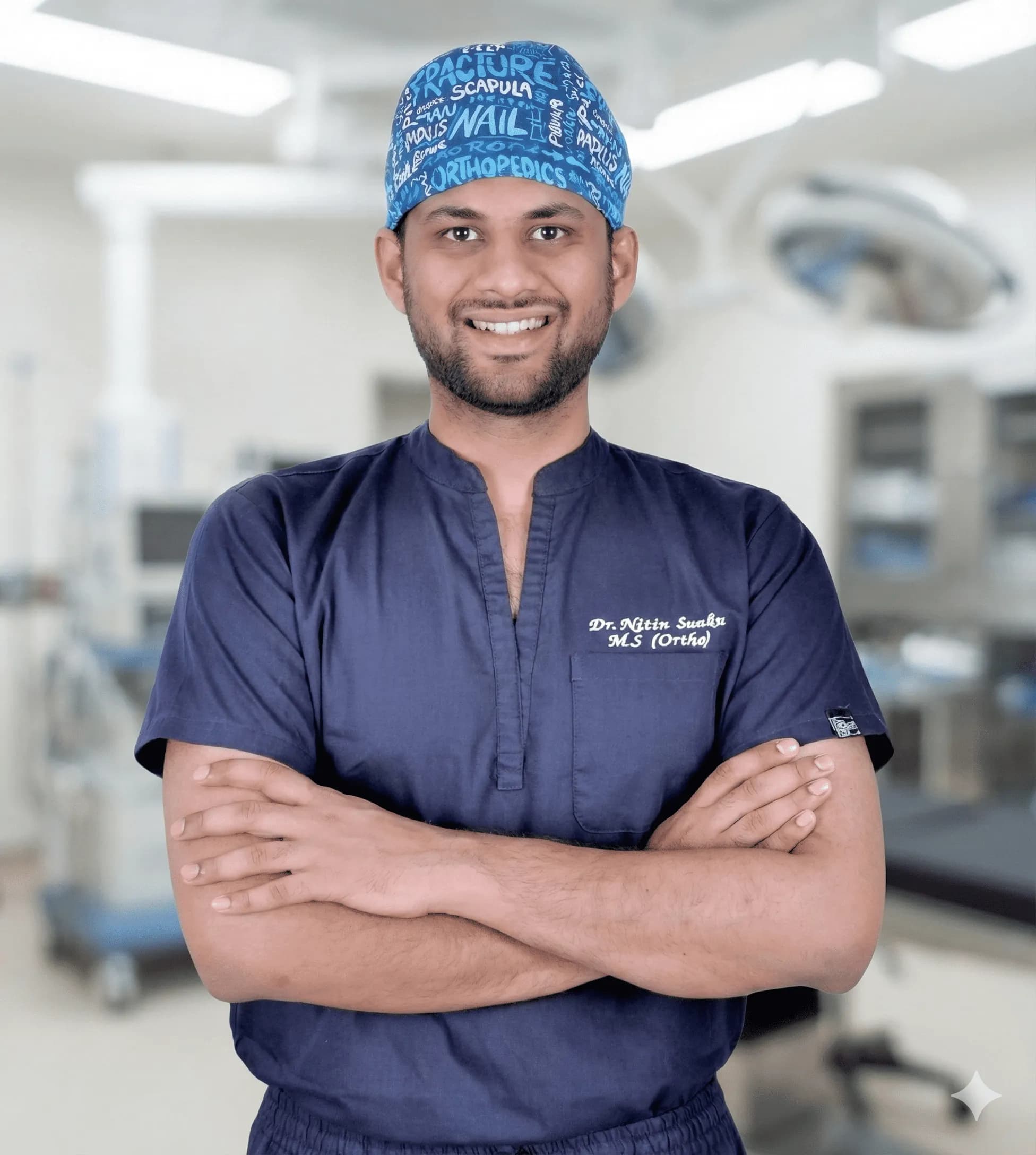
Dr. Nitin N Sunku
MBBS, MS (Orthopedics), Fellowship in Arthroscopy & Sports Medicine
Dr. Nitin N Sunku is a Consultant Orthopedic & Sports Medicine Surgeon with over 10 years of focused practice in Bengaluru. He serves as the Team Doctor for Bengaluru FC and consults at Raghava Multispeciality Hospital (Attibele) and Health Nest Hospital (HSR Layout). His clinical interests include arthroscopy, ligament & meniscus care, regenerative orthopedic medicine, ultrasound-guided injections, and joint replacement.
Experiencing symptoms?
Don't let pain hold you back. Schedule a comprehensive evaluation with Dr. Nitin today.
Book Appointment