This article is for general education and does not replace an in-person assessment, examination, or imaging. Everyone's injury pattern, medical history, and goals differ; use what you read here to prepare better questions for your doctor.
Dr. Nitin N Sunku is a consultant orthopedic and sports medicine surgeon. He sees patients at Raghava Multispeciality Hospital, Attibele, on Sarjapura–Attibele Road, and at Health Nest Hospital, HSR Layout, Bengaluru. If pain is rapidly worsening, you cannot bear weight, you develop numbness or weakness in a limb, or you have fever after an injury, seek urgent medical care. For non-emergency evaluation and individualised treatment options, book through the contact page.
Topics across this blog include knee ligament and meniscus problems, shoulder pain and instability, hip and knee arthritis, fracture recovery principles, spine symptoms when urgent causes have been excluded, running and tendon overuse issues, and what to expect from arthroscopy or joint replacement discussions. If you are comparing sources online, cross-check dates and always confirm advice with an in-person clinician.
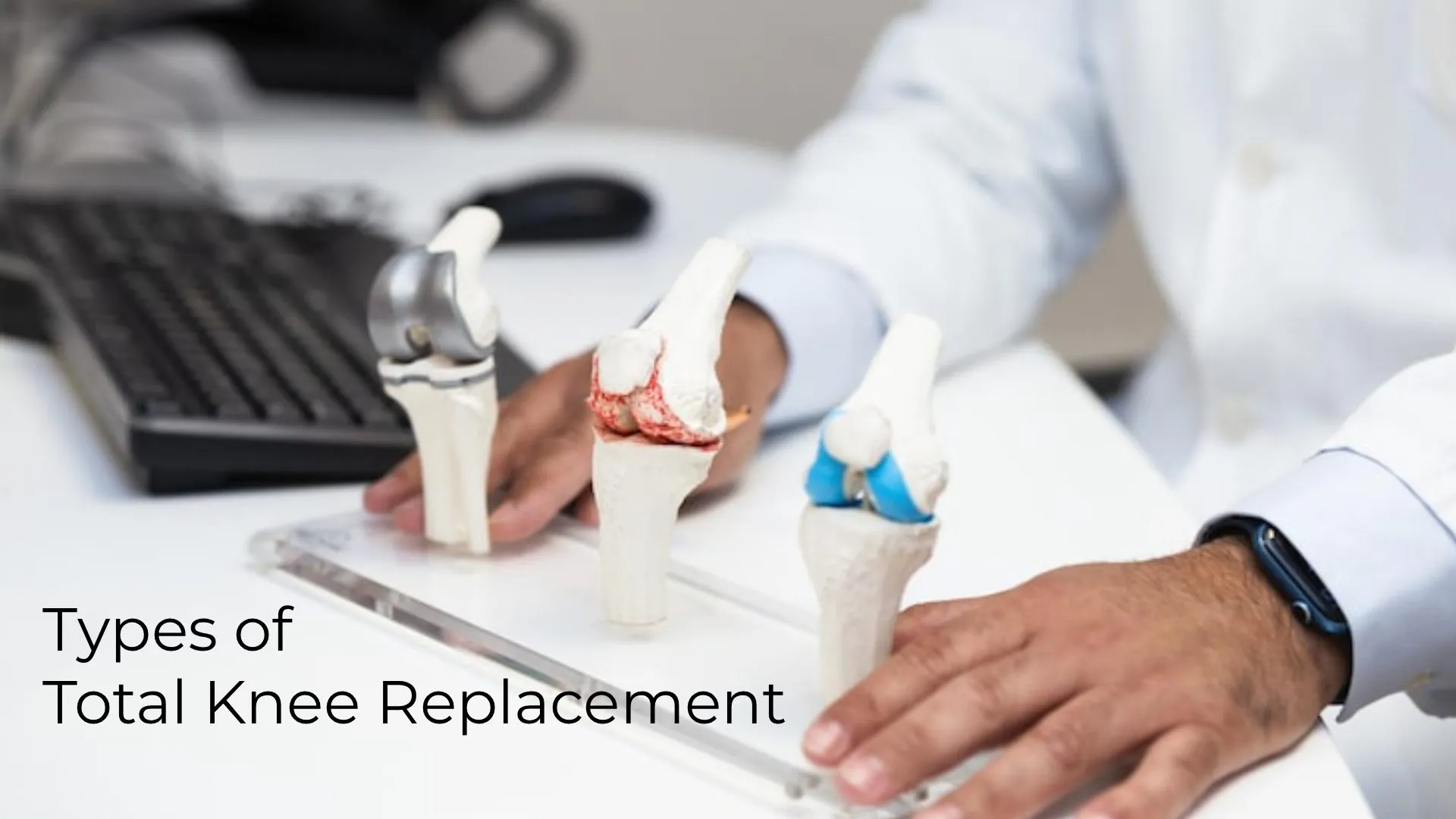
A patient-friendly comparison of titanium, Johnson/DePuy (cobalt-chrome), and ceramic/Oxinium knee implants — wear, biocompatibility, registry data, cost, and who each one suits in Bangalore.
When your orthopaedic surgeon tells you that you need a knee replacement, the conversation rarely stops at "yes" or "no". A follow-up question almost always arrives: which implant should I choose?
For patients in Bangalore and across India, three categories dominate most online searches: titanium knee replacement, Johnson knee replacement (referring to DePuy Synthes, the orthopaedic division of Johnson and Johnson), and ceramic knee replacement (including Oxinium oxidised zirconium options). Each has genuine strengths. Each has trade-offs. The "best" choice is almost always patient-specific.
The Three-Part Anatomy of Any Knee Implant
Every total knee replacement has three main components:
- Femoral component: a metal cap that fits over the end of the thigh bone. Material choice has the greatest impact here on wear performance.
- Tibial component: a flat metal tray fixed to the top of the shin bone, with a polyethylene insert on top that acts as the new cartilage.
- Patellar component: a polyethylene dome that replaces the undersurface of the kneecap (sometimes left untouched).
When people talk about a "titanium", "ceramic" or "Johnson" knee, they are mostly referring to the material used in the femoral component and tibial tray, and the fixation method. The polyethylene insert is common to most systems but its quality varies between generations.
What Is a Titanium Knee Replacement?
Titanium alloys (most commonly Ti6Al4V) have been used in orthopaedic surgery for decades. Key reasons:
- Biocompatibility: titanium is naturally inert and rarely triggers immune reactions — a strong choice for patients with metal sensitivities.
- Elastic modulus closer to bone: more natural load distribution, reducing stress shielding.
- Osseointegration: titanium surfaces can be coated with hydroxyapatite, encouraging bone to grow directly into the implant — useful for cementless designs.
- Lower density: roughly one-third the weight of an equivalent cobalt-chromium implant.
Best for: patients with known nickel allergies, younger and more active patients, and those where cementless fixation is preferred. Limitations: pure titanium is softer than cobalt-chrome — so the articulating femoral surface may show slightly higher wear over time. Many titanium-based systems therefore use a titanium tibial base plate but a harder alloy or ceramic-coated femoral surface. Titanium implants also cost more than standard cobalt-chrome.
What Is a Johnson Knee Replacement? (DePuy Synthes)
When patients ask about a "Johnson knee replacement", they almost always mean implants made by DePuy Synthes, the orthopaedic division of Johnson and Johnson. DePuy is one of the world's largest joint-replacement manufacturers, and their products are widely used across India.
Current flagship knee systems include:
- ATTUNE Knee System — the primary platform for total and revision knee replacement.
- PFC Sigma — an older but extensively tracked design with long registry data.
- VELYS Robotic-Assisted Solution — imageless robotic guidance with FDA clearance for unicompartmental knee arthroplasty.
Material composition: The ATTUNE femoral component is primarily cobalt-chromium-molybdenum (CoCr). The tibial tray is titanium-based with a porous coating. The polyethylene insert uses UHMWPE, with cross-linked versions for improved wear resistance. Some DePuy systems also offer Oxinium femoral surfaces.
Why widely prescribed: decade-plus registry longevity data (Australian AOANJRR, UK NJR), surgeon familiarity with the instrumentation, broad range across total/partial/revision/robotic, and the VELYS robotic option for sub-millimetre placement precision. Limitation: the CoCr femoral surface contains nickel, which can cause reactions in patients with confirmed nickel hypersensitivity.
What Is a Ceramic Knee Replacement?
"Ceramic" in knee replacement does not mean fragile. It covers a spectrum of modern materials with a hard, smooth, scratch-resistant surface.
1. Oxinium (Oxidised Zirconium)
Made by Smith and Nephew, Oxinium is a zirconium-niobium alloy (97.5% zirconium, 2.5% niobium) whose surface is transformed into zirconium oxide ceramic through heat oxidation. The result is a metal core (strong and fracture-resistant) with a true ceramic surface (hard, smooth, biocompatible, nickel-free). Oxinium produces significantly less polyethylene wear debris in laboratory simulations and competitive long-term revision rates in registry data.
2. Full ceramic implants (alumina/zirconia composite)
Some European manufacturers produce fully metal-free ceramic total knee systems. An 8-year prospective study in Scientific Reports found highly comparable clinical outcomes to metallic counterparts. These remain niche options, primarily for patients with extreme metal sensitivity.
3. Titanium nitride (TiN) and TiNbN coatings
Ceramic coatings applied to a standard metal substrate. A medium-term study found no significant differences in clinical outcomes or revision rates compared to conventional cobalt-chrome at 6.5 years, with survivorship of 96% in both groups.
The key advantage: the femoral component rubs against polyethylene thousands of times a day. Smoother, harder ceramic surfaces produce fewer wear particles — meaning less inflammatory response and theoretically a longer-lasting implant. This matters most for younger, more active patients. Limitations: ceramic implants cost significantly more than standard cobalt-chrome, and pure ceramic components carry a small fracture risk — which is why the metal-core-with-ceramic-surface design (Oxinium) has become more popular than fully ceramic constructs.
Head-to-Head Comparison
Wear resistance: titanium moderate, CoCr good, ceramic/Oxinium excellent.
Nickel content: titanium negligible, CoCr present, ceramic/Oxinium none.
Long-term registry data: CoCr extensive (15+ years), Oxinium growing (20+ years), titanium limited compared to CoCr.
Best for: titanium — allergy patients, cementless fixation; CoCr — most standard total knee patients; Oxinium — younger or more active patients, allergy patients who want a fracture-resistant design.
Cost (India): CoCr moderate, titanium higher, Oxinium premium.
Factors That Matter More Than Material
Implant material is one factor among many in determining your outcome. Research consistently shows that surgical precision (alignment, bone cuts, ligament balancing), surgeon experience with a specific system, patient selection (total vs partial, cemented vs cementless, sizing), post-operative rehabilitation, and lifestyle factors (weight, activity, follow-up adherence) are all more predictive of long-term function than whether the femoral component is CoCr or Oxinium.
Who Should Choose Which Implant?
Consider titanium-based or ceramic if: you have a confirmed nickel/CoCr allergy, you are under 60 and concerned about long-term wear, you lead an active lifestyle, or your surgeon recommends cementless fixation.
Consider standard Johnson/DePuy CoCr if: you are 60+ with moderate activity, robotic precision matters and your surgeon uses VELYS, premium implant cost is a concern, or you have no metal allergies.
Consider Oxinium (ceramic-surfaced) if: you want a metal core (strength) with a ceramic surface (low wear, nickel-free), you are young and active with potentially 25+ years of implant use ahead, or you have metal hypersensitivity but still want a fracture-resistant implant.
What About Partial Knee Replacement?
Yes, material still matters — but a partial (unicompartmental) replacement resurfaces only the damaged compartment. The same materials (CoCr, titanium, Oxinium) are available. Partial replacement, when correctly indicated, typically offers faster recovery, less blood loss, and a more natural knee feel — but requires very precise patient selection starting with weight-bearing X-rays and clinical examination.
Knee Replacement in Bangalore: What a Good Consultation Covers
- Full weight-bearing X-rays of both knees.
- Clinical examination — range of motion, ligament stability, muscle strength, deformity.
- Discussion of your activity goals, not just pain relief.
- Honest conversation about implant options and cost implications.
- Review of co-morbidities (diabetes, hypertension, cardiac history) affecting surgical risk.
Dr. Nitin Sunku sees knee replacement patients at Raghava Multispeciality Hospital, Attibele (easily accessible from Electronic City, Bommasandra, Chandapura, Jigani, and Anekal) and Health Nest Hospital, HSR Layout (for patients from Koramangala, BTM Layout, Bellandur, and the HSR corridor).
Recovery: Different Based on Implant Type?
In most cases, no. Recovery is driven by surgical approach, pre-operative fitness, and rehabilitation quality — not the material composition of the femoral component.
- Day 1–2: walking with a walker, physiotherapy begins.
- Week 2: targeting 0–90° knee flexion, wound review.
- Week 6–8: walking without aids for most patients.
- Month 3: most daily activities resumed.
- Month 6: functional target achieved; low-impact exercise (swimming, cycling) appropriate.
- Month 12+: full recovery, implant integration complete.
Frequently Asked Questions
Is a ceramic knee replacement better than a titanium one?
Not categorically. Oxinium offers superior wear resistance and is nickel-free; titanium offers excellent biocompatibility and bone ingrowth for cementless fixation. The right choice depends on age, activity level, allergy status, and bone quality.
What does "Johnson knee replacement" mean?
Implants made by DePuy Synthes, the orthopaedic division of Johnson and Johnson — primarily the ATTUNE and PFC Sigma systems in India.
How long does a knee implant last?
Modern implants are expected to last 15–20 years in most patients. Oxinium and cross-linked polyethylene may extend this further, particularly in younger patients. Major systems show >95% survivorship at 10 years in Australian and UK registries.
Can I have a knee replacement if I am allergic to metals?
Yes. Oxinium (zirconium-niobium), titanium-based, and fully ceramic systems are all options. Always disclose known allergies during pre-operative assessment.
Is robotic knee replacement better than conventional?
Robotic systems enable more precise alignment and can reduce outlier cases. But it is a tool in the surgeon's hands — a skilled surgeon with a well-understood conventional technique can achieve excellent results too. Robotic surgery adds cost; not every patient requires it.
What is Oxinium?
Smith and Nephew's brand for oxidised zirconium. A zirconium-niobium alloy whose surface is transformed into a ceramic oxide layer by heat. The hybrid metal-core/ceramic-surface design addresses pure ceramic's fracture risk while keeping the low-wear benefits.
Does the implant material affect recovery time?
Generally no. Recovery is determined by surgical approach, fitness, pain management, and physiotherapy compliance.
Educational content. Implant pricing in India is subject to NPPA price ceilings; your surgeon and hospital will provide a written estimate before surgery. Always consult a qualified orthopaedic surgeon before any surgical decision.

About the Author
Dr. Nitin N Sunku
MBBS, MS (Orthopedics), Fellowship in Arthroscopy & Sports Medicine
Dr. Nitin N Sunku is a Consultant Orthopedic & Sports Medicine Surgeon with over 10 years of focused practice in Bengaluru. He serves as the Team Doctor for Bengaluru FC and consults at Raghava Multispeciality Hospital (Attibele) and Health Nest Hospital (HSR Layout). His clinical interests include arthroscopy, ligament & meniscus care, regenerative orthopedic medicine, ultrasound-guided injections, and joint replacement.
Experiencing symptoms?
Don't let pain hold you back. Schedule a comprehensive evaluation with Dr. Nitin today.
Book Appointment