This article is for general education and does not replace an in-person assessment, examination, or imaging. Everyone's injury pattern, medical history, and goals differ; use what you read here to prepare better questions for your doctor.
Dr. Nitin N Sunku is a consultant orthopedic and sports medicine surgeon. He sees patients at Raghava Multispeciality Hospital, Attibele, on Sarjapura–Attibele Road, and at Health Nest Hospital, HSR Layout, Bengaluru. If pain is rapidly worsening, you cannot bear weight, you develop numbness or weakness in a limb, or you have fever after an injury, seek urgent medical care. For non-emergency evaluation and individualised treatment options, book through the contact page.
Topics across this blog include knee ligament and meniscus problems, shoulder pain and instability, hip and knee arthritis, fracture recovery principles, spine symptoms when urgent causes have been excluded, running and tendon overuse issues, and what to expect from arthroscopy or joint replacement discussions. If you are comparing sources online, cross-check dates and always confirm advice with an in-person clinician.
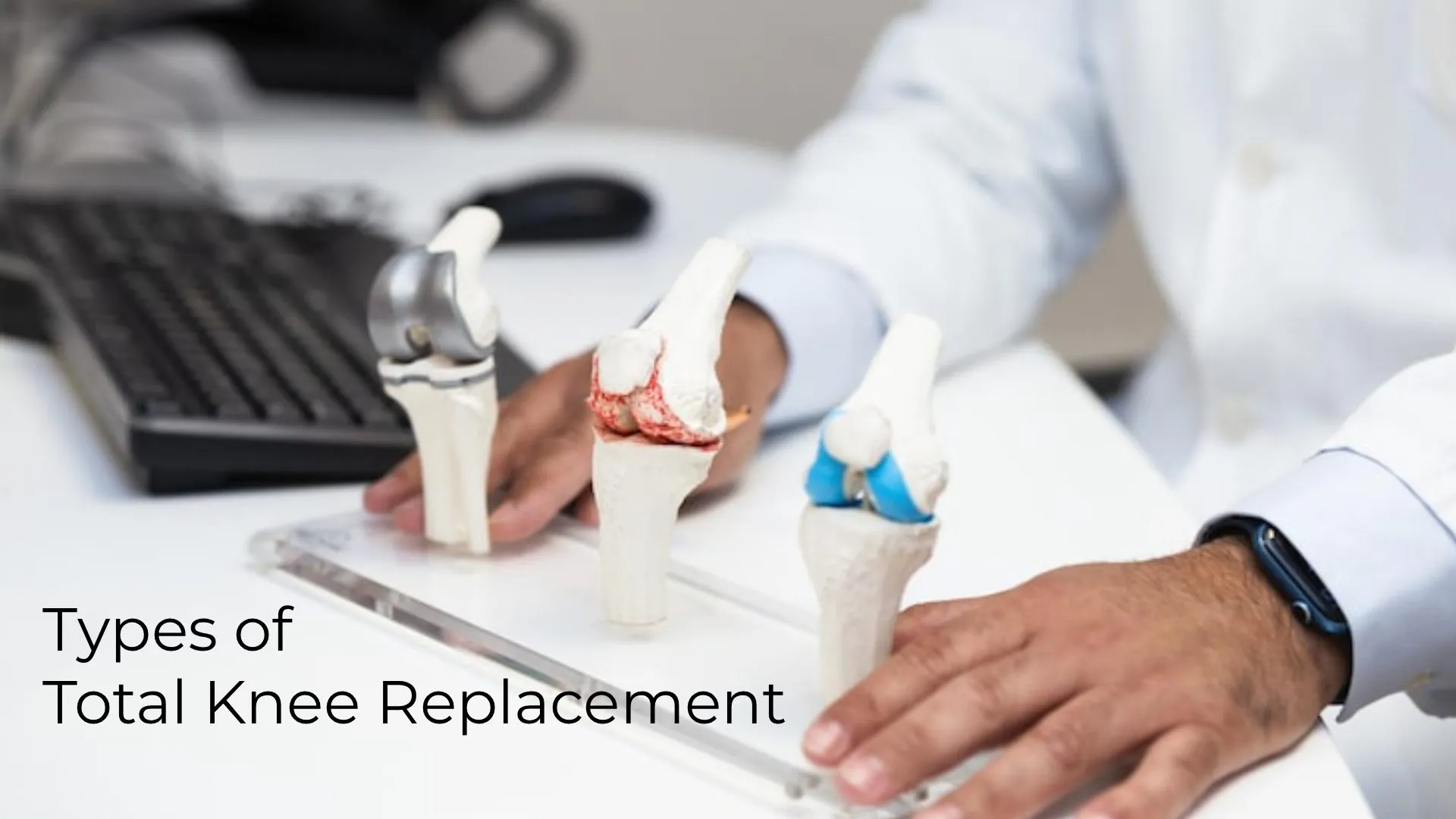
A Bengaluru orthopedic surgeon explains which knee replacement exercises to avoid, which are safe, and how restrictions ease as your new knee heals.
If you have recently had a total knee replacement — or you are planning one — the question that arrives within days of surgery is almost always the same: "What can I do, and what should I avoid?" Searching for knee replacement exercises to avoid is one of the most common things patients do in the first three months after surgery, and the answers online range from terrifyingly strict to dangerously casual. The truth sits in between, and it depends on your implant, your surgeon's technique, your bone quality, and your lifestyle goals.
A modern knee replacement is a remarkably durable piece of engineering. With today's materials and surgical precision, most implants last 15–25 years — some longer. But that longevity is not automatic. Certain activities accelerate polyethylene wear, increase the risk of component loosening, or stress the bone–implant interface in ways the prosthesis was never designed to handle. Dr. Nitin N Sunku, who practises orthopedic and sports medicine surgery in Bengaluru at Raghava Multispeciality Hospital (Attibele) and Health Nest Hospital (HSR Layout), counsels every knee replacement patient through these activity choices — because the surgery is only half the outcome. How you use the knee for the next two decades is the other half.
Why some exercises matter after knee replacement
Two forces drive almost every long-term complication after a total knee replacement: high-impact loading and extreme range of motion. High impact — the kind generated by running, jumping, or landing — pushes the polyethylene liner against the metal components with forces several times body weight, accelerating wear debris and micro-loosening. Extreme flexion, especially deep squatting past 110–120 degrees under load, stresses the posterior implant interface and can compromise the patellar tracking. Avoiding these two patterns is the foundation of every restriction list below.
Exercises to avoid permanently after knee replacement
These are activities that most orthopedic surgeons, including Dr. Nitin, recommend permanently substituting with lower-impact alternatives. Individual surgeon advice varies, and newer implants are easing some of these rules — but for the majority of patients, the list below remains the safest long-term framework.
1. Running and jogging
Running generates ground-reaction forces of 3–5 times your body weight at the knee with every stride. Even slow recreational jogging shortens implant life measurably over years. Switch to brisk walking, elliptical training, or stationary cycling — you can keep your cardiovascular fitness without the impact penalty.
2. Jumping sports
Basketball, volleyball, kabaddi and similar sports combine high-impact landings with sudden pivots — the worst possible combination for a replaced knee. Even a single awkward landing can dislocate the patellar component or fracture the bone around the implant. There is no safe modification; these sports need to be retired.
3. Contact sports
Football, rugby, and martial arts involve both direct impact to the knee and unpredictable fall mechanics. A tackle or twist that a native knee would shrug off can loosen an implant or cause a periprosthetic fracture. Coaching, refereeing, or non-contact training drills are all reasonable substitutes.
4. Deep squats below 90°
Squatting below 90–100 degrees of knee flexion under body weight stresses the posterior implant interface. This includes deep Indian-style floor sitting, prolonged vajrasana, and weighted gym squats. Chair-height squats and sit-to-stand exercises are encouraged; going lower is not.
5. Heavy weightlifting and leg press
Leg press with heavy loads through a deep range, barbell back squats, and heavy lunges generate compressive forces the implant was not designed for. Strength training is still strongly recommended — just keep loads moderate and range of motion controlled, ideally with a physiotherapist's input for the first year.
6. High-impact aerobics and step classes
The repetitive jumping, hopping, and step-down landings in high-impact aerobics classes accumulate stress quickly. Low-impact aerobics, water aerobics, or spinning deliver the same cardiovascular benefit without the wear cost.
7. Competitive singles tennis, squash, badminton
The sudden lateral pivots, sprints, and stops in competitive singles racquet sports are high-risk. Recreational doubles tennis or badminton at a relaxed pace is generally permitted and many patients return to it happily — the key word is recreational.
8. Skiing and downhill cycling on rough terrain
Downhill skiing combines high speed, fall risk, and rotational forces. Aggressive mountain biking on rough trails carries similar risks. Cross-country skiing on gentle terrain and road cycling are safer alternatives that many patients enjoy.
Exercises and movements to avoid in the FIRST 6–12 WEEKS
This second category is different — these are time-limited restrictions while soft tissues heal and the implant integrates with bone. Most can be relaxed after your three-month review.
Twisting the operated knee while the foot is planted
Reaching behind you while your foot stays still — common when getting out of a car or turning in the kitchen — can stress the healing soft tissues. Move your whole body as a unit instead of pivoting on the operated leg.
Crossing the legs at the knee or ankle
Crossing legs stretches the healing capsule on the inner side of the knee and can also affect circulation in the early weeks. Keep both feet flat on the floor when sitting for the first six weeks.
Kneeling directly on the operated knee
Most surgeons advise waiting at least 3–6 months before kneeling, and some patients find it permanently uncomfortable due to scar sensitivity. If kneeling is essential for work or worship, a thick cushion and brief duration are reasonable accommodations after the early healing period.
Pivoting suddenly
Quick changes of direction — reaching for a falling object, turning to a doorbell — should be deliberate and slow for the first three months. The reflex to pivot quickly returns naturally; resist it early on.
Climbing on chairs or ladders without support
A fall in the first 12 weeks can be catastrophic for the implant. Avoid step-ladders, stools, and chairs for reaching high shelves until cleared by your surgeon.
What you CAN and SHOULD do
The restrictions list is not a sentence to a sedentary life — the opposite. Staying active protects your implant by maintaining muscle strength, bone density, and weight control. Recommended options include:
- Brisk walking — the single best long-term exercise after TKR
- Stationary cycling — start with low resistance, build up gradually
- Swimming and pool walking — excellent once the wound has fully healed (usually 4–6 weeks)
- Elliptical training — low-impact cardiovascular work
- Gentle yoga with modifications avoiding deep knee flexion
- Gardening using a kneeler or a low stool
- Golf — consider a cart for the first year
- Recreational doubles tennis or badminton
- Dance in modified forms — avoiding jumps and deep dips
- Resistance training with moderate loads and controlled range
The Indian-context question: sitting cross-legged and squatting on the floor
Almost every Indian patient asks the same question: "Doctor, can I sit cross-legged for puja? Can I use an Indian-style toilet? Can I do vajrasana?" The honest answer is that brief, occasional floor sitting will not ruin a well-placed modern implant if you can do it comfortably — but it should not be your default daily posture. Routine deep flexion through cross-legged sitting or squatting accelerates polyethylene wear over years. For Indian toilets specifically, Dr. Nitin recommends installing a Western-style commode or a raised seat — this single change protects the implant more than almost any other lifestyle modification.
Signs you're overdoing it
Listen to the knee. Activity is good; pain and swelling are signals to scale back. Call your surgeon if you notice:
- Persistent swelling that is still present the morning after activity
- New pain — especially deep, aching, or sharp pain that was not there before
- Warmth or redness around the knee (possible infection)
- A new clicking, clunking, or feeling of instability
- Loss of range of motion you previously had
- Fever, chills, or drainage from the incision at any stage
How activity restrictions evolve over time
The rules are strictest in the first 6 weeks — this is when soft tissues are healing and the bone is integrating with the implant. Between 3 and 6 months, restrictions ease progressively as you build strength and confidence. After 12 months, most patients have settled into a sustainable low-impact lifestyle that protects the implant for decades. Newer implant designs, robotic-assisted surgical techniques, and improved polyethylene materials are slowly relaxing some of the older "avoid forever" guidance — which is why a personalised conversation with your specific surgeon matters more than a generic internet list. For broader context on implant choices and how material affects activity tolerance, see the comparison of Titanium vs Johnson vs Ceramic Knee Replacement, and for budgeting see the Knee Replacement Cost in Bangalore pillar guide.
Get a personalised post-op plan in Attibele or HSR Layout
Activity guidance after knee replacement is not one-size-fits-all. Your implant model, the alignment achieved in surgery, your bone quality, your weight, and your personal goals all shape what is truly safe for you. Dr. Nitin N Sunku reviews each patient's activity goals at the 6-week, 3-month, and annual follow-ups, and adjusts recommendations accordingly. To book a personalised post-operative review or to discuss returning to a specific sport or activity, contact Raghava Multispeciality Hospital, Attibele on +91-9980031006 or Health Nest Hospital, HSR Layout on +91-9449031003.
Frequently Asked Questions
Can I run after knee replacement?
Running is not recommended after a total knee replacement. The repetitive impact accelerates polyethylene wear and shortens implant life. Brisk walking, elliptical, and cycling deliver similar cardiovascular benefits without the wear cost. A small number of patients with newer implants and excellent technique return to light jogging — but only with explicit surgeon clearance.
How long before I can return to yoga?
Gentle yoga with modifications can usually resume around 8–12 weeks, with surgeon approval. Avoid deep knee-flexion asanas — vajrasana for long periods, deep malasana, lotus position — permanently or use modified versions with props. Standing poses, gentle twists, and breathing practices are generally safe and beneficial.
Is cycling safe after TKR?
Yes. Stationary cycling is one of the best exercises after knee replacement and can usually start within 2–3 weeks with low resistance. Outdoor cycling on flat, smooth roads is typically safe after 6–8 weeks. Avoid mountain biking on rough terrain for the first year due to fall risk.
Can I sit cross-legged after knee replacement?
Brief, occasional cross-legged sitting is usually possible after 3–6 months if it is comfortable, but it should not be your default sitting posture. Routine deep flexion accelerates implant wear over years. Most patients adopt a Western sitting style for daily use and reserve floor sitting for short occasions.
How long should I avoid stairs?
You do not need to avoid stairs — in fact, climbing them is encouraged as part of recovery. Use a handrail and lead with the operated leg going up, the operated leg going down for the first several weeks. Most patients climb stairs normally by 6–8 weeks.
Can I drive after knee replacement?
For a right knee replacement, most patients can drive an automatic car at 4–6 weeks. For a left knee with an automatic car, sometimes earlier. Manual cars take longer due to clutch use. You must be off strong painkillers and able to perform an emergency stop before driving.
What is the best exercise after knee replacement?
For most patients, the best long-term exercise combination is brisk walking 30–45 minutes most days, supplemented by stationary cycling, swimming, and twice-weekly resistance training for the quadriceps, hamstrings, and glutes. This protects the implant, maintains bone density, controls weight, and supports overall health for decades after surgery.
About the Author
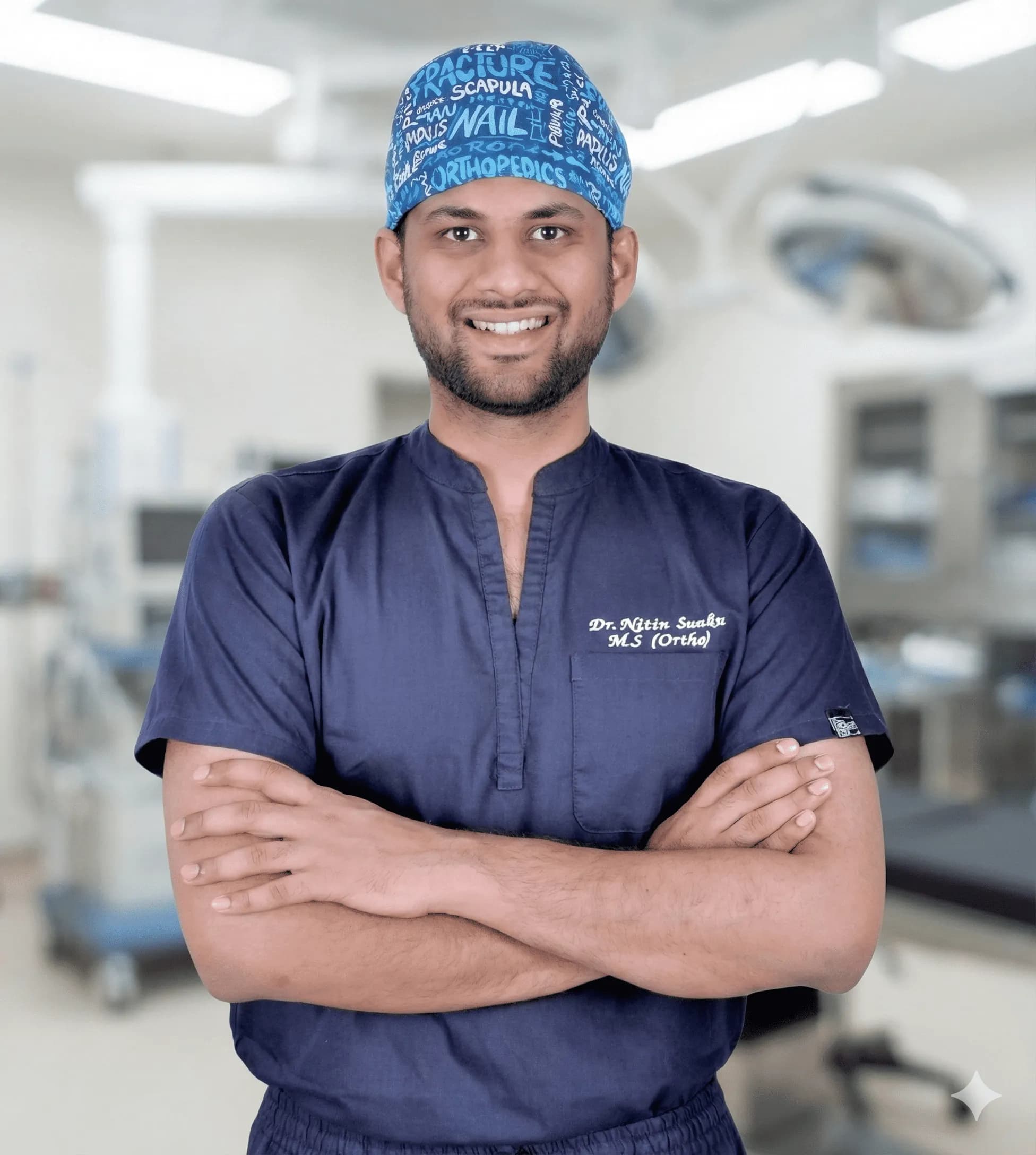
Dr. Nitin N Sunku
MBBS, MS (Orthopedics), Fellowship in Arthroscopy & Sports Medicine
Dr. Nitin N Sunku is a Consultant Orthopedic & Sports Medicine Surgeon with over 10 years of focused practice in Bengaluru. He serves as the Team Doctor for Bengaluru FC and consults at Raghava Multispeciality Hospital (Attibele) and Health Nest Hospital (HSR Layout). His clinical interests include arthroscopy, ligament & meniscus care, regenerative orthopedic medicine, ultrasound-guided injections, and joint replacement.
Experiencing symptoms?
Don't let pain hold you back. Schedule a comprehensive evaluation with Dr. Nitin today.
Book Appointment