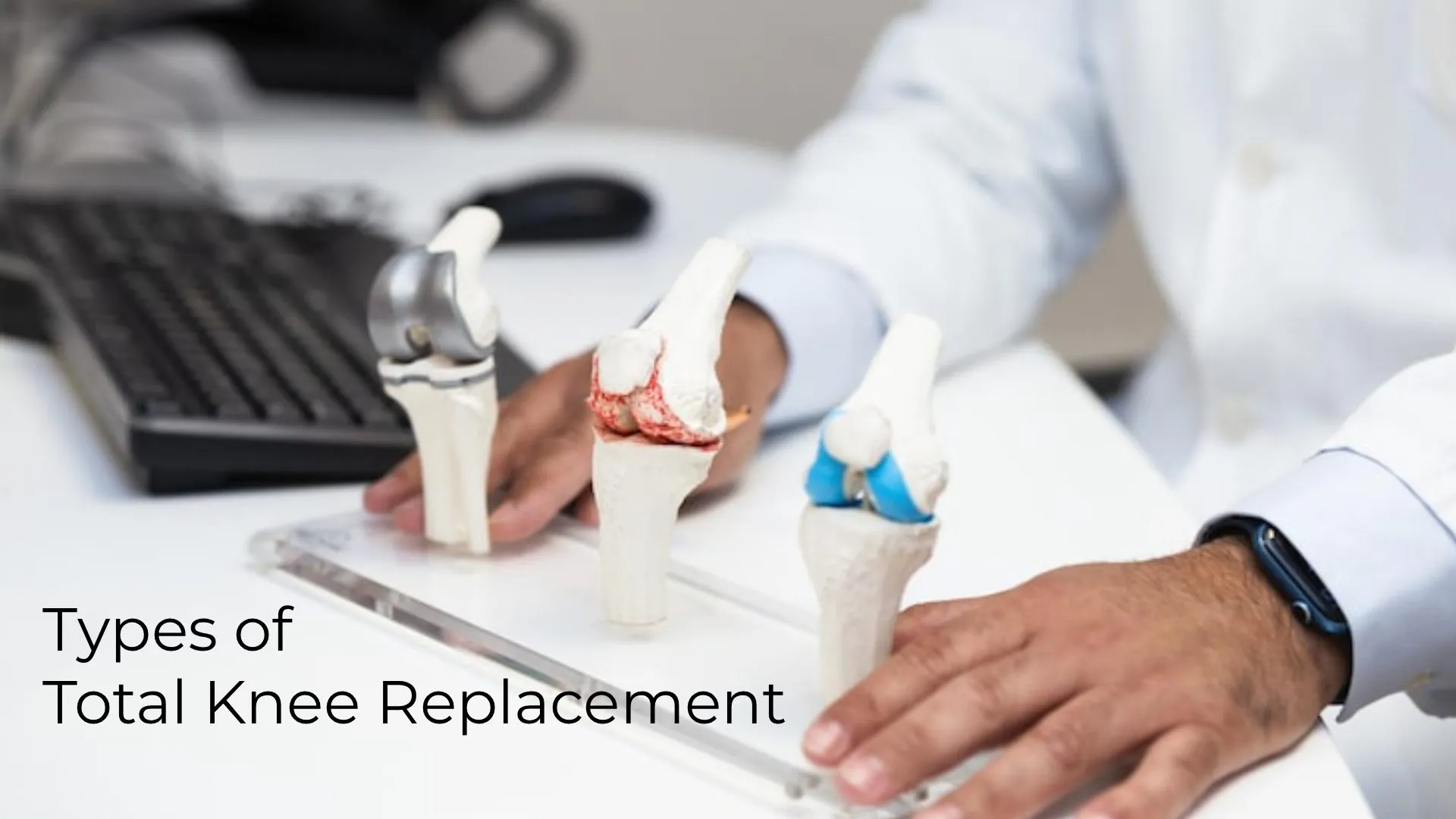
This article is for general education and does not replace an in-person assessment, examination, or imaging. Everyone's injury pattern, medical history, and goals differ; use what you read here to prepare better questions for your doctor.
Dr. Nitin N Sunku is a consultant orthopedic and sports medicine surgeon. He sees patients at Raghava Multispeciality Hospital, Attibele, on Sarjapura–Attibele Road, and at Health Nest Hospital, HSR Layout, Bengaluru. If pain is rapidly worsening, you cannot bear weight, you develop numbness or weakness in a limb, or you have fever after an injury, seek urgent medical care. For non-emergency evaluation and individualised treatment options, book through the contact page.
Topics across this blog include knee ligament and meniscus problems, shoulder pain and instability, hip and knee arthritis, fracture recovery principles, spine symptoms when urgent causes have been excluded, running and tendon overuse issues, and what to expect from arthroscopy or joint replacement discussions. If you are comparing sources online, cross-check dates and always confirm advice with an in-person clinician.
When a knee replacement fails from infection, loosening, or instability, revision surgery can restore function — if planned by a high-volume specialist.
A knee replacement is meant to be a once-in-a-lifetime operation. Patients are usually told to expect 15–20 years of good function, and most modern implants do deliver that. But sometimes — whether after eighteen months or eighteen years — the knee that was supposed to end the pain begins to hurt again. It swells, it gives way, it feels hot, or it simply stops bending the way it used to. That is the unsettling territory where revision knee replacement becomes part of the conversation.
Dr. Nitin N Sunku, orthopedic and sports-medicine surgeon at Raghava Multispeciality Hospital in Attibele and Health Nest Hospital in HSR Layout, sees a steady stream of patients in exactly this situation — frightened, frustrated, and often carrying op notes from a surgery done years ago in another city. It is important to say this clearly at the outset: revision knee surgery is technically far more demanding than a primary knee replacement. The bone is different, the soft tissues are scarred, the implants must be removed without further damage, and the new construct must be built to last on a foundation that has already failed once. Choosing the right surgeon for this matters more than almost any other decision in the journey.
What revision knee replacement actually is
Revision knee replacement is the operation in which one or more components of a previously implanted artificial knee are removed and replaced with new components. It is rarely a simple swap. Bone that has loosened or been eaten away by wear debris often needs to be reconstructed with bone graft, metal augments, or cones. Longer stems are usually placed down the femur and tibia to gain fixation in healthy bone beyond the damaged zone. The plastic insert is almost always more constrained — meaning it provides more inbuilt stability to compensate for stretched or damaged ligaments. Surgery typically takes two to four hours instead of the ninety minutes of a primary replacement, blood loss is higher, and recovery is meaningfully longer. None of this should frighten a patient who genuinely needs revision — it should simply set the expectation that this is a different operation, planned and performed differently.
Why knee replacements fail
Aseptic loosening
This is the commonest long-term reason for failure. Over years, the bond between the implant and bone gives way — often because of micromotion, wear particles, or progressive bone thinning. Pain on weight-bearing that improves with rest is the classic symptom.
Periprosthetic joint infection
Infection can present early (within the first three months) or late (years later, often seeded from a dental, urinary, or skin infection elsewhere). It is the most dreaded complication because it usually requires staged surgery rather than a single revision.
Polyethylene wear and osteolysis
The plastic insert between the metal components wears over time. Wear particles trigger an inflammatory response that dissolves bone around the implant — a process called osteolysis — which eventually loosens the components.
Instability or malalignment
If the original implant was placed slightly off axis or the ligament balance was imperfect, the knee may feel unstable, give way on stairs, or wear unevenly. This is one of the more common reasons for early revision.
Stiffness (arthrofibrosis)
Some knees scar down aggressively after the first surgery and never regain useful bend. When manipulation under anaesthesia and physiotherapy fail, revision with implant exchange and scar release is sometimes considered.
Periprosthetic fracture
A fall or osteoporotic bone can fracture around the implant. Depending on the pattern, this may need plating, revision, or both.
Unexplained pain
Honesty matters here. In a small percentage of failed-feeling knees, even thorough investigation finds no clear cause. Operating on these knees rarely helps and can make things worse. A good revision surgeon is as willing to say "do not operate yet" as to say "you need revision."
Signs your knee replacement may need revision
- Increasing pain that is worse than before the original surgery
- New instability, buckling, or a feeling that the knee will give way
- Persistent swelling that does not settle with rest and ice
- Warmth, redness, or a draining sinus — suspect infection until proven otherwise
- Reduced range of motion compared to what you had a year after primary surgery
- Audible clunking, grinding, or a sensation of something moving inside the knee
- Fever or systemic illness after any dental, urinary, or other procedure
- X-ray changes — lucent lines around the implant, sinking of components, or visible wear
How revision is planned
A failed knee is investigated, not just operated on. Weight-bearing X-rays in multiple views show alignment, sinking, and lucent lines. A CT scan maps bone defects in three dimensions and helps decide whether augments or grafts will be needed. Inflammatory markers (ESR and CRP) are checked in every case — persistently raised values raise suspicion of infection even when the knee looks unremarkable. If infection is suspected, joint aspiration is performed and the fluid sent for cell count, culture, and alpha-defensin. Nuclear medicine scans occasionally help distinguish loosening from infection. Only when this workup is complete can a surgeon plan honestly which implants to remove, what bone defects to expect, and which revision system to prepare.
Types of revision surgery
Single-component revision (polyethylene exchange)
The least invasive form — only the worn plastic insert is changed. It is rare and is appropriate only when the metal components are perfectly fixed and well aligned, which is the exception rather than the rule.
Full revision with new components
The most common pattern. Femoral and tibial components are both removed, bone defects are reconstructed, stems are added for fixation, and a new, often more constrained, plastic insert is placed.
Two-stage revision for infection
The gold standard when infection is confirmed. In the first stage, all implants and infected tissue are removed and an antibiotic-loaded cement spacer is placed. The patient is then on intravenous antibiotics for six weeks. After roughly 6–12 weeks, once infection markers are clear, the second stage re-implants definitive components.
Constrained or hinged revision implants
When collateral ligaments are damaged beyond repair, implants with built-in stability are used — a varus-valgus constrained insert or, in severe cases, a rotating-hinge knee.
Megaprosthesis
Reserved for catastrophic bone loss, usually after multiple failed revisions or tumour surgery. Very rarely needed in routine practice.
Revision knee replacement cost in India
- Single-stage revision (aseptic loosening or wear): ₹3,50,000 – ₹6,00,000
- Two-stage revision for infection (two separate surgeries plus IV antibiotics): ₹5,00,000 – ₹9,00,000 or more
- Complex revision with constrained or hinged implant: ₹5,00,000 – ₹8,00,000
For a wider view of primary surgery pricing, the Knee Replacement Cost in Bangalore guide on this site lays out hospital tiers, implant choices, and insurance basics. Health insurance usually covers revision surgery, but pre-authorisation scrutiny is significantly higher than for a primary — insurers ask for op notes from the first surgery, infection workup, and clear surgical justification. Plan for additional documentation time.
Recovery from revision knee replacement
- Hospital stay is typically 5–7 days, longer than the 3–4 days for a primary replacement.
- Walker support for 4–8 weeks — longer if a bone graft or extended trochanteric osteotomy was used.
- Walking stick for 8–12 weeks before unaided walking.
- Physiotherapy is more gradual, with care taken not to stress reconstructed bone.
- Full functional recovery often takes 6–12 months, compared to 3–6 months for a primary.
- Long-term, patients are usually counselled to avoid high-impact activity, deep squatting, and heavy lifting more strictly than after a first knee replacement.
The Knee Replacement Recovery Time for Elderly article gives a deeper view of post-operative milestones and is worth reading alongside this one, especially for families supporting an older parent.
Realistic outcomes
This is the section many websites avoid, and it is the most important. Revision knee replacement has lower patient-satisfaction rates than primary surgery — broadly 70–80% of revision patients report a good or excellent outcome, compared to 90% or more after primary replacement. Re-revision rates are also higher, and each subsequent revision is harder than the last. None of this means revision should be avoided when it is genuinely needed; it means expectations must be set honestly. A revision knee will usually be much better than the failing one it replaces, but it may not feel as forgotten as a well-functioning primary. A surgeon who promises the moon before a revision is a surgeon to be cautious of.
How to choose a revision knee surgeon
- High volume of revisions, not just primary cases. Ask specifically how many revision knees the surgeon performs each year. Revision is a different operation and rewards experience disproportionately.
- Access to a full revision implant system — stems, augments, cones, constrained and hinged inserts — on the day of surgery, not ordered after a problem is found.
- Bone graft availability, either from a bone bank or autograft, with a clear plan for which technique will be used.
- Infection control protocols — laminar flow theatre, body-exhaust suits where indicated, and a clear two-stage pathway if infection is suspected.
- Willingness to discuss risks honestly, including the possibility that surgery may not fully relieve pain.
- A genuine second opinion is reasonable. If a surgeon refuses to share imaging or op notes for review elsewhere, that itself is information.
For patients also weighing implant choices before a primary or revision, the posts on Titanium vs Johnson vs Ceramic Knee Replacement and Advantages and Disadvantages of Robotic Knee Replacement on this site cover the trade-offs in more detail.
Book a revision consultation in Attibele or HSR Layout
Dr. Nitin N Sunku consults on revision knee replacements at Raghava Multispeciality Hospital, Attibele (+91-9980031006) and Health Nest Hospital, HSR Layout (+91-9449031003). For a meaningful first consultation, please bring the operative notes from your original surgery, the implant brand and size if available (often on the discharge summary or implant sticker), any recent X-rays, and an MRI or CT if one has been done. The more information available on day one, the more honest the conversation about whether revision is truly needed — and if so, when and how.
Frequently Asked Questions
How long does a revision knee replacement last?
A well-performed revision typically lasts 10–15 years, somewhat shorter than a primary replacement. Longevity depends heavily on the reason for the first failure, bone quality, and the patient's activity level.
Is revision surgery more painful than the first knee replacement?
The operation itself is longer and the immediate recovery is more uncomfortable because more bone work is involved. However, modern multimodal pain management makes it very manageable, and most patients say the pain from the failing knee was worse than the recovery from revision.
Can revision be avoided?
Sometimes, yes. Not every painful knee replacement needs revision — an injection, a brace, physiotherapy, or simply a careful second opinion may be the right answer. Revision should be reserved for clearly diagnosed mechanical or infective failure.
How is infection in a knee replacement diagnosed?
Through a combination of blood tests (ESR, CRP), joint aspiration with fluid analysis and culture, and sometimes imaging. No single test is perfect, which is why an experienced surgeon weighs all of them together before declaring a knee infected.
Will I walk normally after a revision knee replacement?
Most patients walk independently and comfortably after recovery, often without a limp. Heavy impact activity, deep squatting, and running are usually discouraged long-term to protect the revision construct.
Does insurance cover revision knee replacement in India?
Yes, most health insurance policies cover revision surgery as a medically necessary procedure. Pre-authorisation requires documentation of the original surgery and the cause of failure, so expect a slightly longer approval process than for a primary replacement.
How do I find the right surgeon for a revision knee replacement?
Look for a surgeon who does revision knees regularly — not occasionally — with access to a full revision implant system and a clear infection-management pathway. A surgeon who is comfortable saying "you may not need surgery yet" is usually a safer pair of hands than one who recommends operating on every painful knee.
About the Author
Dr. Nitin N Sunku
MBBS, MS (Orthopedics), Fellowship in Arthroscopy & Sports Medicine
Dr. Nitin N Sunku is a Consultant Orthopedic & Sports Medicine Surgeon with over 10 years of focused practice in Bengaluru. He serves as the Team Doctor for Bengaluru FC and consults at Raghava Multispeciality Hospital (Attibele) and Health Nest Hospital (HSR Layout). His clinical interests include arthroscopy, ligament & meniscus care, regenerative orthopedic medicine, ultrasound-guided injections, and joint replacement.
Experiencing symptoms?
Don't let pain hold you back. Schedule a comprehensive evaluation with Dr. Nitin today.
Book Appointment