This article is for general education and does not replace an in-person assessment, examination, or imaging. Everyone's injury pattern, medical history, and goals differ; use what you read here to prepare better questions for your doctor.
Dr. Nitin N Sunku is a consultant orthopedic and sports medicine surgeon. He sees patients at Raghava Multispeciality Hospital, Attibele, on Sarjapura–Attibele Road, and at Health Nest Hospital, HSR Layout, Bengaluru. If pain is rapidly worsening, you cannot bear weight, you develop numbness or weakness in a limb, or you have fever after an injury, seek urgent medical care. For non-emergency evaluation and individualised treatment options, book through the contact page.
Topics across this blog include knee ligament and meniscus problems, shoulder pain and instability, hip and knee arthritis, fracture recovery principles, spine symptoms when urgent causes have been excluded, running and tendon overuse issues, and what to expect from arthroscopy or joint replacement discussions. If you are comparing sources online, cross-check dates and always confirm advice with an in-person clinician.
PRP and GFC both come from your own blood, but they're not the same. A clear, patient-friendly comparison of how each regenerative injection works, who benefits, and how to choose.
If you have been researching non-surgical treatments for knee pain, tendinopathy, or a sports injury, you have probably come across two names: PRP (Platelet-Rich Plasma) and GFC (Growth Factor Concentrate). Both are regenerative injection therapies prepared from your own blood. Both aim to reduce pain and support tissue health. So — what's actually different, and which one might suit you?
What is PRP?
PRP, or Platelet-Rich Plasma, is prepared by drawing a small amount of your blood and spinning it in a centrifuge to concentrate the platelets. Platelets carry growth factors that play a role in inflammation modulation and tissue repair.
A typical PRP preparation contains a higher-than-baseline concentration of platelets, plasma (the liquid component of blood), and often some white and red blood cells, depending on the preparation kit. PRP has been used in orthopedics, sports medicine, and aesthetics for many years.
What is GFC?
GFC (Growth Factor Concentrate) uses the same starting material — your own blood — but goes further. The processing aims to release and isolate the growth factors directly, with reduced cellular debris (fewer red and white blood cells), giving a cleaner, more standardised dose of growth factor signalling molecules.
In effect, GFC is often described as an evolved, more refined version of PRP, focused specifically on the active healing signals.
Side-by-side comparison
- Source: Both use your own blood
- Main active component: PRP — platelets + the growth factors they release. GFC — concentrated growth factors
- Cellular debris: PRP — more. GFC — less
- Standardisation of dose: PRP — variable. GFC — more standardised
- Injection texture: PRP — often thicker. GFC — typically clearer and smoother
- Common indications: Mild-to-moderate OA, tendinopathy, sports injuries — both can be used
- Safety: High for both, because they are autologous
Which one is "better"?
There is no universally better option — only the better fit for your situation. Generally:
GFC may be preferred when:
- A more standardised, growth-factor-rich injection is desired
- The target tissue (e.g., a small tendon) needs a cleaner injectate
- The patient has had limited benefit from a previous PRP
PRP may still be appropriate when:
- The clinical situation is well suited to platelet-rich preparations
- Specific indications or patient preferences favour it
In Dr. Nitin N Sunku's practice, GFC is often the regenerative option of choice for mild-to-moderate knee OA, patellar tendinopathy, and select shoulder/elbow tendinopathies, while PRP retains a role in selected cases. The decision is always individualised after examination, imaging review, and your goals.
What both PRP and GFC are NOT
- They do not regrow lost cartilage to a healthy joint.
- They are not a guaranteed cure for OA.
- They will not reverse a severe, end-stage joint.
- They are not a substitute for physiotherapy, weight management, and lifestyle care.
They are biological tools — when used in the right patient with the right plan, they can reduce pain, improve function, and help delay surgery in suitable cases.
How does Dr. Nitin N Sunku decide PRP vs GFC for you?
The decision usually rests on:
- Diagnosis and severity — OA grade, tendon condition, presence of mechanical issues
- Target tissue — small/deep targets often benefit from cleaner GFC
- Imaging findings — joint space, swelling, tendon structure
- Goals — return to sport vs daily comfort vs surgery delay
- Prior treatments — what you have already tried and how you responded
Realistic expectations
- Onset of relief is usually gradual — 2–4 weeks for early benefit, 6–12 weeks for peak.
- Some patients need a planned series of 2–3 sessions.
- Combination with HA injections is sometimes ideal.
- All injections are best when delivered with ultrasound guidance for tendons and small targets.
For the broader picture of how these therapies fit into a non-surgical plan, see the non-surgical knee pain treatment hub.
Get assessed in Bengaluru
If you would like a structured, honest evaluation, you can book a consultation with Dr. Nitin N Sunku at Raghava Multispeciality Hospital, Attibele (Sarjapura–Attibele Road) or Health Nest Hospital, HSR Layout. The clinics serve patients from Attibele, Anekal, Bommasandra, Chandapura, Hosur Road, Electronic City, HSR Layout, Koramangala, BTM Layout, Sarjapur Road, and Bellandur. Bring any prior X-ray or MRI; the imaging is reviewed and explained in plain language during your visit.
This article is educational and does not replace a clinical examination. Treatment outcomes vary based on the severity of your condition, age, weight, lifestyle, and other medical factors. Severe joint degeneration may still require surgical management.
About the Author
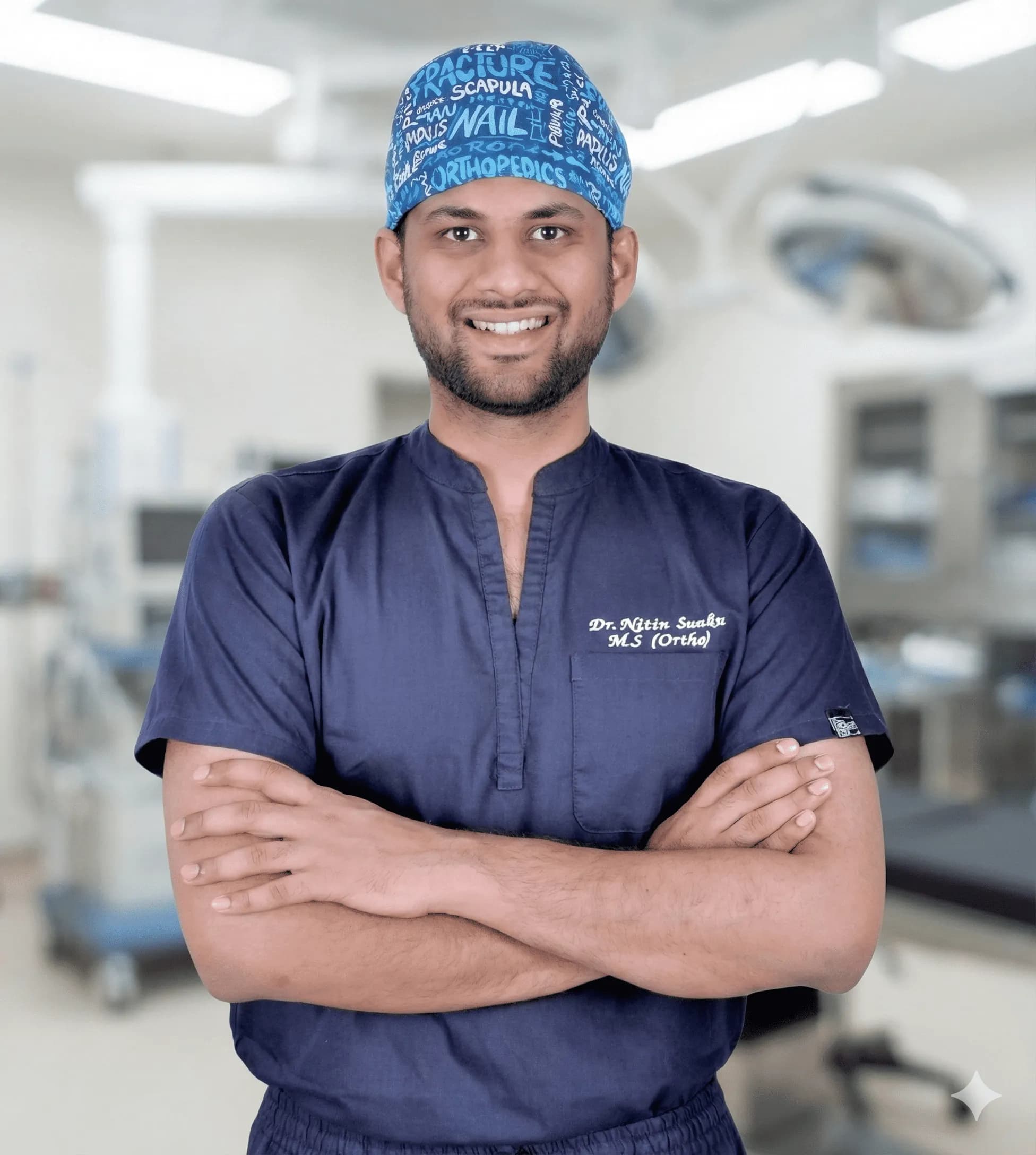
Dr. Nitin N Sunku
MBBS, MS (Orthopedics), Fellowship in Arthroscopy & Sports Medicine
Dr. Nitin N Sunku is a Consultant Orthopedic & Sports Medicine Surgeon with over 10 years of focused practice in Bengaluru. He serves as the Team Doctor for Bengaluru FC and consults at Raghava Multispeciality Hospital (Attibele) and Health Nest Hospital (HSR Layout). His clinical interests include arthroscopy, ligament & meniscus care, regenerative orthopedic medicine, ultrasound-guided injections, and joint replacement.
Experiencing symptoms?
Don't let pain hold you back. Schedule a comprehensive evaluation with Dr. Nitin today.
Book Appointment

