This article is for general education and does not replace an in-person assessment, examination, or imaging. Everyone's injury pattern, medical history, and goals differ; use what you read here to prepare better questions for your doctor.
Dr. Nitin N Sunku is a consultant orthopedic and sports medicine surgeon. He sees patients at Raghava Multispeciality Hospital, Attibele, on Sarjapura–Attibele Road, and at Health Nest Hospital, HSR Layout, Bengaluru. If pain is rapidly worsening, you cannot bear weight, you develop numbness or weakness in a limb, or you have fever after an injury, seek urgent medical care. For non-emergency evaluation and individualised treatment options, book through the contact page.
Topics across this blog include knee ligament and meniscus problems, shoulder pain and instability, hip and knee arthritis, fracture recovery principles, spine symptoms when urgent causes have been excluded, running and tendon overuse issues, and what to expect from arthroscopy or joint replacement discussions. If you are comparing sources online, cross-check dates and always confirm advice with an in-person clinician.
Chronic joint pain — whether in the knee, shoulder, hip, or ankle — can limit daily activities and affect quality of life.
Chronic joint pain — whether in the knee, shoulder, hip, or ankle — can limit daily activities and slowly erode quality of life. When rest, medication, and physiotherapy have not given lasting relief, many patients ask about Platelet-Rich Plasma (PRP) injections as a treatment option, and whether they really work.
What Is PRP?
PRP is a regenerative treatment made from your own blood. A small sample is taken and spun in a centrifuge to separate and concentrate the platelets — the cells responsible for healing. This concentrated plasma, rich in growth factors, is then injected precisely into the affected joint or tendon, often under ultrasound guidance for accuracy.
The growth factors released by these platelets are thought to stimulate the body's natural repair processes, reduce inflammation, and improve the local healing environment. Because PRP comes from your own body, the risk of an allergic or rejection reaction is very low.
How PRP Treatment Works in Practice
The procedure is done in the clinic and usually takes under an hour. After your blood is drawn and processed, the injection itself takes only a few minutes. Most patients go home the same day. Some soreness at the injection site for a day or two is normal, and any improvement is gradual — typically building over several weeks as healing progresses, rather than offering instant pain relief.
When PRP May Help
- Mild to moderate osteoarthritis in the knee or hip
- Tendon injuries such as tennis elbow, golfer's elbow, or patellar tendinopathy
- Cartilage damage from wear and tear
- Sports-related joint and tendon pain that has not improved with rest or physiotherapy
Benefits of PRP Therapy
- Uses your body's own natural healing process
- Minimally invasive, non-surgical option performed in clinic
- Can reduce pain and improve joint mobility
- May help delay or avoid major surgery in selected cases
- Low risk of reaction because it uses your own blood
What PRP Cannot Do
It is important to have realistic expectations. PRP is not a cure for every condition, and it cannot reverse advanced arthritis or replace a worn-out joint. It tends to work best in early-to-moderate disease and in tendon problems. Results vary from person to person, and more than one session is sometimes needed. For severe joint damage, options such as joint replacement may give more reliable results — which is exactly why proper assessment matters.
Is PRP Right for You?
A proper diagnosis by an orthopedic specialist is essential before deciding on PRP. The right treatment depends on the exact cause and stage of your joint pain, your age, your activity goals, and what has already been tried. If you are struggling with chronic joint pain in Bengaluru, an evaluation with Dr. Nitin N Sunku at his Attibele or HSR Layout clinic will clarify whether PRP injections are a suitable part of your treatment plan.
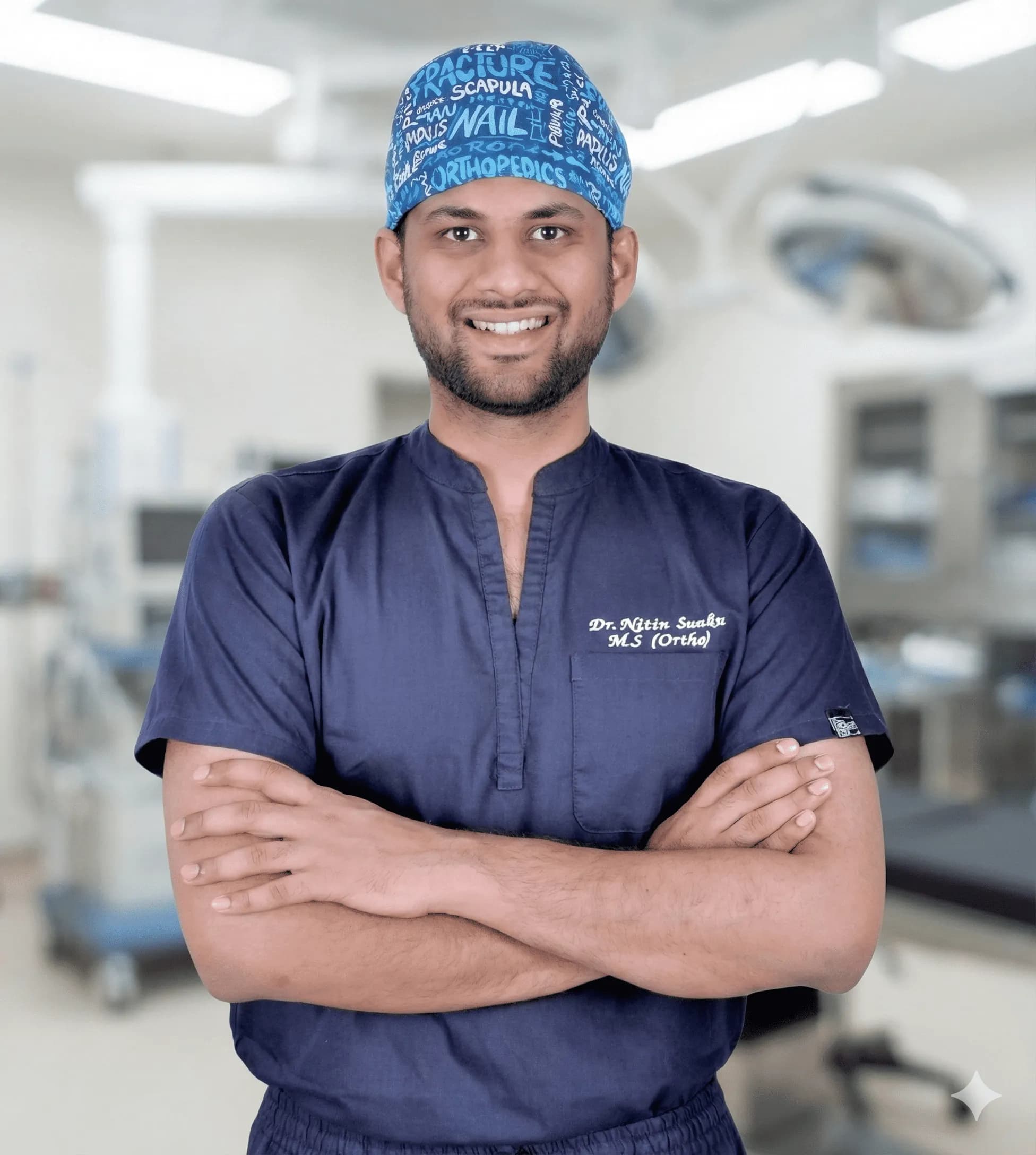
About the Author
Dr. Nitin N Sunku
MBBS, MS (Orthopedics), Fellowship in Arthroscopy & Sports Medicine
Dr. Nitin N Sunku is a Consultant Orthopedic & Sports Medicine Surgeon with over 10 years of focused practice in Bengaluru. He serves as the Team Doctor for Bengaluru FC and consults at Raghava Multispeciality Hospital (Attibele) and Health Nest Hospital (HSR Layout). His clinical interests include arthroscopy, ligament & meniscus care, regenerative orthopedic medicine, ultrasound-guided injections, and joint replacement.
Experiencing symptoms?
Don't let pain hold you back. Schedule a comprehensive evaluation with Dr. Nitin today.
Book Appointment