This article is for general education and does not replace an in-person assessment, examination, or imaging. Everyone's injury pattern, medical history, and goals differ; use what you read here to prepare better questions for your doctor.
Dr. Nitin N Sunku is a consultant orthopedic and sports medicine surgeon. He sees patients at Raghava Multispeciality Hospital, Attibele, on Sarjapura–Attibele Road, and at Health Nest Hospital, HSR Layout, Bengaluru. If pain is rapidly worsening, you cannot bear weight, you develop numbness or weakness in a limb, or you have fever after an injury, seek urgent medical care. For non-emergency evaluation and individualised treatment options, book through the contact page.
Topics across this blog include knee ligament and meniscus problems, shoulder pain and instability, hip and knee arthritis, fracture recovery principles, spine symptoms when urgent causes have been excluded, running and tendon overuse issues, and what to expect from arthroscopy or joint replacement discussions. If you are comparing sources online, cross-check dates and always confirm advice with an in-person clinician.
Yes — for many patients, knee osteoarthritis can be managed without surgery. Here's the honest picture of what works, what doesn't, and where the line really sits.
The short, honest answer
Yes — for many patients, knee osteoarthritis can be managed without surgery. Specifically, most patients with mild-to-moderate OA (KL grades 1–3) can experience meaningful pain relief and improved mobility with a structured non-surgical plan.
But not always. Severe end-stage OA (KL grade 4) with significant deformity may eventually require surgical management, even with the best conservative care.
See the full ladder of options on the osteoarthritis knee treatment page and the non-surgical knee pain treatment hub.
What "managing without surgery" really involves
It is not a single injection. It is a layered plan:
- Foundation care — physiotherapy, weight management, lifestyle adjustments
- Symptomatic medication when needed
- Targeted injections — HA, GFC, ultrasound-guided where appropriate
- Combination protocols for moderate OA
- Ongoing monitoring — adjust based on your response
Patients who succeed with non-surgical management typically commit to all of these — not just one.
Who is most likely to succeed without surgery?
- KL grade 1–3 OA
- BMI being actively optimised
- Reasonable muscle strength or willingness to do rehab
- No major mechanical issues (locked knee, large displaced meniscal tear)
- Reasonable medical fitness
- Commitment to follow-up and the plan
Who may eventually need surgery?
- KL grade 4 OA with bone-on-bone changes and deformity
- Severe pain at rest and at night
- Walking distance severely restricted despite a sincere non-surgical trial
- Major mechanical block from the joint
- Quality of life seriously impaired
If you are at this point, a thoughtful surgical referral is in your best interest. You will be told so honestly.
A typical non-surgical pathway
- Weeks 0–4: Assessment, imaging review, foundation rehab kicks off, weight plan, possible HA or GFC injection scheduled.
- Weeks 4–12: Pain reduction kicks in; rehab progresses; lifestyle tweaks settle.
- Weeks 12–24: Maintenance phase; periodic check-ins; activity goals refined.
- Months 6–12: Re-evaluation; top-up injections if needed.
Many patients comfortably maintain quality of life for years with this rhythm.
Common mistakes that derail non-surgical care
- Treating knee OA only with painkillers, no rehab
- Doing rehab inconsistently
- Ignoring weight as a major driver
- Expecting one HA injection to "cure" everything
- Skipping follow-up
- Comparing your timeline to someone else's
Get assessed in Bengaluru
If you would like a structured, honest evaluation, you can book a consultation with Dr. Nitin N Sunku at Raghava Multispeciality Hospital, Attibele (Sarjapura–Attibele Road) or Health Nest Hospital, HSR Layout. The clinics serve patients from Attibele, Anekal, Bommasandra, Chandapura, Hosur Road, Electronic City, HSR Layout, Koramangala, BTM Layout, Sarjapur Road, and Bellandur. Bring any prior X-ray or MRI; the imaging is reviewed and explained in plain language during your visit.
This article is educational and does not replace a clinical examination. Treatment outcomes vary based on the severity of your condition, age, weight, lifestyle, and other medical factors. Severe joint degeneration may still require surgical management.
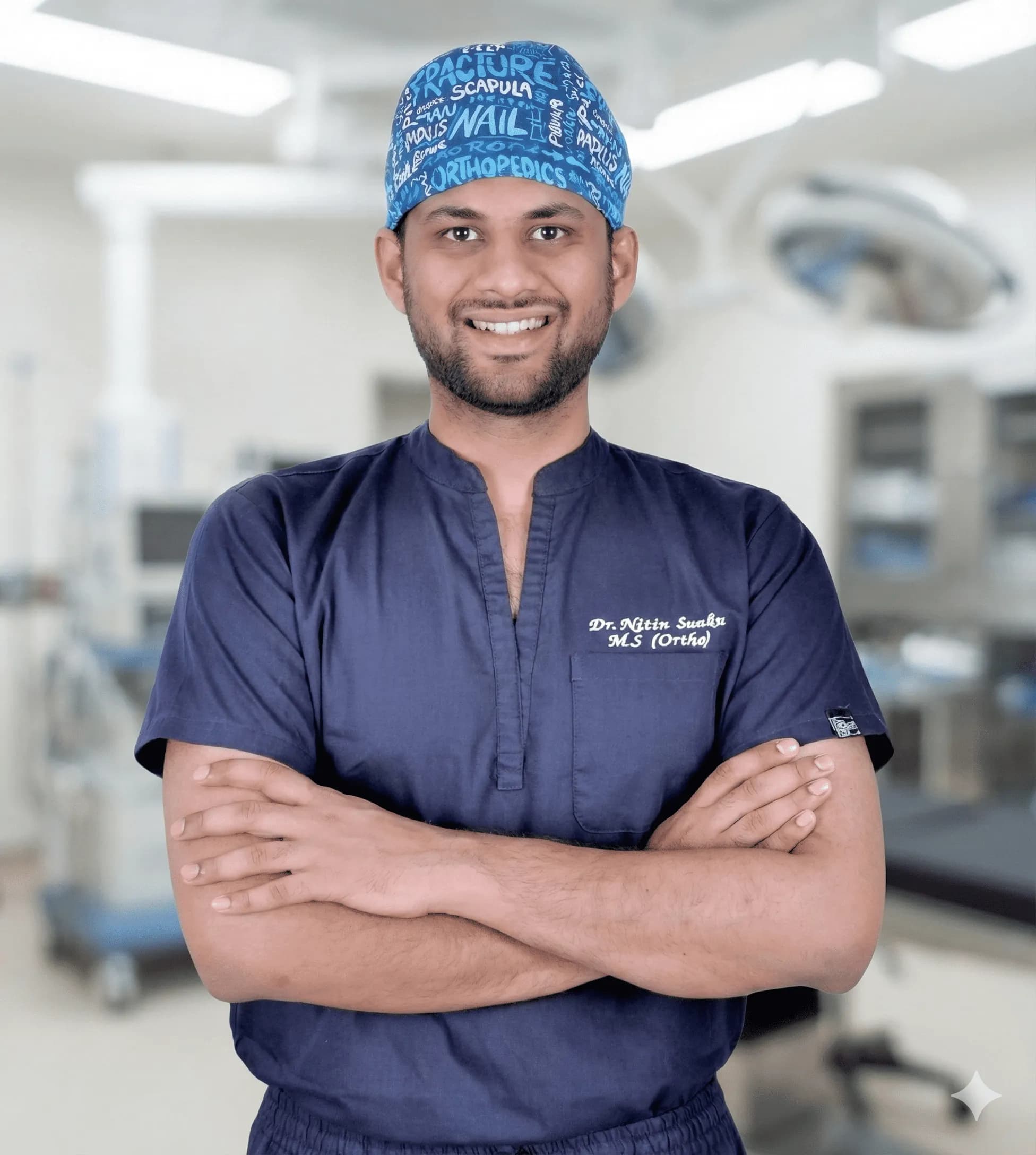
About the Author
Dr. Nitin N Sunku
MBBS, MS (Orthopedics), Fellowship in Arthroscopy & Sports Medicine
Dr. Nitin N Sunku is a Consultant Orthopedic & Sports Medicine Surgeon with over 10 years of focused practice in Bengaluru. He serves as the Team Doctor for Bengaluru FC and consults at Raghava Multispeciality Hospital (Attibele) and Health Nest Hospital (HSR Layout). His clinical interests include arthroscopy, ligament & meniscus care, regenerative orthopedic medicine, ultrasound-guided injections, and joint replacement.
Experiencing symptoms?
Don't let pain hold you back. Schedule a comprehensive evaluation with Dr. Nitin today.
Book Appointment

