This article is for general education and does not replace an in-person assessment, examination, or imaging. Everyone's injury pattern, medical history, and goals differ; use what you read here to prepare better questions for your doctor.
Dr. Nitin N Sunku is a consultant orthopedic and sports medicine surgeon. He sees patients at Raghava Multispeciality Hospital, Attibele, on Sarjapura–Attibele Road, and at Health Nest Hospital, HSR Layout, Bengaluru. If pain is rapidly worsening, you cannot bear weight, you develop numbness or weakness in a limb, or you have fever after an injury, seek urgent medical care. For non-emergency evaluation and individualised treatment options, book through the contact page.
Topics across this blog include knee ligament and meniscus problems, shoulder pain and instability, hip and knee arthritis, fracture recovery principles, spine symptoms when urgent causes have been excluded, running and tendon overuse issues, and what to expect from arthroscopy or joint replacement discussions. If you are comparing sources online, cross-check dates and always confirm advice with an in-person clinician.
Knee pain after 40? A practical, evidence-based guide to the best non-surgical treatments — exercise, weight, HA, GFC, ultrasound-guided injections.
Why knee pain shows up in your 40s
Your 40s are the decade where many silent factors begin to add up: subtle cartilage changes, less daily activity, gradual weight gain, weaker hip and thigh muscles, and old injuries you forgot about. The knee absorbs all of it.
The good news: this decade is also the most rewarding time to act. Early intervention dramatically changes the trajectory of the next 20–30 years.
For the bigger picture, see non-surgical knee pain treatment.
The best treatments — ranked by impact
1. Targeted strengthening
Weak quadriceps, hamstrings, and hip stabilisers are by far the biggest accelerators of knee pain after 40. A focused 10–12 week strengthening programme often outperforms most other interventions.
2. Weight optimisation
Every kilogram lost reduces 3–4 kg of load across the knee while walking. Even a modest 5–7% reduction can transform symptoms.
3. Movement education
How you stand, climb stairs, sit, drive, and lift makes a real difference. Small habit changes compound over years.
4. HA injections (when indicated)
Particularly useful for early-to-moderate OA after 40. HA viscosupplementation provides smoother walking and reduced stiffness.
5. GFC therapy (when indicated)
A modern regenerative option, often paired with HA in moderate cases or used for tendinopathies common in this age group. See GFC treatment for knee pain.
6. Ultrasound-guided injections
For anyone considering injections after 40, image guidance dramatically improves accuracy and outcomes — especially for tendons and small targets.
7. Sleep, stress, and inflammation control
Poor sleep and chronic stress amplify pain perception. Diet quality matters too — patterns that reduce systemic inflammation help.
8. Selected medications, when needed
Used strategically — never as a long-term substitute for the foundation work above.
Common scenarios in the 40-something patient
"I run on weekends and my knee hurts on Monday." Often patellar tendinopathy or early patellofemoral pain. Strengthening + targeted physiotherapy is foundational; GFC under ultrasound guidance helps in stubborn cases.
"I sit at a desk all day and my knee aches in the evening." Tight hips, weak glutes, and prolonged sitting. Movement breaks every 60–90 minutes plus a structured strength plan usually transform this.
"I climbed stairs fine last year, now I don't." Could be early OA, meniscal change, or pure deconditioning. An assessment with X-ray clarifies it quickly.
"I had a sports injury at 22 and my knee feels different now." Old injuries shift the joint's mechanics. Even decades later, this can drive early OA. A baseline assessment is wise.
What about painkillers?
Painkillers can help during flares — short-term, targeted use is reasonable. But they should not be a daily, long-term solution. NSAIDs carry stomach, kidney, and heart considerations, especially as you age.
When to see a specialist
- Pain present for more than 4–6 weeks
- Swelling lasting more than a week
- Knee giving way or catching
- Pain that wakes you at night
- Pain after a fall or twist
Get assessed in Bengaluru
If you would like a structured, honest evaluation, you can book a consultation with Dr. Nitin N Sunku at Raghava Multispeciality Hospital, Attibele (Sarjapura–Attibele Road) or Health Nest Hospital, HSR Layout. The clinics serve patients from Attibele, Anekal, Bommasandra, Chandapura, Hosur Road, Electronic City, HSR Layout, Koramangala, BTM Layout, Sarjapur Road, and Bellandur. Bring any prior X-ray or MRI; the imaging is reviewed and explained in plain language during your visit.
This article is educational and does not replace a clinical examination. Treatment outcomes vary based on the severity of your condition, age, weight, lifestyle, and other medical factors. Severe joint degeneration may still require surgical management.
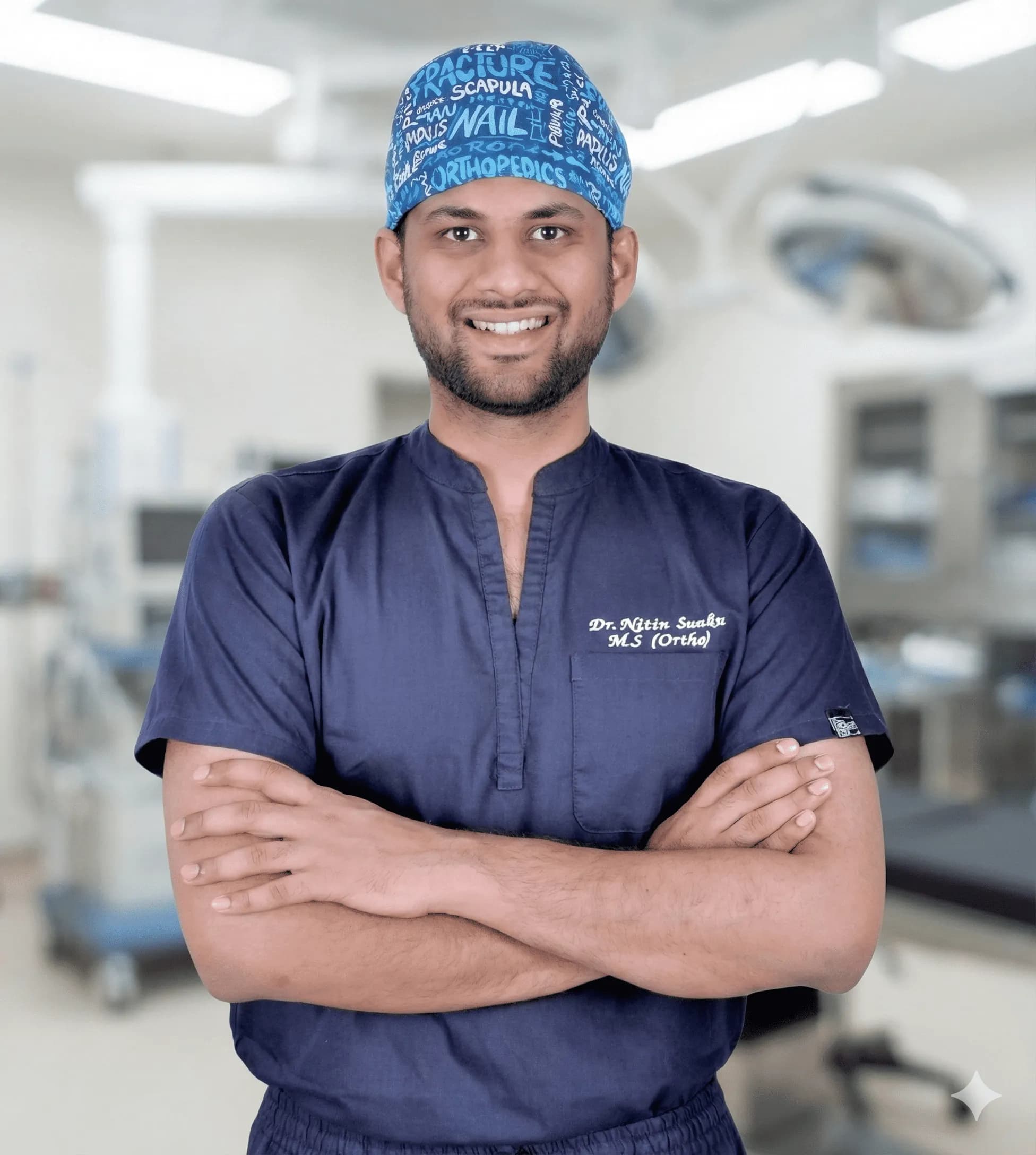
About the Author
Dr. Nitin N Sunku
MBBS, MS (Orthopedics), Fellowship in Arthroscopy & Sports Medicine
Dr. Nitin N Sunku is a Consultant Orthopedic & Sports Medicine Surgeon with over 10 years of focused practice in Bengaluru. He serves as the Team Doctor for Bengaluru FC and consults at Raghava Multispeciality Hospital (Attibele) and Health Nest Hospital (HSR Layout). His clinical interests include arthroscopy, ligament & meniscus care, regenerative orthopedic medicine, ultrasound-guided injections, and joint replacement.
Experiencing symptoms?
Don't let pain hold you back. Schedule a comprehensive evaluation with Dr. Nitin today.
Book Appointment

